
Best Hair Transplant Surgeons in the World 2026: Two Alvi Armani Physicians Included
Two Alvi Armani physicians have been included in the American Hair Loss Association’s 2026 guide to the Best Hair Transplant Surgeons in the World.
Choosing a Hair Transplant Surgeon Goes Beyond Graft Count
Choosing a hair transplant surgeon is one of the most consequential decisions in a patient’s hair restoration journey.
Patients researching a hair transplant today encounter hundreds of clinics, dramatic before-and-after images, competing claims, new technologies, and increasingly similar marketing language. Yet the differences between practices can be substantial—particularly when it comes to physician involvement, surgical planning, management of the donor area, hairline design, and the long-term strategy behind a procedure.
The American Hair Loss Association recently published its 2026 guide to The Best Hair Transplant Surgeons in the World, created specifically to give patients a more medically grounded starting point when researching the best hair transplant doctors and top hair transplant physicians.
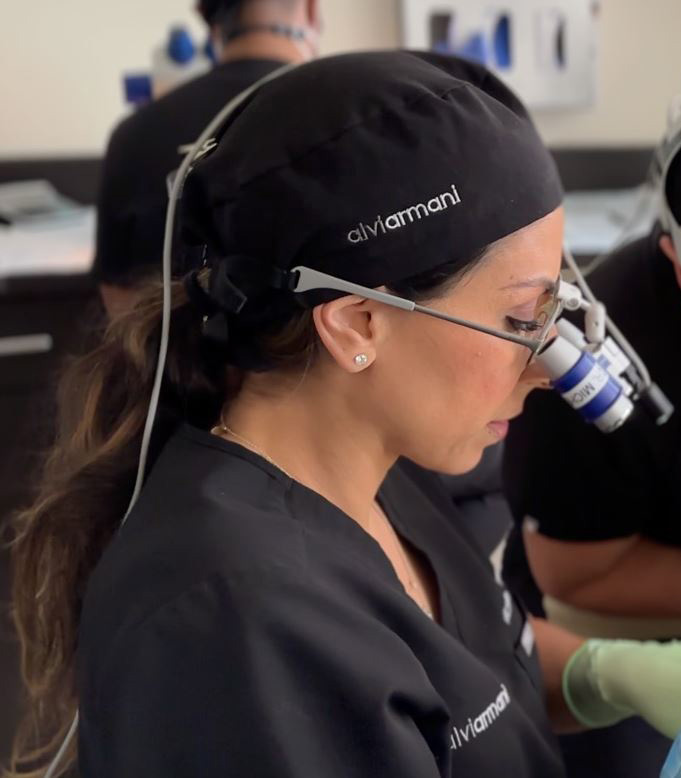
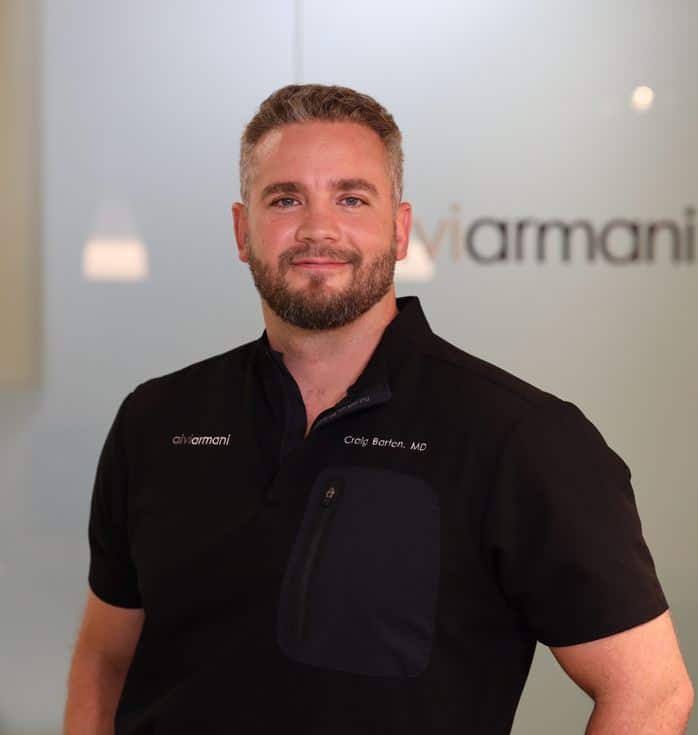
Two Alvi Armani physicians are included on the 2026 list: Dr. Michelle Ischayek in Beverly Hills, California and Dr. Craig Barton in Salt Lake City, Utah.
For patients considering hair transplant surgery in Beverly Hills, Los Angeles, Salt Lake City, or elsewhere in Utah, their inclusion provides an important independent reference point in the process of choosing the right surgeon.
What Does the AHLA “Best Hair Transplant Surgeons” List Mean?
There is no official worldwide ranking of hair restoration physicians, something the American Hair Loss Association makes clear in its report.
Instead, AHLA created its guide to help patients distinguish between marketing visibility and the characteristics it associates with high-quality surgical hair restoration. The physicians included are accepted members of the International Alliance of Hair Restoration Surgeons, or IAHRS, and are presented alphabetically rather than in ranked order.
AHLA specifically points to meaningful differences in areas such as surgical planning, physician involvement, donor management, repair experience, ethics, and long-term patient outcomes.
Those considerations matter because there may not be a single “best” physician for every patient. The appropriate approach to hair transplantation depends on the patient’s age, pattern of hair loss, donor characteristics, medical history, aesthetic goals, and future progression.
The value of the AHLA guide is that it gives patients a more selective place to begin that evaluation.
A Hair Restoration System Built Across Generations
Alvi Armani was established in 1999 and has performed follicular unit extraction since 2004.
Across generations of physicians, the practice has continued to develop a system centered on natural design, surgical precision, donor management, graft care, and long-term patient planning.
That distinction is important. Alvi Armani is not built around the idea that excellence depends on one physician or one moment in the practice’s history. The objective is to carry forward repeatable standards for candidacy, design, harvesting, recipient-site planning, graft handling, patient care, and follow-up through a shared physician and clinical system .
Natural Hairline Planning
Hairline planning considers facial architecture, proportion, density, age appropriateness, donor supply, and future hair loss.
Physician-Led FUE
At Alvi Armani’s U.S. clinics, FUE harvesting is performed by physicians, supporting clear surgical accountability and careful donor management.
Donor Preservation
Surgical planning considers present restoration goals alongside future hair loss and the finite nature of the donor supply.
Dr. Michelle Ischayek
Dr. Michelle Ischayek of Alvi Armani Beverly Hills is included among AHLA’s best hair transplant surgeons for 2026.
For patients researching a Beverly Hills hair transplant or hair restoration in Los Angeles, that recognition is particularly relevant because choosing a surgeon should involve more than comparing graft counts or procedure prices.
Alvi Armani Beverly Hills focuses on individualized natural hairline design, donor-area planning, physician-performed FUE harvesting, physician-created recipient sites, and a single-case-day surgical model.
A successful procedure is not simply a matter of moving the greatest possible number of follicles.
The design should make sense for the individual patient: the proportions of the face, existing hair, anticipated pattern of loss, characteristics of the donor region, and the amount of donor hair that may need to remain available for the future.

That is particularly important in Beverly Hills, where patients evaluating hair restoration procedures often arrive with sophisticated aesthetic goals and high expectations for subtlety.
The goal is to pursue natural results that complement the individual rather than simply maximizing graft count.
Dr. Craig Barton
Dr. Craig Barton of Alvi Armani Salt Lake City is also included in AHLA’s 2026 selection.
For patients researching a hair transplant doctor in Utah, this provides another meaningful independent reference point.
Alvi Armani Salt Lake City carries forward the same core Alvi Armani system of physician-led FUE, individualized planning, donor management, hairline design, and long-term restoration strategy.
With follicular unit extraction, individual follicular units are harvested from the donor region rather than through a linear strip incision. But the term FUE alone says relatively little about the quality of a procedure.
Careful Graft Harvesting
Extraction strategy should account for present needs, future hair loss, donor density, and the finite nature of the donor supply.
Precise Graft Placement
Distribution, angle, direction, and density contribute to how naturally transplanted hair integrates with existing hair.

These are among the reasons careful graft harvesting, thoughtful donor management, and precise graft placement matter when evaluating FUE hair transplantation.
Patients exploring advanced FUE and modern hair restoration techniques should therefore look beyond the name of the technology itself.
The physician, the plan, and the execution remain critical.
What Should You Look for in a Hair Transplant Surgeon?
AHLA’s report reinforces an important point: choosing between hair transplant procedures should begin with the physician, the system, and the plan rather than a marketing claim or technique alone.
Patients who want a deeper framework can also review our guide to choosing the right hair transplant surgeon , including how to evaluate the physician, documented results, donor management, long-term planning, and the system supporting the surgeon.
When comparing physicians or hair transplant clinics in the United States, these are some of the questions worth asking.
Who Performs the Surgical Steps?
Understand who evaluates your hair loss, develops the surgical plan, performs harvesting, creates recipient sites, and remains accountable for your treatment.
How Is the Donor Area Managed?
A responsible plan should consider current graft requirements alongside donor preservation and possible future hair loss.
How Is the Hairline Designed?
Hairline planning should consider facial proportions, age, existing hair, density goals, donor supply, and likely long-term progression.
What Standards Guide Patient Care?
Ask how the practice approaches patient safety, procedural responsibility, follow-up, realistic expectations, and overall quality of care.
The answers tell you substantially more than graft count alone.
At Alvi Armani’s U.S. clinics, FUE harvesting is physician-performed. The system also incorporates clinical review, provider development, procedure-specific standards, ongoing oversight, donor management, and structured patient follow-up.
Hair Restoration Is a Long-Term Decision
One of the most important considerations in modern hair restoration surgery is also one of the easiest to overlook.
Your Donor Hair Is Finite
Every procedure uses part of a limited donor resource, making long-term donor preservation an important part of surgical planning.
Hair Loss May Continue
A restoration should account for potential future progression rather than considering only the patient’s appearance today.
Balance Should Endure
A hairline that looks appropriate today should continue to make aesthetic sense as the patient ages and surrounding hair changes.
Thoughtful surgical planning therefore considers more than the immediate transformation. It considers how grafts are distributed, what donor supply remains available, how existing hair may change, and whether the restoration can remain balanced over time.
This reflects the broader Alvi Armani philosophy: natural results are not accidental. They are designed through proportion, density, donor management, technical execution, and long-term planning.
Patients who want to understand that planning in greater detail can explore the Alvi Armani hair transplant case studies , where selected cases include graft counts, restoration strategy, procedure choice, and planning context.
Recognition Is a Starting Point. Your Consultation Is the Next Step.
Being included in the American Hair Loss Association’s 2026 list of the best hair transplant surgeons in the world is meaningful recognition for Dr. Michelle Ischayek and Dr. Craig Barton.
But AHLA itself makes an equally important point: its guide is intended as a medically grounded starting point rather than a numerical ranking or guarantee of an individual outcome.
We agree.
If you are considering hair transplant surgery, use independent recognition as one part of your research.