
Can you wear your hair short after a hair transplant? This documented Alvi Armani patient provides one example: a 2,275-graft Vitruvian FUE™ procedure for Norwood 3 hair loss, with the hairline and temples treated and the result documented at 1 year with the hair worn short.
Can You Wear Short Hair After a Hair Transplant?
A hair transplant does not necessarily require wearing the hair long after postoperative healing and growth.
How a very short hairstyle looks varies by patient and can depend on the recipient area, donor area, hair characteristics, skin-to-hair contrast, haircut length and individual healing.
In this case, the patient's restored frontal region can be evaluated with the hair worn short at the documented 1-year follow-up.
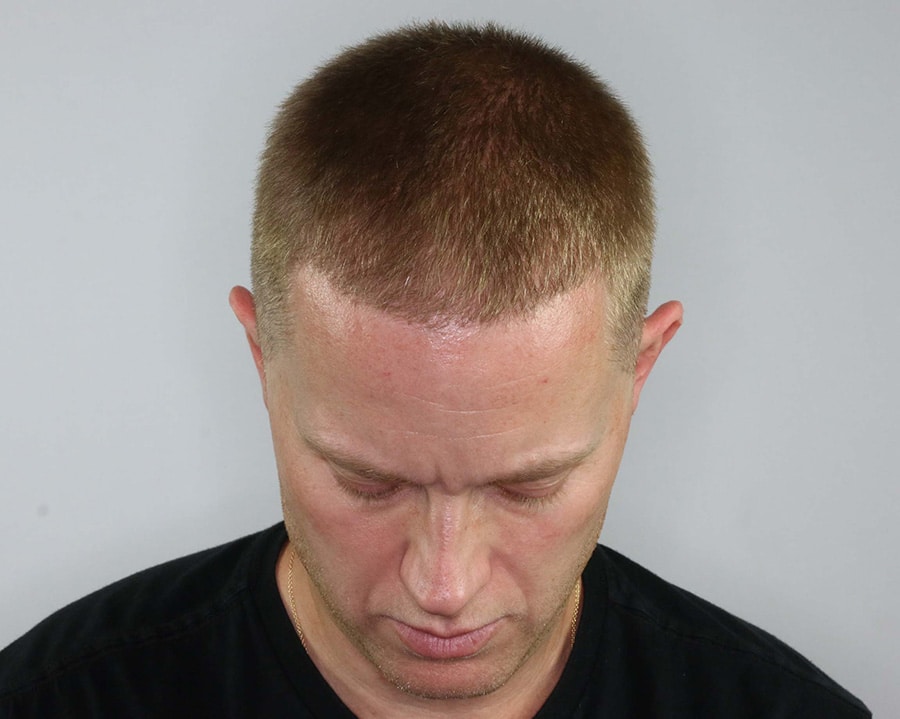
2,275-Graft Vitruvian FUE™ Result
The documented procedure used 2,275 Vitruvian FUE™ grafts to treat the hairline and temple regions.
The comparison below shows immediate postoperative graft placement alongside the patient's appearance at 1 year.

Norwood 3 Hair Loss With Hairline and Temple Recession
The patient was documented as Norwood 3 and Alvi Armani Pattern 2 Class 4.
The documented treatment involved the hairline and temple regions. The 1-year photography provides evidence of the result with the patient's hair maintained at a relatively short length.
2,275 Vitruvian FUE™ Grafts to the Hairline and Temples
The documented procedure used 2,275 Vitruvian FUE™ grafts to restore the patient's hairline and temporal recession.
This case is particularly useful because the result can be evaluated with relatively short hair rather than only through longer styling.
Hairline Restoration
The frontal hairline was one of the documented recipient areas treated during the procedure.
Temple Restoration
Treatment also included the recessed temple regions as part of the patient's frontal restoration.
Profile Views of the Hairline and Temples
Profile views provide additional context for evaluating the relationship between the restored hairline, temple regions and the patient's short hairstyle.

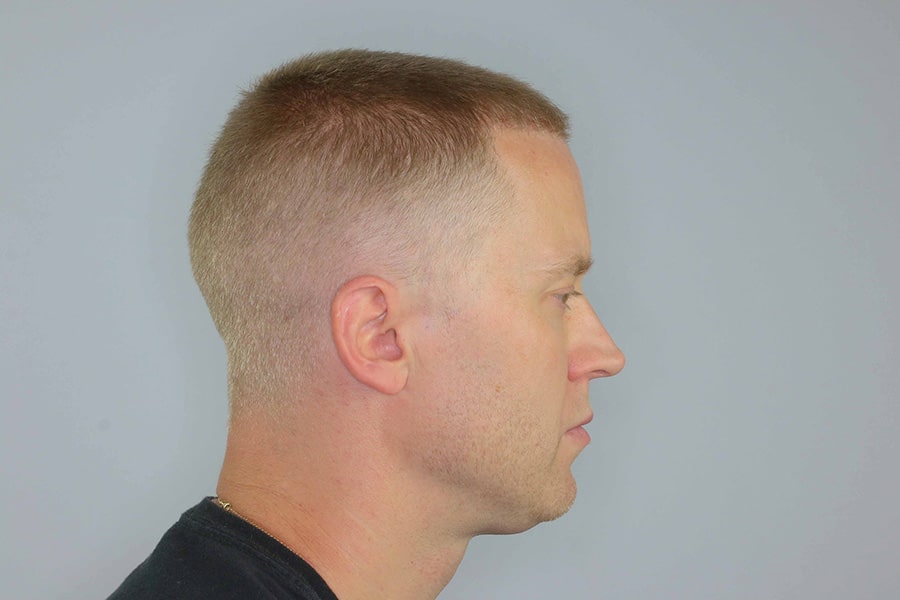
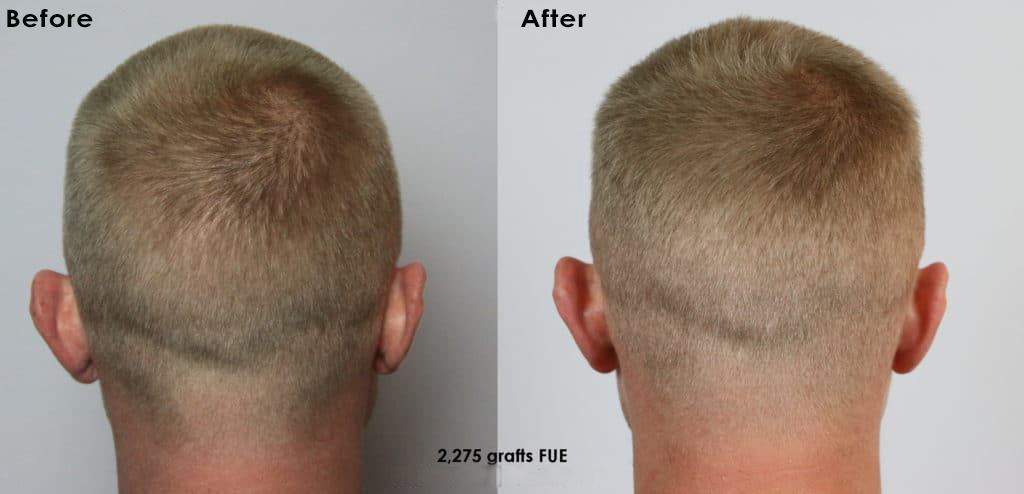
Donor Area With the Hair Worn Short
The donor-area comparison provides another useful view when evaluating this patient's FUE result with shorter hair.
Donor-area appearance varies between patients and may be influenced by harvesting pattern, individual healing, hair characteristics, skin-to-hair contrast and haircut length.
frontal focus
One 2,000-Graft-Range Restoration With the Hair Worn Short
This case shows one way a procedure in the 2,000-graft range can be used for a focused frontal restoration involving the hairline and temples.
Because the patient's hair is worn short at the 1-year follow-up, the photography also provides another way to examine the relationship between the treated frontal region, surrounding scalp and donor area.
This does not mean every Norwood 3 patient or every patient seeking a similar restoration requires approximately 2,000 grafts. Appropriate graft requirements depend on recipient-area size, donor resources, existing native hair, hair characteristics and the goals of the individual restoration.
What About a Buzz Cut, Fade or Other Short Haircut?
The appropriate time to cut the hair after a transplant depends first on postoperative healing. Patients should follow the specific aftercare and haircut instructions provided by their surgical team before trimming the recipient or donor areas.
After healing, the appearance of a buzz cut, fade or another very short hairstyle can vary according to the individual transplant, donor area, hair characteristics and selected haircut length.
This case documents one short-hair result rather than establishing a universal haircut length or postoperative haircut schedule.
Look Beyond the Frontal Before-and-After
When evaluating a hair transplant worn short, consider more than a frontal comparison. Top views, profile views and donor-area photographs provide additional context.
Lighting, angle, styling, hair length and individual hair characteristics can also influence how a transplant appears in photographs.
Short Hair and Hair Transplant FAQs
Can I wear my hair short after a hair transplant?
A hair transplant does not necessarily require wearing the hair long after healing. This case documents a 2,275-graft Vitruvian FUE™ patient wearing his hair short at the 1-year follow-up. Individual results and donor-area appearance vary.
Can I get a buzz cut after a hair transplant?
A very short hairstyle may be possible after healing, but its appearance varies by patient. The donor area, recipient area, hair characteristics and selected clipper length can all affect how a buzz cut looks. Patients should follow their surgical team's postoperative instructions before cutting the hair.
When can I get a haircut after a hair transplant?
Haircut timing depends on postoperative healing and the instructions provided for the individual procedure. Patients should follow their surgical team's specific guidance rather than relying on a universal haircut timeline.
Does FUE create a linear donor scar?
FUE harvests follicular units individually rather than removing a strip of donor tissue, so it does not create the linear incision associated with strip harvesting. The visibility of individual extraction sites at very short hair lengths varies by patient.
How many grafts were used in this case?
The documented procedure used 2,275 Vitruvian FUE™ grafts.
What was the patient's hair-loss classification?
The patient was documented as Norwood 3 and Alvi Armani Pattern 2 Class 4.
Which areas were treated?
The documented treatment involved the hairline and temple regions.
When was the result documented?
The case includes immediate postoperative evidence and a documented result at 1 year.
Learn More About FUE and Patient Results
Explore the Alvi Armani provider team and locations, compare additional patient evidence or begin a personalized evaluation of your restoration goals.
Your FUE Hair Transplantation Plan Is Individual
Graft count is only one part of planning. Your hair-loss pattern, treatment areas, existing native hair, donor resources and long-term goals all influence the appropriate approach.