
This patient underwent a 1,800-graft Vitruvian FUE™ procedure at AlviArmani Beverly Hills to lower a receding hairline and address the temporal recessions. The case includes preoperative, immediate postoperative, and documented 12-month result photography.
Before & After 1,800-Graft Hairline Lowering
The documented procedure used 1,800 grafts to lower the patient's receding frontal hairline and address recession through the temporal regions.
The photographs provide multiple views of the treatment, including the patient's appearance at the documented 12-month follow-up.
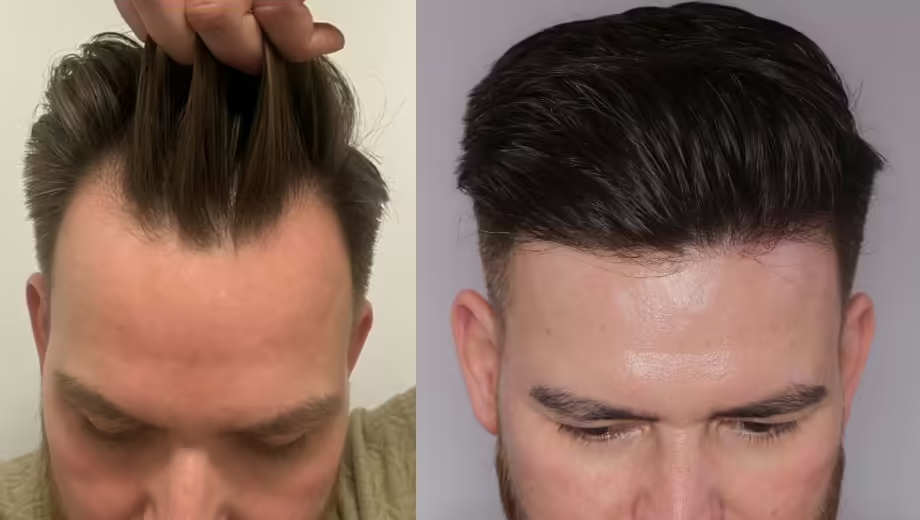
Progressive Hairline Recession Beginning in His 30s
The patient began experiencing hair loss in his 30s, with gradual recession of the frontal hairline over time. By the time he sought surgical treatment in his 40s, the hairline and temporal regions remained his primary restoration concerns.
The case record states that he had used oral finasteride and topical minoxidil for approximately two years before surgery. His hair loss was described as stabilized during that period, but the recessed hairline itself remained.
1,800 Grafts Focused on Lowering the Frontal Frame
The patient underwent a 1,800-graft Vitruvian FUE™ procedure at AlviArmani Beverly Hills.
The documented treatment focused on lowering the receded frontal hairline while addressing recession through the temporal regions.
Hairline Lowering
The frontal hairline was advanced as the central objective of the documented procedure.
Temporal Framing
The treatment also addressed the patient's documented temporal recession as part of the frontal restoration.
Hairline Design and Immediate Postoperative Placement
The case includes operative photography documenting the planned frontal hairline and the recipient area following placement of the 1,800 grafts.

One Year After 1,800-Graft Vitruvian FUE™
The documented 12-month photographs provide additional views of the restored frontal hairline and temporal regions.


focused frontal plan
1,800 Grafts Can Represent a Focused Hairline-Lowering Plan
This case provides documented patient evidence of a 1,800-graft Vitruvian FUE™ procedure focused primarily on the frontal hairline and temporal recession.
It is useful when comparing 1,800-graft hair transplants because the graft count here represents a focused frontal objective rather than broad multi-zone scalp coverage.
This does not mean every patient seeking hairline lowering requires 1,800 grafts. Appropriate graft requirements depend on the amount of advancement, treatment-area size, temporal involvement, existing native hair, donor resources, hair characteristics and individual restoration goals.
Questions About This 1,800-Graft Hairline-Lowering Case
How many grafts were used?
The documented procedure used 1,800 grafts.
What procedure was used?
The case documents a 1,800-graft Vitruvian FUE™ procedure.
Which areas were treated?
The documented treatment focused on lowering the frontal hairline and addressing the temporal recession.
Where was the procedure performed?
The procedure was performed at AlviArmani Beverly Hills.
When were the result photographs taken?
The case includes documented 12-month postoperative photography.
Did the patient use hair-loss medication before surgery?
Yes. The case record states that he had used oral finasteride and topical minoxidil for approximately two years before surgery.
Does every hairline-lowering patient need 1,800 grafts?
No. The appropriate graft count depends on the starting hairline, amount of advancement, treatment area, existing native hair, donor resources, hair characteristics and individual restoration goals.
Learn More About Hairline Restoration and Patient Results
Your Hair Restoration Plan Is Individual
Graft count is only one part of planning. Your hair-loss pattern, treatment areas, existing native hair, donor resources and long-term goals all influence the appropriate approach.