
This patient with documented Norwood Class IV hair loss, corresponding to AlviArmani Pattern 1 Class 4, received 2,500 grafts using Vitruvian FUE™ to restore the hairline and frontal region, including the temple areas. The case includes next-day postoperative evidence and a documented 1-year result.
One Year After 2,500-Graft Vitruvian FUE™
The documented 1-year photographs show the postoperative appearance after 2,500 FUE grafts were used to restore the patient's hairline and frontal region.
The temple areas were also included in the documented frontal restoration plan.
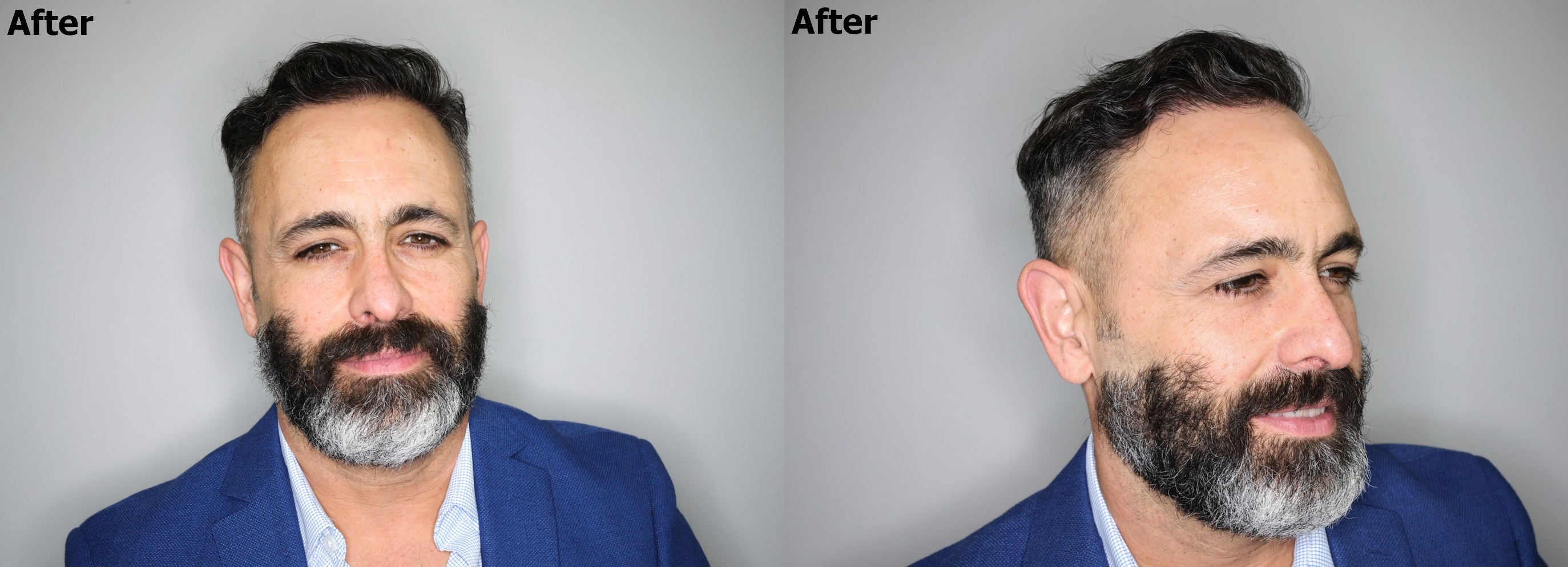
Norwood 4 Hair Loss Affecting the Frontal Region and Temples
The patient presented with thinning in the frontal region and temples.
His starting pattern was documented as Norwood Class IV and AlviArmani Pattern 1 Class 4.
2,500 Grafts for a Frontal and Temple-Focused Restoration
The documented treatment used 2,500 grafts with Vitruvian FUE™ to restore the hairline and rebuild coverage through the frontal region.
The temple areas were also included in the restoration, creating a treatment plan centered on the frontal frame rather than extending through every region of the scalp.
Hairline & Frontal Restoration
The hairline and frontal region were the principal documented recipient areas for this 2,500-graft procedure.
Temple Treatment
The documented starting pattern included temple thinning, and the temple areas formed part of the frontal restoration.
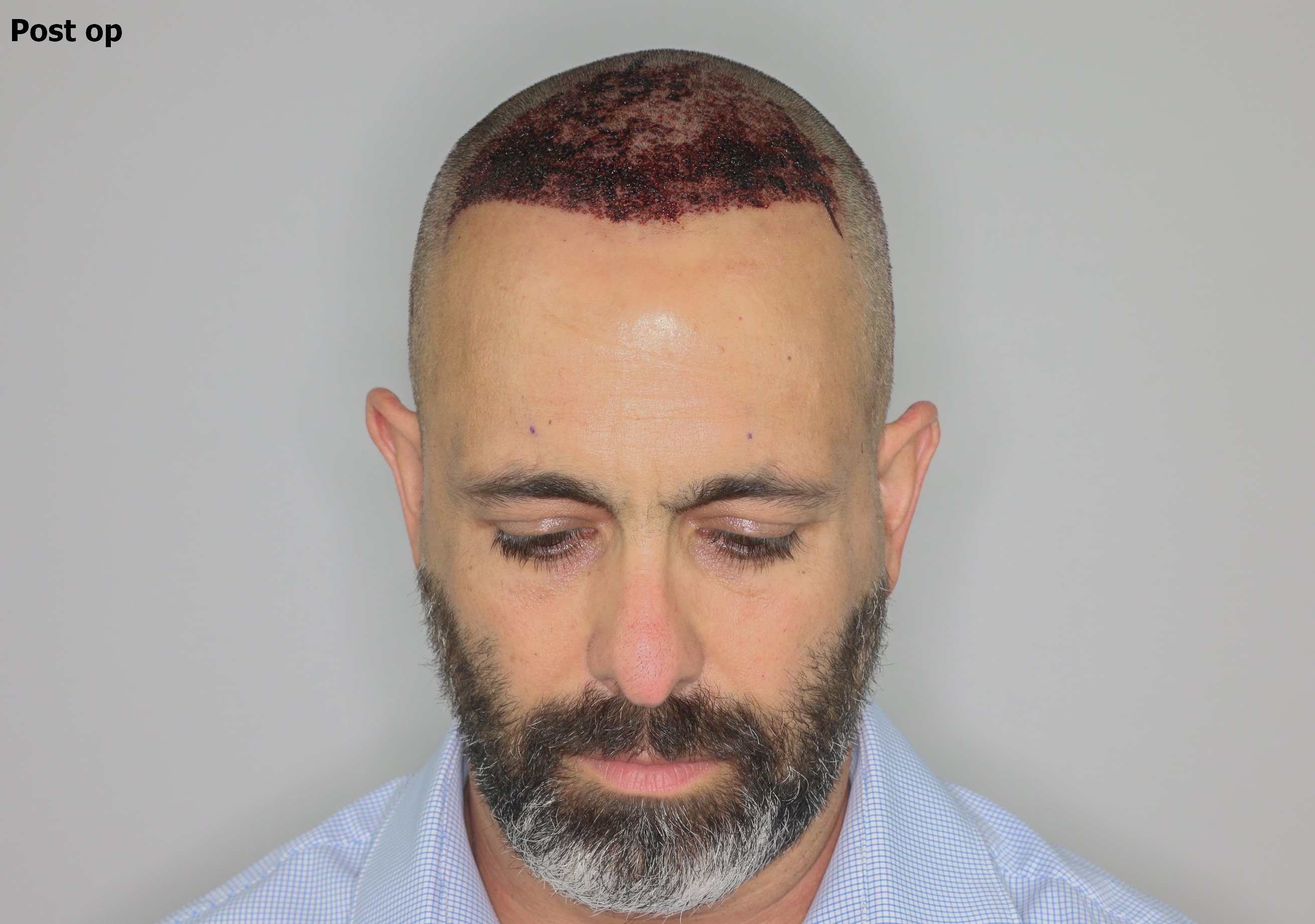
The Day After the 2,500-Graft Procedure
The photograph below documents the recipient area one day after the 2,500-graft Vitruvian FUE™ procedure.
This view provides direct postoperative evidence of the frontal treatment area before the later 1-year result.
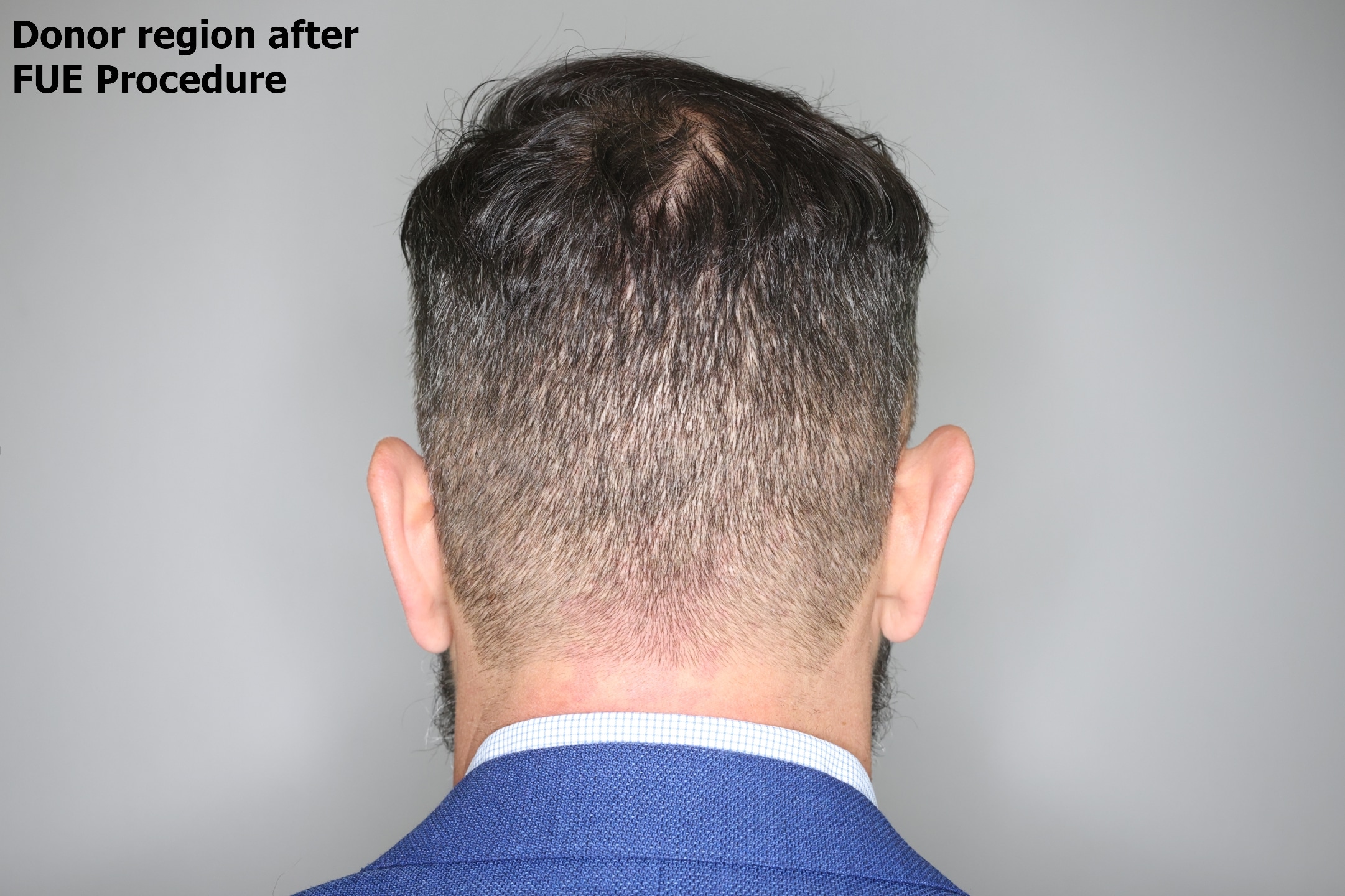
Donor Region at One Year
The case record also includes a photograph of the donor region one year after harvesting 2,500 FUE grafts.
This photograph is presented as donor-area evidence from this patient without assigning an unsupported density, scarring or harvesting-quality claim.
frontal focus
2,500 Grafts Can Represent a Focused Frontal Restoration
This case provides an example of 2,500 grafts being concentrated on the hairline, frontal region and temple areas in a documented Norwood 4 patient.
The next-day and 1-year photographs also make it useful for evaluating the procedure at two very different stages of the postoperative timeline.
This does not mean every Norwood 4 patient or every patient seeking frontal restoration requires 2,500 grafts. Appropriate graft requirements depend on recipient-area size, donor resources, existing native hair, hair characteristics and restoration goals.
Compare the Result Alongside the Treatment Plan
A graft count is most useful when it can be interpreted alongside the patient's starting pattern, documented recipient areas and follow-up interval.
In this case, the record provides both early postoperative evidence and a documented 1-year result.
Questions About This 2,500-Graft FUE Case
How many grafts were used?
The documented procedure used 2,500 FUE grafts.
What type of procedure was performed?
The case record documents a 2,500-graft Vitruvian FUE™ procedure.
What was the patient's hair-loss classification?
The patient was documented as Norwood Class IV, corresponding to AlviArmani Pattern 1 Class 4.
Which areas were treated?
The documented restoration involved the hairline, frontal region and temple areas.
Was the crown treated?
Crown treatment is not documented in the available case record. The documented treatment was focused on the frontal region and temples.
When was the postoperative photograph taken?
The early postoperative photograph is documented as being taken the day after the procedure.
When was the result photographed?
The later result shown on this page is documented at one year after surgery.
Is there donor-area photography?
Yes. The case includes a documented photograph of the donor region one year after harvesting 2,500 FUE grafts.
Learn More About the Team, Results and Your Treatment Options
Compare additional patient evidence or begin an individualized evaluation of your hair-loss pattern and restoration goals.
Your Hair Restoration Plan Is Individual
Graft count is only one part of planning. Your hair-loss pattern, treatment areas, existing native hair, donor resources and long-term goals all influence the appropriate approach.