
A documented AlviArmani Vitruvian FUE restoration performed in Beverly Hills using 3,527 grafts to restore the frontal hairline and increase coverage through the mid-scalp. The patient was documented as Norwood 3 / AlviArmani Pattern 1 Class 3, with a one-year result available for review.
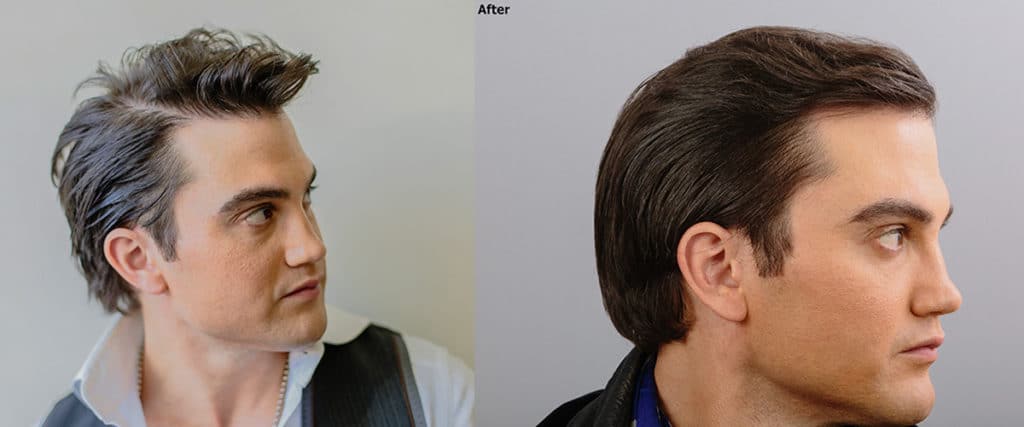
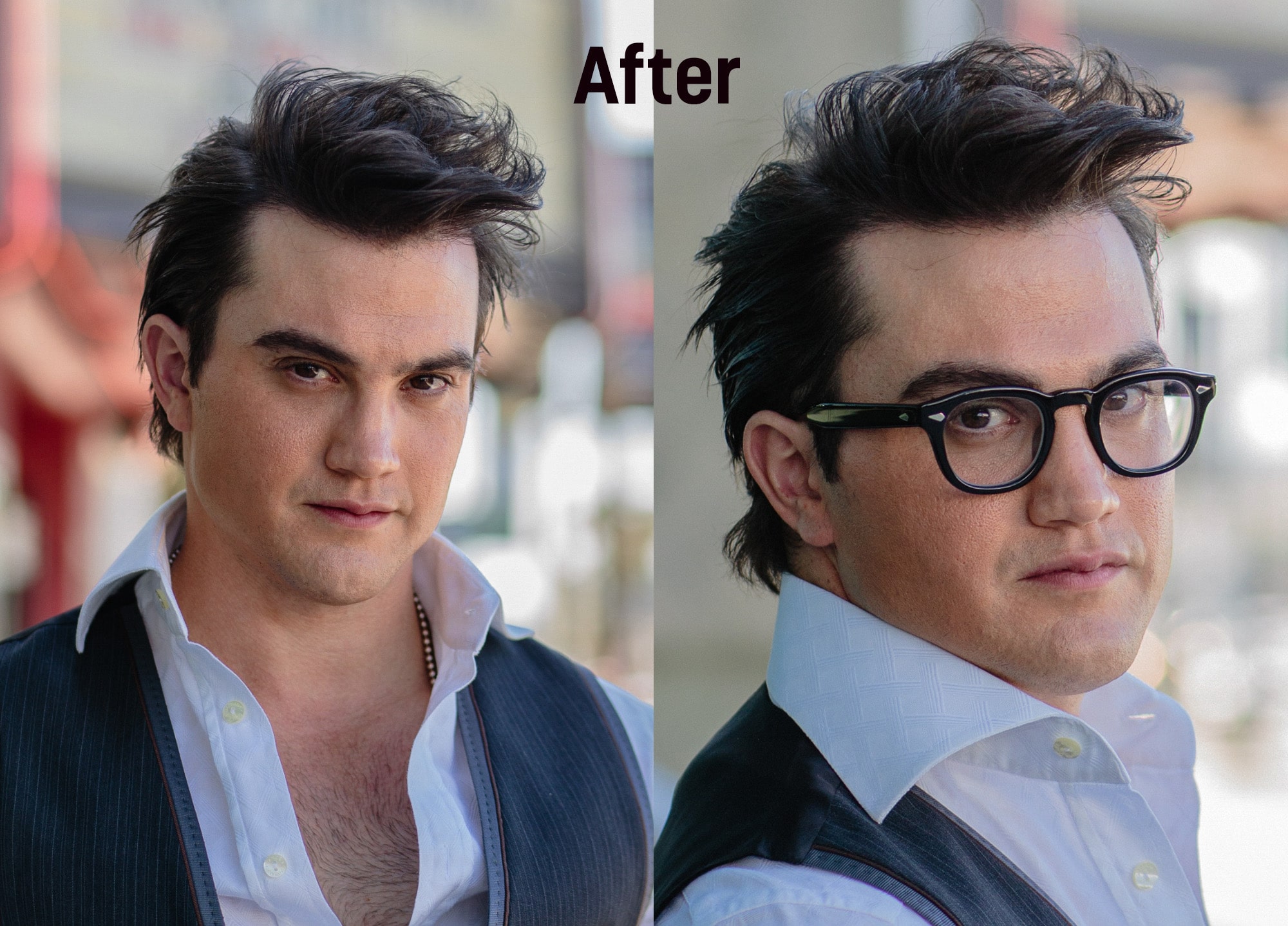
One-Year Result After 3,527-Graft Vitruvian FUE
The available case evidence documents the appearance following a 3,527-graft restoration involving the frontal hairline and mid-scalp.
The right-profile result is documented at one year after the procedure.
Norwood 3 / Pattern 1 Class 3 Hair Loss
The patient was documented as Norwood 3 / AlviArmani Pattern 1 Class 3. The preoperative record shows frontal recession together with thinning extending through the mid-scalp.
The surgical goal was to restore the frontal hairline while also increasing coverage through the mid-scalp rather than limiting treatment to the leading hairline alone.
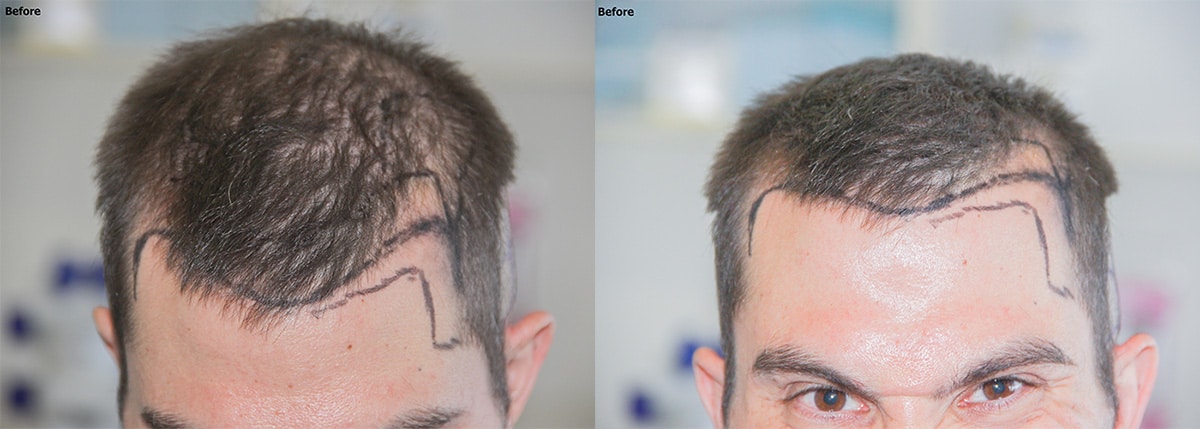
Connecting the Frontal Hairline With the Mid-Scalp
The documented procedure used 3,527 Vitruvian FUE grafts to address the frontal hairline and extend the restoration through the mid-scalp.
The case materials also describe attention to frontal symmetry, hairline detailing and transitions at the temporal edges as part of the design.
Frontal Hairline
Reconstructing the frontal hairline was a documented priority of the procedure and established the anterior portion of the restoration.
Mid-Scalp Coverage
Treatment extended posteriorly through the mid-scalp, making this broader than a hairline-only 3,500-graft case.
Additional Frontal Evidence at Follow-Up
The case includes an additional frontal result view that allows the restored anterior frame to be evaluated from another perspective.
The available record documents a one-year milestone for the case. The exact timing of this individual frontal image is not separately stated, so it is presented as supplementary result evidence rather than assigned an unsupported interval.
Watch This 3,527-Graft Case
Video provides additional context for the patient's restoration beyond the still photography.
Mid-Scalp
Approximately 3,500 Grafts Can Extend From the Hairline Into the Mid-Scalp
This case adds another distinct planning example to the 3,500-graft group. The procedure was not limited to the frontal hairline; treatment also extended through the mid-scalp.
That distinguishes it from documented cases in which a similar graft supply was concentrated more heavily in the frontal zones, or distributed among a different combination of treatment areas.
The documented one-year result also provides a later follow-up point for comparison with the earlier interim cases within the same graft-count range.
This does not mean every Norwood 3 patient requires 3,527 grafts. Appropriate graft requirements depend on recipient-area size, donor resources, existing native hair, hair characteristics and the goals of the individual restoration.
Understanding This 3,527-Graft Vitruvian FUE Case
How many grafts were used?
The documented procedure used 3,527 FUE grafts.
Which areas were treated?
The documented treatment plan addressed the frontal hairline and mid-scalp.
What was the patient's hair-loss classification?
The case record identifies the patient as Norwood 3 / AlviArmani Pattern 1 Class 3.
Was this a Vitruvian FUE procedure?
Yes. The documented procedure used Vitruvian FUE .
Were the temples treated?
The case materials describe temporal-transition design and a result image notes temple-angle closure. The explicit treatment description, however, identifies the frontal hairline and mid-scalp, so the temples are not separately classified as a documented operative treatment area.
How long after surgery was the documented result?
The case includes a documented one-year postoperative result.
How were the 3,527 grafts divided between treatment areas?
The current case record does not provide an exact graft-by-area allocation.
Does every Norwood 3 patient require approximately 3,500 grafts?
No. Graft requirements depend on recipient-area size, donor resources, existing native hair, hair characteristics and the goals of the individual restoration.
Learn More About the Team, Location and Patient Results
Explore the AlviArmani provider team and Beverly Hills clinic, compare additional patient results, or begin an individualized evaluation of your own restoration goals.
Your Hair Restoration Plan Is Individual
Graft count is only one part of planning. Your hair-loss pattern, treatment areas, existing native hair, donor resources and long-term goals all influence the appropriate approach.