
This patient received 4,000 grafts using Maximus FUE to restore the hairline and mid-scalp. The available case record includes immediate postoperative evidence, a documented 4-month follow-up and a 1-year postoperative result.
Before & After 4,000-Graft Maximus FUE
The procedure used 4,000 FUE grafts to restore the patient's hairline and mid-scalp. The case record describes a density-focused restoration across these treated areas.
The photographic record follows the case from the preoperative appearance through postoperative treatment, early growth at 4 months and the documented 1-year result.
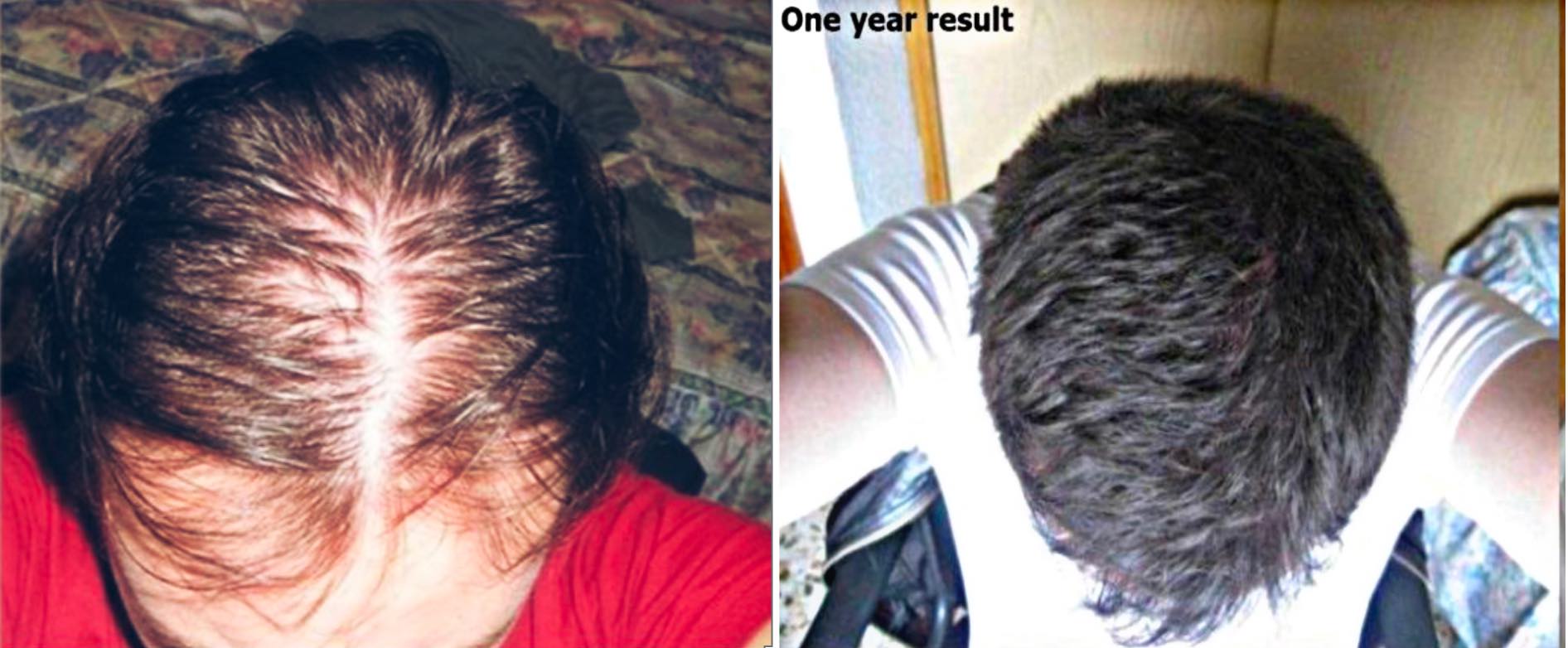
Hairline and Mid-Scalp Restoration Goals
The available case record identifies the hairline and mid-scalp as the areas selected for restoration.
A Norwood classification, exact procedure date and additional baseline measurements are not documented in the current case record, so they are not assigned to this case.
4,000 Grafts Concentrated Through the Hairline and Mid-Scalp
The documented treatment used 4,000 grafts with Maximus FUE to restore the hairline and mid-scalp.
This is important when comparing the case with other approximately 4,000-graft procedures. The graft number alone does not determine how far treatment extends across the scalp. In this case, the documented targets were the hairline and mid-scalp.
Hairline Restoration
The frontal hairline was one of the specifically documented recipient areas for the 4,000-graft procedure.
Mid-Scalp Coverage
Treatment extended posteriorly into the documented mid-scalp rather than being limited to the frontal edge.
Immediate Postoperative View
The postoperative photograph documents the recipient-site distribution following the 4,000-graft Maximus FUE procedure.

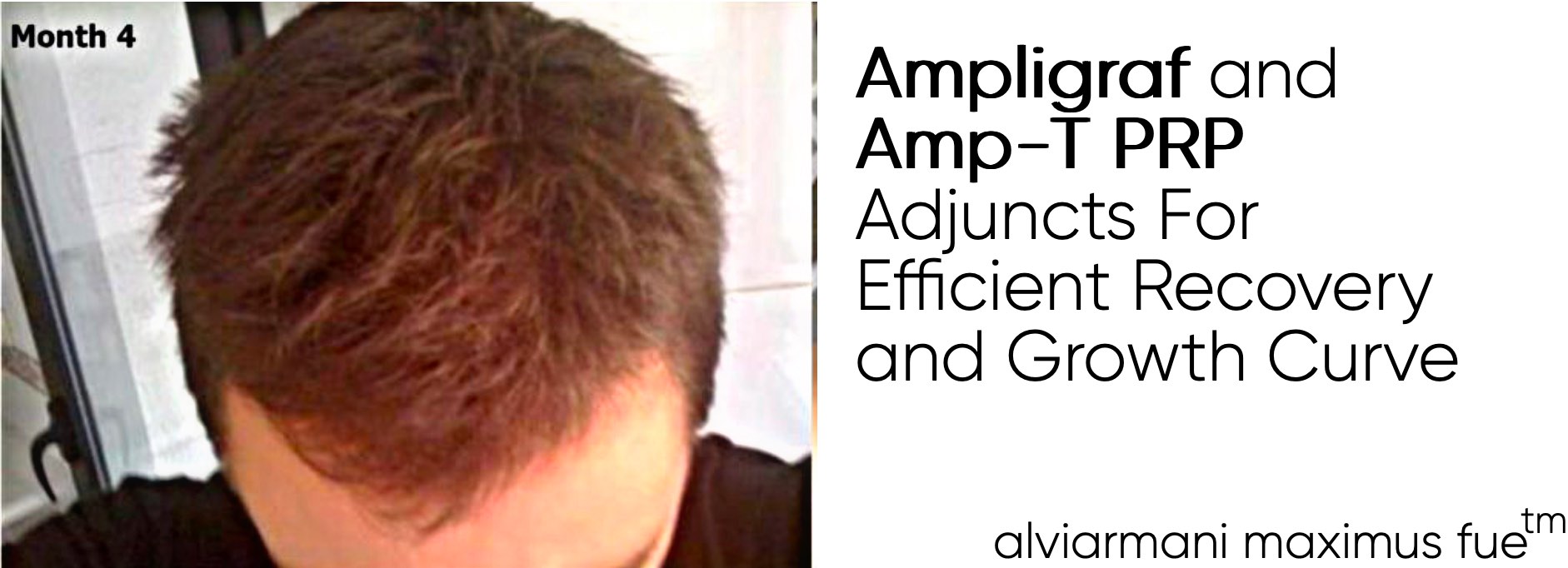
4-Month Postoperative Result
The available case record includes a documented photograph taken 4 months after the 4,000-graft procedure.
Four months represents an interim stage of the postoperative timeline rather than the endpoint of the case. The 1-year photograph below provides the later documented result.
One Year After 4,000-Graft Maximus FUE
The case record documents this photograph at 1 year following the procedure, providing a later view of the hairline and mid-scalp restoration.
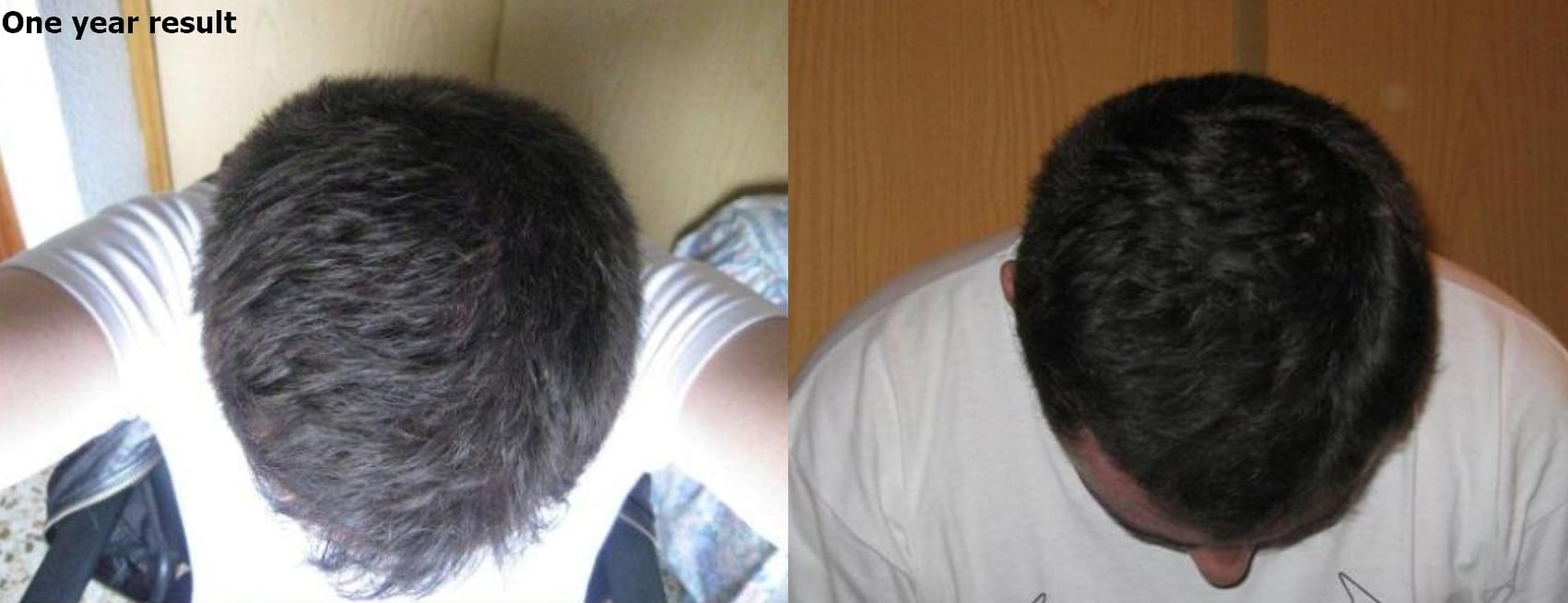
hairline + mid-scalp
A 4,000-Graft Procedure Can Be Focused on the Front and Mid-Scalp
This case provides an example of 4,000 grafts being directed to the hairline and mid-scalp rather than distributed across every area of the scalp.
That makes it useful to compare with other AlviArmani cases using approximately the same graft count but different treatment-area priorities.
This does not mean every patient with similar hair loss requires 4,000 grafts. Appropriate graft requirements depend on recipient-area size, donor resources, existing native hair, hair characteristics and the goals of the individual restoration.
Questions About This 4,000-Graft Maximus FUE Case
How many grafts were used in this hair transplant?
The documented procedure used 4,000 FUE grafts.
Which areas were treated?
The available case record identifies the hairline and mid-scalp as the treated areas.
Was the crown treated?
Crown treatment is not documented in the available case record. The documented recipient areas are the hairline and mid-scalp.
Was this a Maximus FUE procedure?
Yes. The case record identifies the procedure as a 4,000-graft Maximus FUE hair transplant.
How long after surgery were the result photos taken?
The available evidence includes a documented 4-month postoperative photograph and a later result documented at 1 year.
Were PRP or other adjunct treatments used?
The source case documents AMP-T PRP and Ampligraf operative solutions as part of the procedure. The available record does not establish that either adjunct independently caused the observed growth or recovery.
Does a 4,000-graft transplant always cover the same areas?
No. This case used 4,000 grafts for the hairline and mid-scalp. Other documented AlviArmani cases around the same graft count use different distributions depending on the patient's treatment areas and surgical plan.
Compare the Procedure, Results and Your Treatment Options
Explore the large-session procedure behind this case, compare additional patient evidence or begin an individualized graft evaluation.
Your Hair Restoration Plan Is Individual
Graft count is only one part of planning. Your hair-loss pattern, treatment areas, existing native hair, donor resources and long-term goals all influence the appropriate approach.