
A documented AlviArmani FUE case performed by Dr. Craig Barton in Salt Lake City using 3,000 grafts to restore the receded temples, hairline and frontal region. PRP was used as an adjunct to the surgical procedure. This was the first procedure in a two-procedure restoration series, and the case includes early postoperative evidence together with 4-month, 6-month and updated 1-year photography.
Stage 1: 3,000 Grafts to Rebuild the Frontal Frame
Dr. Craig Barton used 3,000 FUE grafts during the first procedure of this patient's two-procedure restoration series. This initial stage focused on the receded temples, hairline and frontal region.
The photographic sequence is particularly useful because it documents the same first-stage restoration through multiple postoperative milestones rather than showing only a single before-and-after endpoint.
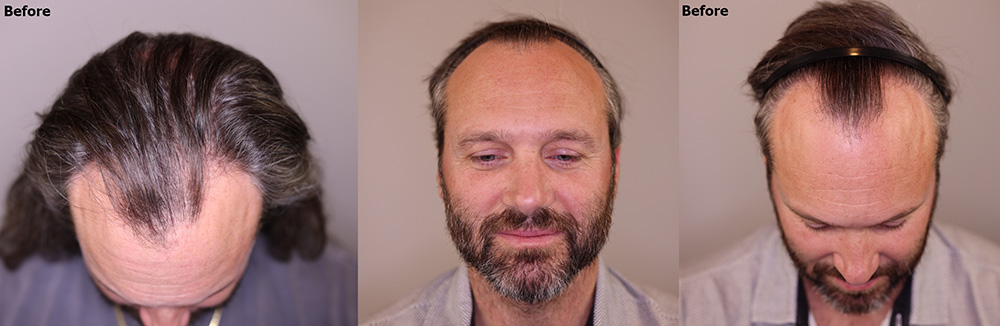
Receded Temples and Frontal Hairline
Before the first procedure, the documented photographs show substantial recession through the temporal areas and frontal hairline.
The first stage of the restoration was therefore directed toward rebuilding the frontal frame rather than attempting to complete the patient's entire restoration in one procedure.
A Staged Restoration Beginning With the Front
This 3,000-graft procedure represented the first stage of a two-procedure restoration series. Dr. Craig Barton concentrated the initial procedure on the patient's temples, hairline and frontal region.
Framing the case this way is important because the 3,000 grafts documented here represent the allocation for the first procedure rather than the patient's entire long-term restoration.
PRP was incorporated as an adjunct to the FUE procedure. The photography documents the patient's postoperative progression, but it does not allow the contribution of PRP to be isolated from the surgical procedure itself.
First-Stage Frontal Priority
The first procedure used 3,000 FUE grafts to address the temples, hairline and frontal region, establishing the frontal component of the patient's restoration.
Part of a Two-Procedure Series
This page documents the first procedure and its progression. A second procedure was subsequently performed as part of the patient's overall restoration plan.
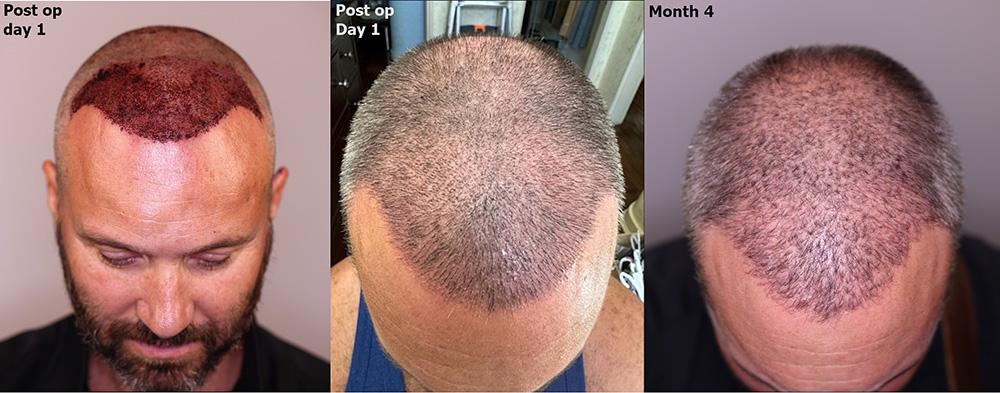
Immediate Post-Op to Month 4
The early progression image documents the recipient area immediately after the first procedure and again at approximately four months.
Four months represents an interim stage rather than the endpoint of the restoration. Including this photograph provides context for the later six-month and one-year results from the same procedure.
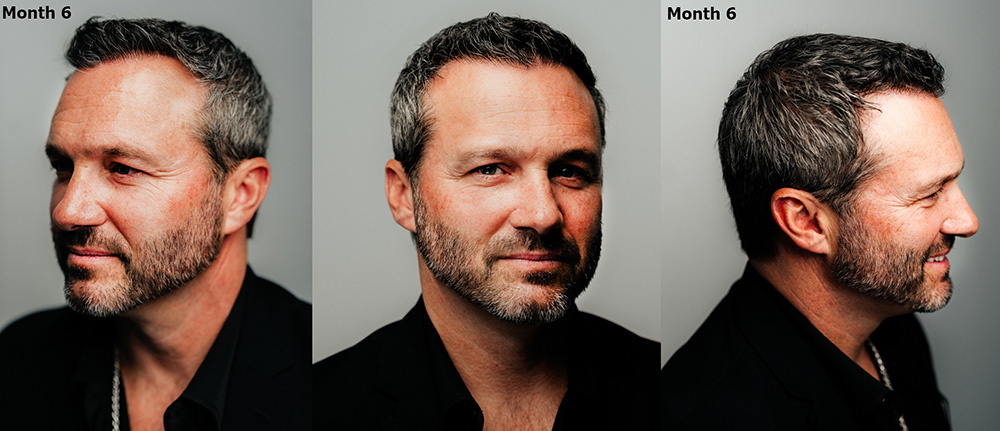
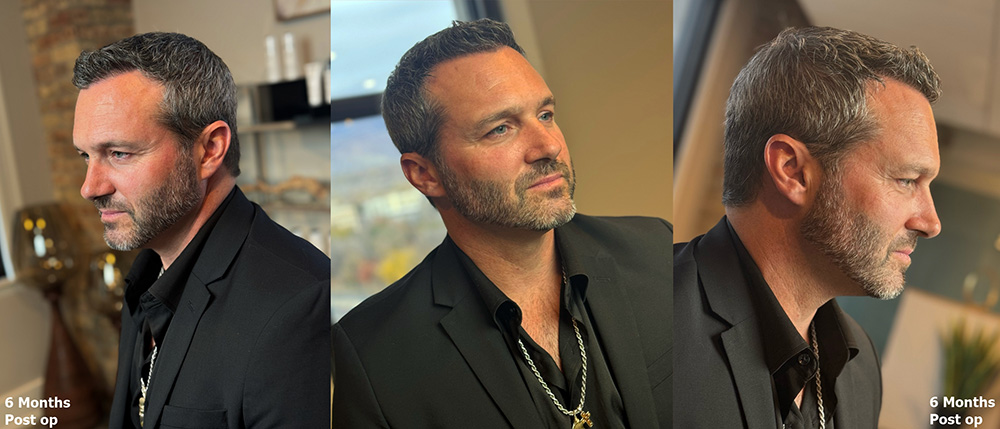
Interim Frontal Result at Six Months
At six months, the photographs document the reconstructed frontal frame from multiple angles.
Six months remains an interim follow-up point. These images are useful for understanding the progression of the first procedure before the later one-year update.
Later Progression From the First Procedure
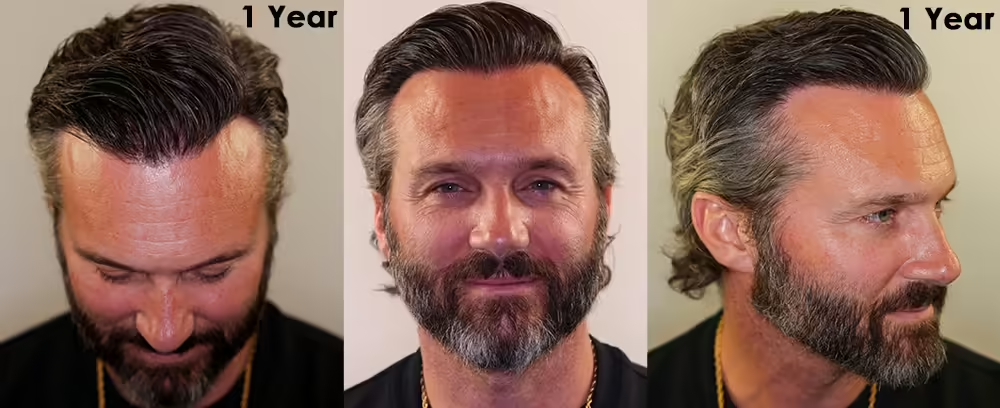
The one-year update provides a later view of the same frontal restoration than the earlier four- and six-month photographs.
This progression demonstrates why follow-up timing matters when comparing hair transplant results. Different images from the same procedure can represent substantially different points in the postoperative timeline.
Watch the First-Stage 3,000-Graft Result
Video provides another way to evaluate the frontal restoration beyond individual still photographs and helps show the result from additional angles.
of a staged plan.
A 3,000-Graft Result Can Represent One Stage of a Larger Plan
This case demonstrates why graft count should be interpreted within the context of the patient's overall restoration strategy.
The 3,000 grafts documented here were used during the first procedure of a two-procedure series, with this initial stage focused on the temples, hairline and frontal region.
The progression photographs then document that first-stage restoration from the early postoperative period through four months, six months and one year.
This does not mean every patient with frontal recession needs 3,000 grafts or two procedures. The appropriate graft count, treated areas and staging strategy depend on the individual patient.
Understanding This Staged 3,000-Graft FUE + PRP Case
How many grafts were used in the first procedure?
Dr. Craig Barton used 3,000 FUE grafts during the first procedure documented on this page.
Which areas were treated in the first procedure?
The first procedure focused on the receded temples, hairline and frontal region.
Was this the patient's only hair transplant procedure?
No. The 3,000-graft FUE + PRP procedure documented on this page was the first procedure in a two-procedure restoration series. This page focuses specifically on the treatment and progression from that first procedure.
Who performed this procedure?
The procedure was performed by Dr. Craig Barton in Salt Lake City.
Was PRP used with the FUE procedure?
Yes. PRP was documented as an adjunct to the FUE procedure. This case does not attempt to isolate how much of the postoperative progression can be attributed specifically to PRP.
Are the six-month photographs the final result?
No. The six-month photographs document an interim stage from the first procedure. Updated photography at one year is also included.
Does every patient with frontal recession need 3,000 grafts?
No. Graft requirements vary according to treatment-area size, donor resources, existing native hair, hair characteristics and the individualized restoration plan.
Explore the Physician, Location and More Patient Results
Your Hair Restoration Plan Is Individual
Graft count is only one part of planning. Your hair-loss pattern, treatment areas, existing native hair, donor resources and long-term goals all influence the appropriate approach.