
Long Hair FUE: Two Meanings, One Powerful Solution
AlviArmani • Educational Guide
Two Meanings, One Discreet Goal
People search “long hair FUE transplant” for two reasons: (1) How do I do a hair transplant procedure without looking shaved? and (2) Can I grow longer hair again after FUE? Both questions come down to preserving visible hair in the recipient area, managing the donor site strategically, and ensuring natural results with minimal “signs of surgery.” The goal of a long hair transplantation approach is discretion now—and styling freedom later.
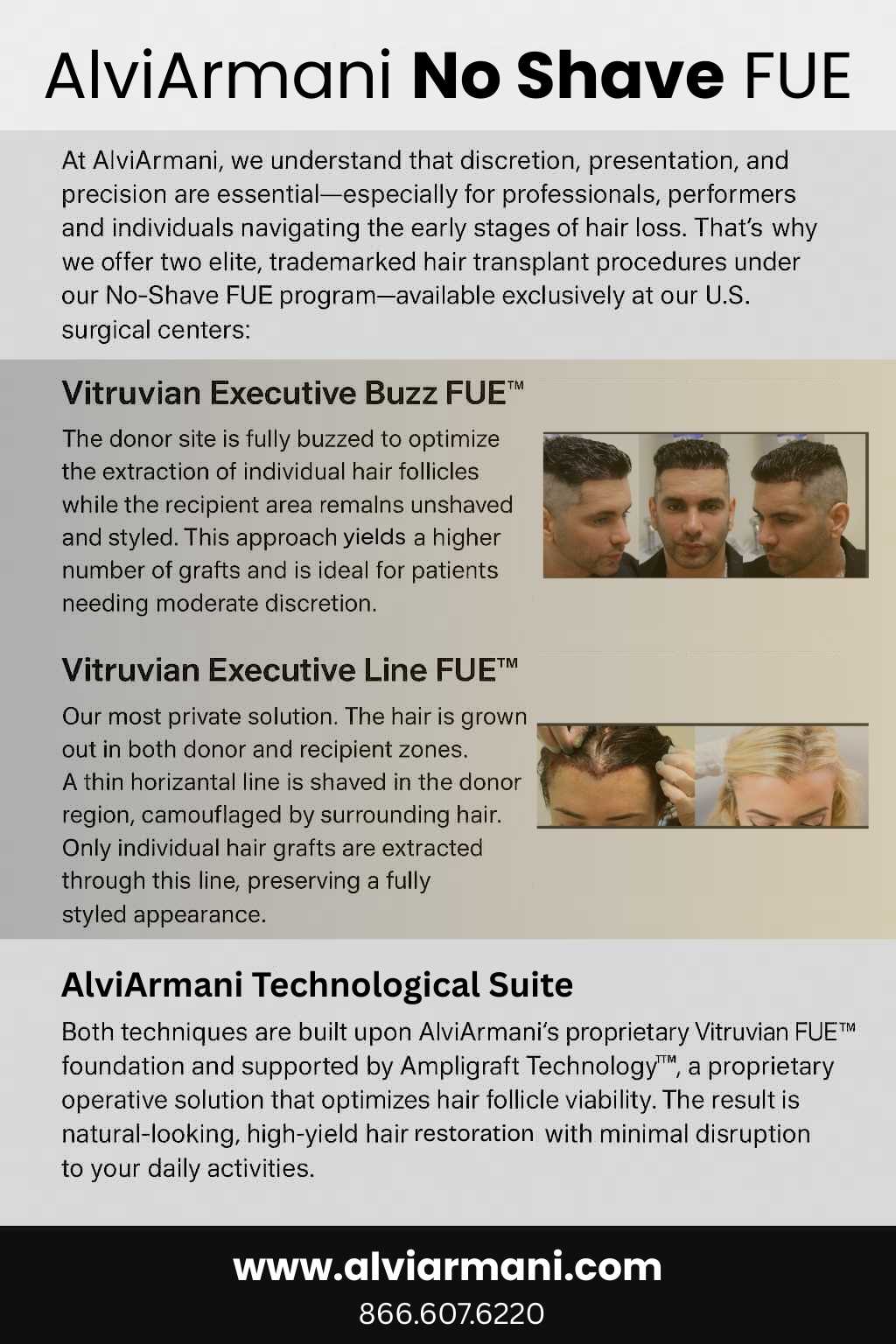
What Does “Long Hair FUE” Actually Mean?
Meaning #1: A discreet “no-shave” approach
In everyday search language, Long Hair FUE is another way of saying No-Shave FUE: a cutting edge option within modern fue methods. The core is still follicular unit extraction—also described as long hair follicular unit extraction, long hair follicular unit excision, or simply a fue procedure. The difference is how we manage short hair vs longer hair in the areas that matter for discretion.
Meaning #2: “Can I grow my hair long again after FUE?”
Yes. Once the healing process is complete and your individual hair follicles re-enter normal cycles, the new hair can be grown to your preferred length. In other words: the same hair strands you transplant behave like native hair. This matters for patients treating androgenetic alopecia and other common patterns of thinning.
Long Hair FUE is about discretion now, and styling freedom later—without compromising the final outcome.
Long Hair FUE = No-Shave FUE (How It Stays Discreet)
The defining goal of a long hair fue transplant is to maintain a normal appearance during the early window, so you can move through daily activities with confidence. The recipient area is preserved so your existing hairstyle stays intact, while the donor site is managed strategically to support efficient graft harvesting with minimal scarring.
Under the microscope, this is still the extraction of hair follicles one by one—protecting individual hairs and the surrounding tissue so each unit is viable for follicular unit transplantation. Planning is guided by hair characteristics such as curl/coil, caliber (the hair shaft thickness), and the natural exit angle of follicles.
| Element | Typical approach | Why it matters |
|---|---|---|
| Recipient zone | Hair preserved (stays long) | Helps conceal redness and reduces visible signs of surgery during early healing |
| Donor strategy | Targeted shaving / hidden zones in the donor | Optimizes graft harvesting while aiming for minimal scarring at the donor site |
| Planning + blending | Direction/angle-based placement | Supports natural flow and consistent hair density as growth matures |
| Technical demand | Higher precision required | A steeper learning curve than a traditional hair transplant workflow |
When patients ask to “preview” Long Hair FUE, they usually mean: (1) keeping visible hair in the recipient area so they look more normal during the early healing process, and (2) placing any trimming in the donor site where it can be concealed by surrounding hair. If you’re asking about true “instant” fullness from long hair grafts, that’s a separate technique and depends on candidacy and surgical planning.
Compared with a traditional hair transplant approach, No-Shave FUE emphasizes discretion. In well-planned cases, the goal remains the same: natural results and a strong, consistent hair density pattern over time.
Can You Grow and Wear Your Hair Long After an FUE Hair Transplant?
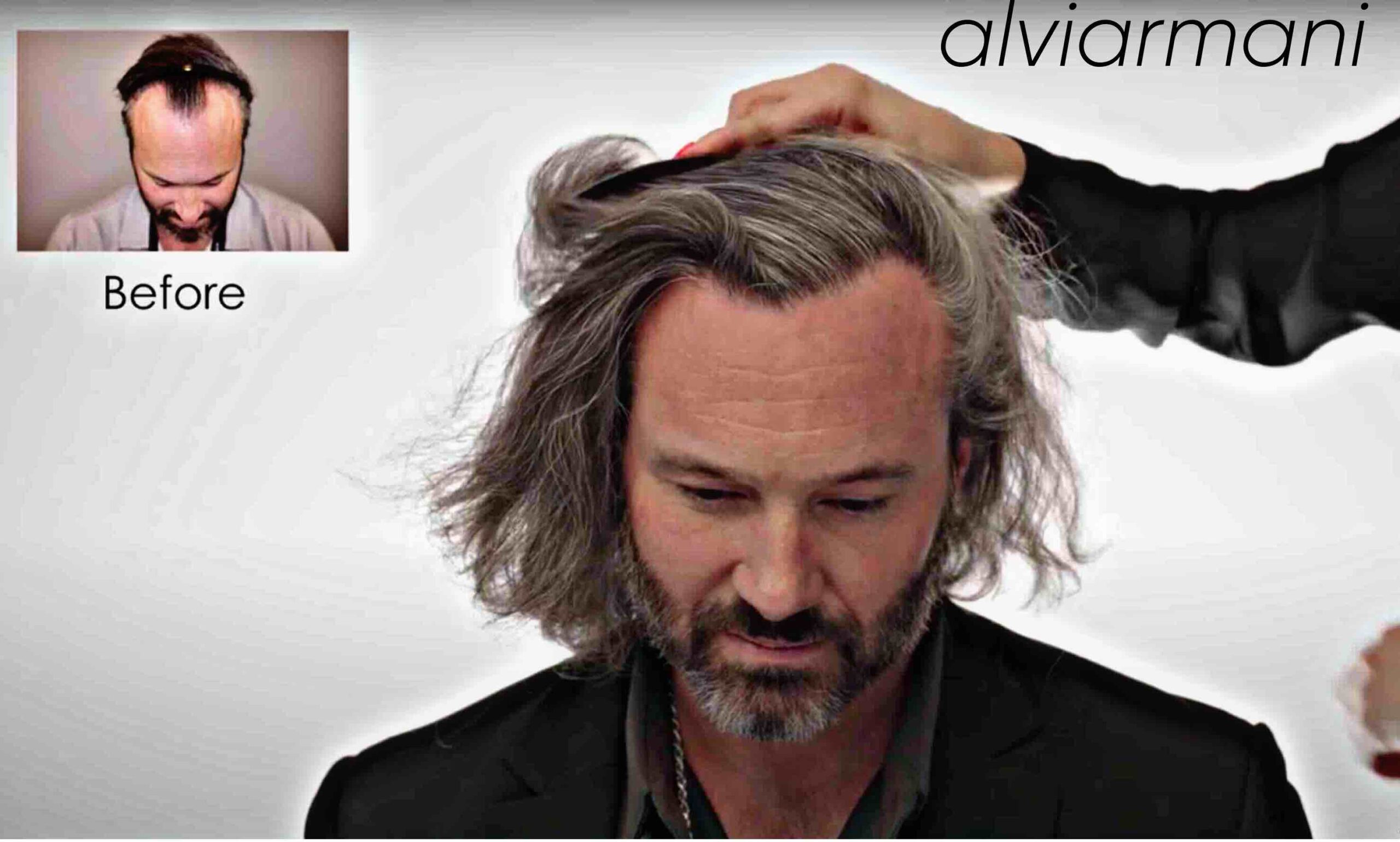
Real-world proof: Watch our comb-through result videos to see natural movement, styling, and mature density.
Many patients ask about long hair grafts and “instant” appearance. The bigger driver of discretion is preserving the surrounding hair so early healing is less obvious.
The simple answer: yes
In a properly planned hair transplant procedure, transplanted follicles are your permanent hair. After the healing process, those follicles can produce hair that you can wear long, cut short, and style normally— because it is your own hair. This is the long-term promise of long hair transplantation.
- Follicles are placed to match direction, angle, and blending for natural results
- Once mature, hair can be worn as short hair or longer hair without special restrictions
- Your return to normal daily activities depends on aftercare and your individualized plan
A natural look depends on placing each follicle to match your native exit angle and direction. This helps the new hair strands lay flat, blend, and style naturally.
Early shedding can be normal after hair transplantation. New growth returns gradually over months as follicles cycle back into anagen. Ask your team what to expect during the first weeks of the recovery period.
Timeline: What to Expect
- Days 1–7: grafts anchor; early healing process begins
- Weeks 2–3: redness settles; you may return to most daily activities per instructions
- Weeks 3–6: shedding phase (often normal)
- Months 3–4: early regrowth begins
- Months 6–9: noticeable hair density improvement
- Months 9–12: mature result; hair can be worn longer and styled freely (your final outcome)
The discretion advantage is most valuable early—especially if you want to minimize visible signs of surgery while healing.
Best Candidates
Great fit if you…
- Need a discreet recovery for work, travel, or lifestyle
- Prefer preserving visible hair in the recipient
- Want refinement or density enhancement with a natural look
- Have hair characteristics (caliber, curl, styling) that benefit from a no-shave plan
- Are a good candidate based on donor supply, pattern, and goals
Your surgeon will confirm whether you’re an ideal candidate based on donor characteristics, scalp laxity, and the overall plan.
Considerations
- Donor trimming strategy varies by case and graft goals
- The technique has a steeper learning curve and is more team-dependent
- Aftercare consistency supports outcomes
- For select patients, body hair transplantation may be discussed when scalp donor is limited
Evidence and Further Reading
If you like to go deeper, you can find peer-reviewed background on FUE outcomes, transection, and technique evolution on Google Scholar. During consultation, we’ll translate the literature into what matters for you: donor strategy, angle planning, and realistic expectations for density and timeline.
Tip: search phrases like “follicular unit extraction outcomes,” “no-shave FUE,” and “long hair follicular unit extraction” on Google Scholar.
Frequently Asked Questions (FAQ)
Is “Long Hair FUE” the same as “No-Shave FUE”?
In most patient searches, yes. “Long Hair FUE” commonly refers to a no shave fue approach that prioritizes discretion—especially by preserving visible hair in the recipient area.
Does No-Shave FUE mean the donor is never shaved?
Not always. The donor site strategy can range from a hidden line shave to broader trimming depending on how many grafts are needed, while keeping the recipient preserved for discretion.
Will this leave obvious signs of surgery?
The goal is to reduce visible signs of surgery early by preserving recipient hair. FUE is designed for minimal scarring, but healing varies and aftercare matters.
Can I grow my hair long again after FUE?
Yes. Once the recovery period is complete and follicles resume normal cycles, you can grow the new hair to your preferred length and style it normally.
How is this different from a traditional hair transplant?
“Traditional hair transplant” often refers to older strip-based workflows or more visibly shaved approaches. With modern FUE, follicles are extracted individually and placed to match angle and direction for natural results—with an emphasis on discreet healing.
If discretion is your priority, review the full No-Shave FUE technique and candidacy details.
Medical information on this page is educational and not a substitute for an in-person evaluation. Results vary based on anatomy, donor supply, and aftercare.