
Alvi Armani - FUE Hairline lowering Procedure
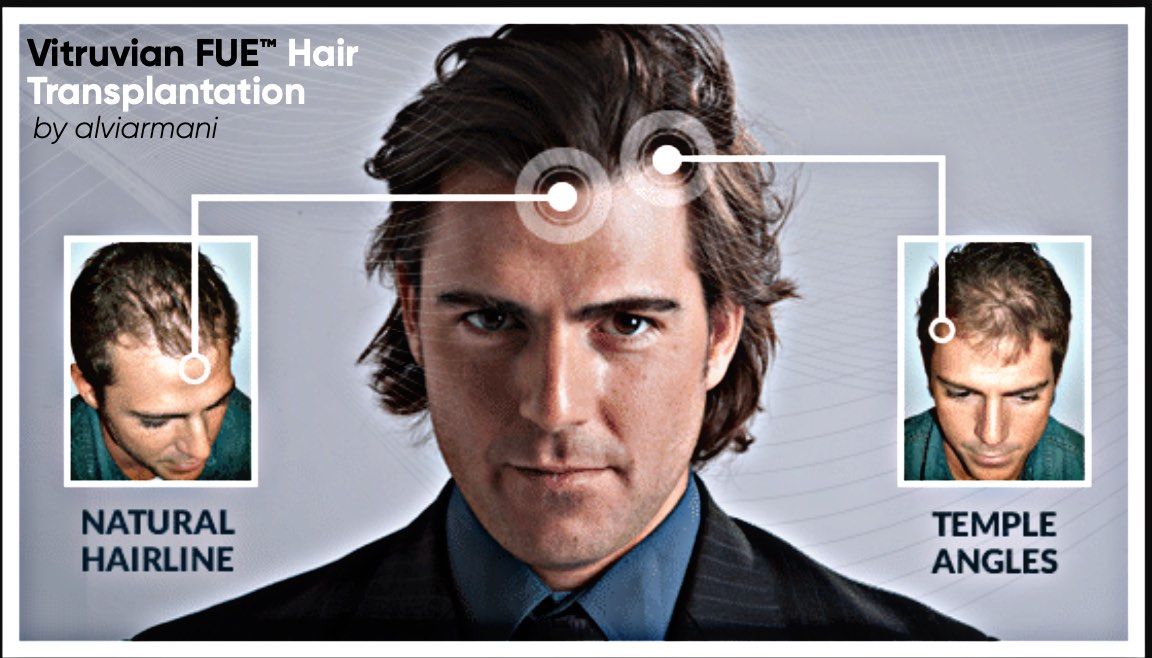
A Guide to FUE Hairline Lowering with AlviArmani
Redefine your hairline. Refine your confidence.
Are You A Candidate?
At AlviArmani, hairline lowering isn’t just cosmetic—it’s a restoration of facial harmony. For those with high foreheads or early signs of hair recession, our minimally invasive hair restoration procedure uses advanced FUE techniques to sculpt a natural hairline without linear scarring. Guided by our proprietary Vitruvian FUE™ Design, we align facial proportions, symmetry, and identity into every result.
Our approach isn’t limited to aesthetics—it’s rooted in how your facial features function together. By designing a hairline that holistically complements bone structure and hair flow, we create harmony that enhances confidence in subtle, powerful ways.

What Is Hairline Lowering and Who Is It For?
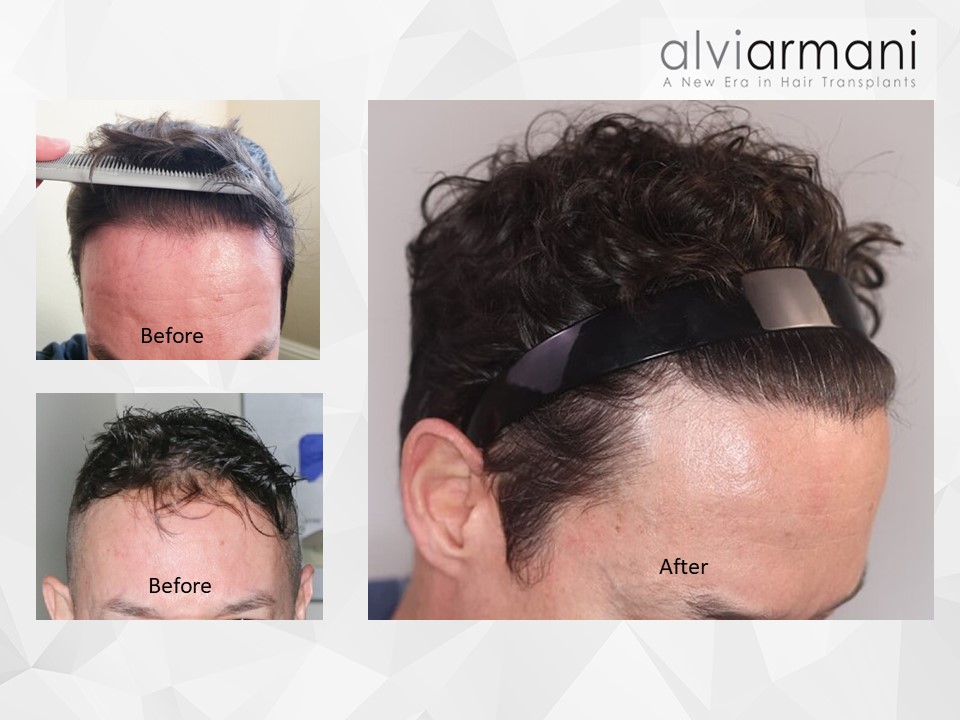
Hairline lowering is more than a cosmetic adjustment—it's the artistic re-invention of the height of your forehead to create a balanced, age-appropriate frame. Whether addressing a disproportionately large forehead, correcting a receding hairline, or seeking facial feminization surgery, our plans are grounded in science and artistry.
Every patient is different. We develop a bespoke plan using scalp laxity, donor evaluation, history of future hair loss, and anatomical mapping—ensuring your result reflects both long-term goals and immediate expectations.
Who Can Benefit?
- High Hairlines or Receding Temples: Restore balance to the upper face.
- Gender-Affirming Refinement: Feminize or masculinize the hairline with precision.
- Stable Hair Loss Patterns: Ideal for lasting outcomes with fewer adjustments.
Female patients often combine hairline lowering with temple refinement for symmetry and proportion.
FUE vs Forehead Reduction
Surgical Forehead Reduction (Scalp Advancement): A surgical procedure under general anesthesia to advance the scalp. While immediate, it may involve a visible incision line, nerve risk, and less contour control.
FUE Hairline Lowering: Uses your own follicles with no scalpel and no stitches, and greater control over shape and temple framing.
Perfect Hairline Restoration & Density Secrets
Prefer YouTube? Watch “Hairline Lowering” on YouTube
Advancements in Hairline Design: The Science Behind Vitruvian Precision™
Since 1999, Vitruvian FUE™ Design has guided every AlviArmani procedure, combining classical ideals of symmetry with modern innovation. Today, AI facial mapping and biometric modeling confirm what we’ve practiced for decades. Explore our dedicated Hairline Lowering page to see the artistry in action.
- M-shaped hairlines benefit men seeking natural masculinity.
- Rounded, downward-sloping contours best suit female and feminization cases.
We evaluate golden-ratio alignment, brow height/arch, temple curvature, hair direction/curl, and harmony with your features and heritage.
Graft Calculations for Hairline Lowering
For hairline lowering, we focus on Zone 1 (hairline & temples) and Zone 2 (frontal scalp)—the most visible areas defining facial framing and symmetry. See examples in our 1,800-graft case and 1,075-graft case.
Natural Density by Ethnicity
- Caucasian: 90–100 FU/cm² | 60–70 μm shafts
- Middle Eastern/Mediterranean: 80–90 FU/cm² | 70–90 μm, thicker shafts
- South Asian: 60–80 FU/cm² | 70–80 μm
- African Descent: 50–70 FU/cm² | 80–100+ μm, curl pattern amplifies coverage
Thicker or curlier hair often requires fewer grafts for the same visual fullness.
AlviArmani Density Goals (Zones 1–2)
| Zone | Target Density (FU/cm²) | Avg Zone Size (cm²) | Estimated Grafts Needed |
|---|---|---|---|
| Zone 1: Hairline & Temples | 50–70 | ~30 | 1,500–2,100 |
| Zone 2: Frontal Scalp | 45–60 | ~40 | 1,800–2,400 |
The Illusion of Density
- Micro-irregularity at the hairline for realism.
- Angulation and direction to match natural flow.
- Strategic use of multi-hair grafts to enhance fullness.
Not all graft counts are equal—design and distribution determine impact today and adaptability to future hair loss.
The Challenge of Temple Angles
When lowering the hairline, one of the most technically demanding elements is recreating the temple angles. These are the lateral transitions where the hairline meets the temples, and they define the facial frame more than almost any other feature.
- Natural Flow: Hairs must be placed at extremely acute angles—often 10–15 degrees from the skin—to mimic natural temple growth.
- Directional Changes: Follicles change orientation rapidly as they curve downward along the temple point, requiring meticulous planning.
- Density & Softness: Too much density looks harsh; too little creates gaps. Achieving balance is an art and science.
Only the best hair restoration clinics are able to replicate temple angles correctly. At AlviArmani, our Vitruvian FUE™ method and decades of artistry allow us to restore temple points that blend seamlessly with your natural profile—creating a youthful, harmonious look without detectable work.
The AlviArmani Experience: From Initial Consultation to Final Results
- Vitruvian Facial Analysis
- Donor Site Evaluation and density assessment
- Preoperative Enhancements
- Vitruvian FUE™: Microsurgical, physician-led grafting on an outpatient basis
Adjunct Therapies
- Amp-T-PRP to stimulate growth
- Ampligraf Pre & Post formulas for optimal healing
- Local anesthesia in a luxury surgical setting
- One seamless session with transformative impact
Recovery Timeline & Aftercare
- Days 1–14: Minor swelling/redness; avoid strenuous activity
- Months 1–3: Temporary shedding; grafts enter natural cycle
- Months 3–6: Visible growth, softening of contours
- 12 Months+: Fully integrated new hairline with long-term stability
Why Patients Choose AlviArmani
- Aesthetic Excellence: We sculpt, not stamp
- Technology Without Compromise: Regenerative science & advanced harvesting tools
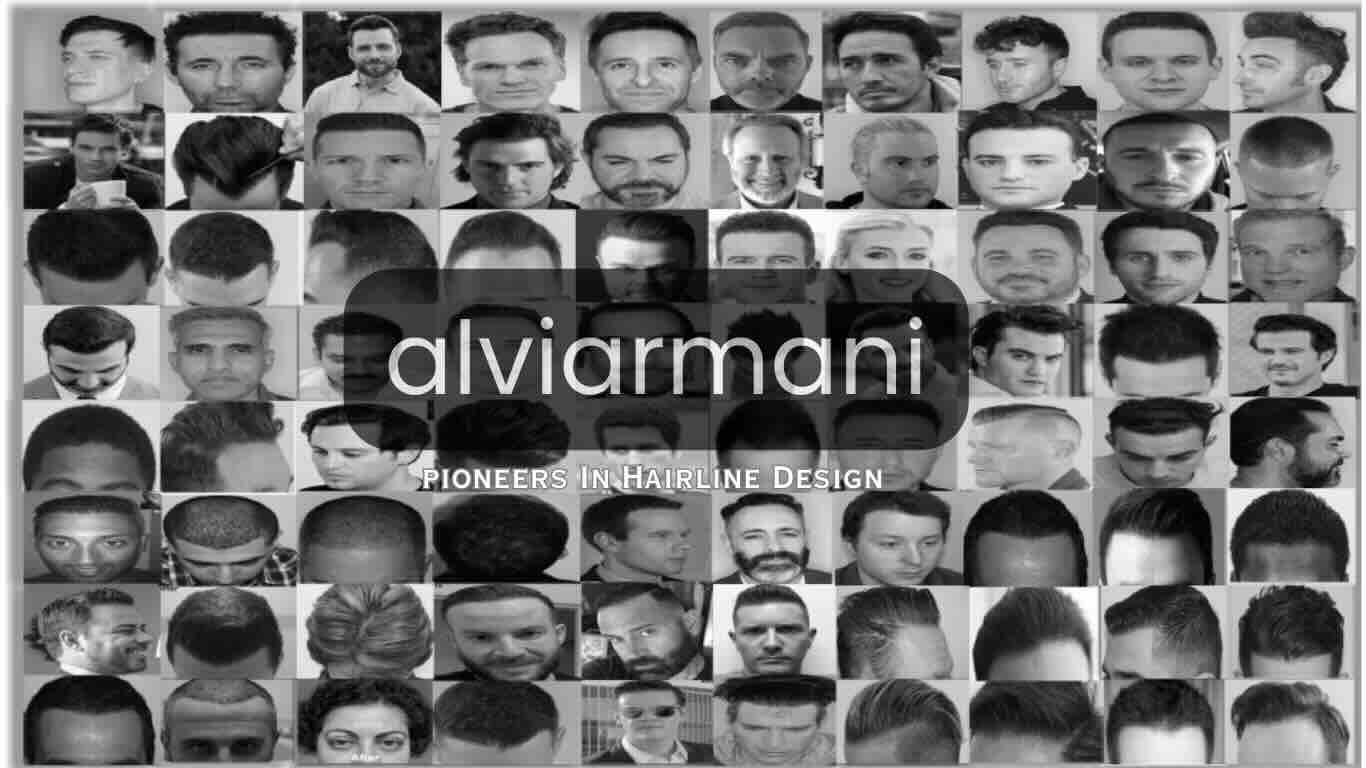
- Real Patients. Real Results: Thousands of transformations since 1999
- Vitruvian Design™: Personalized symmetry rooted in the golden ratio
- Reputable Clinic: Led by skilled reconstructive surgeons with global recognition
Frequently Asked Questions
Is hairline lowering with FUE a safe procedure?
Yes. Performed on an outpatient basis under local anesthesia, it avoids general anesthesia and large incisions, minimizing risks compared to a traditional forehead reduction procedure.
How many grafts do I need for hairline lowering?
Most patients require between 1,500–2,400 grafts across Zones 1–2, depending on zone size, natural density, and hair shaft diameter/curl pattern. See our 1,800-graft and 1,075-graft case studies.
Will there be a visible scar?
No. Unlike surgical scalp advancement, FUE avoids a linear incision line. Tiny dot scars in the donor zone are typically undetectable.
Am I an ideal candidate for hairline advancement?
You may be an ideal candidate if you have a high hairline, stable hair-loss pattern, and sufficient donor supply. We also assess facial proportions for balance and longevity.
How long until I see final results?
New growth typically begins at 3–6 months, with final results visible by 12–15 months as the new hairline fully matures.
Ready to Reshape Your Future?
If you’ve considered hairline correction, temple framing, or reducing forehead height, FUE offers precision without compromise. Explore our FUE Hair Transplant overview and the Vitruvian FUE™ method for deeper context.
Part of the Hairline Design series on facial framing, natural hairline creation, temple architecture, and hair restoration planning.