
Hair Transplant Repair & Scar Revision
FUT Strip Scar Revision and Hair Transplant Repair
Expert hair transplantation for visible FUT strip scars and FUE scarring. We restore the frontal hairline, refine hair density, and re-design recipient areas for a more natural appearance. Our approach blends hair restoration surgery, selective follicular unit extraction, and, when helpful, scalp micropigmentation to deliver natural results that fit your life.
- Camouflage linear scars and soften scar tissue
- Rebuild with single-hair units for a soft, natural transition
- Plan number of grafts based on donor supply, coverage goals, and style
Beverly Hills / Los Angeles
Flagship surgical center for complex repair, hairline naturalization, and high-density artistry. Discreet No-Shave options available when appropriate — led by an experienced hair transplant surgeon.
Salt Lake City, Utah
Advanced repair and scar revision led by Dr. Craig Barton, with the same Vitruvian FUE™ approach in a serene, private setting.
Why people seek repair
- Visible FUT (strip) scar that limits hair length in the donor area
- Low yield or hair plugs creating an unnatural appearance in the frontal hairline
- Patchy donor hair or areas of the scalp with poor hair growth after a failed hair transplant
- Bad hair transplant design (wrong angles or wrong direction) that needs corrective work
- Hair loss progression after a prior procedure requiring a strategic update
- Unsatisfactory hair transplant results from another hair transplant clinic
How repair with FUE works
We plan your hair transplant procedure around realistic goals, donor supply, and future hair growth. Using refined follicular unit extraction (FUE), we harvest micro-selected hair grafts and place them as follicular unit grafts to break up straight lines, enhance coverage, and restore a more natural appearance. We often integrate scalp micropigmentation for contrast optimization.
Depending on scar width and elasticity, a limited follicular unit transplantation (FUT) or revision may be considered; many patients benefit most from FUE camouflage to reduce detectability at practical hair lengths.
FUT Strip-Scar Revision vs. FUE Scar Camouflage
| Aspect | FUT Strip-Scar Revision | FUE Scar Camouflage |
|---|---|---|
| Best for | Wide or stretched linear scars | Narrow/medium scars; breaking up straight lines |
| Goal | Narrow the scar surgically | Visually hide the scar with surrounding hairs |
| Hair length flexibility | Improved vs baseline | Often allows shorter hair with less detection |
| Can combine with SMP? | Yes | Yes — common for optimal blending |
We’ll advise the right path after assessing scar width, vascularity, blood flow, donor supply, and style goals.
Repair Results: Before / After
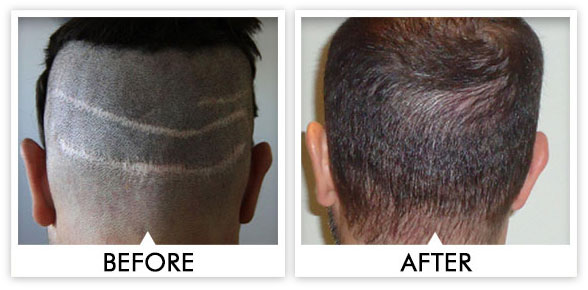
FUT Strip-Scar Camouflage — Comparison
Classic linear FUT strip scar concealed using targeted FUE grafting to break up the line and improve hair-length flexibility. The approach protects existing hair follicles while adding strategic transplanted hair for coverage.
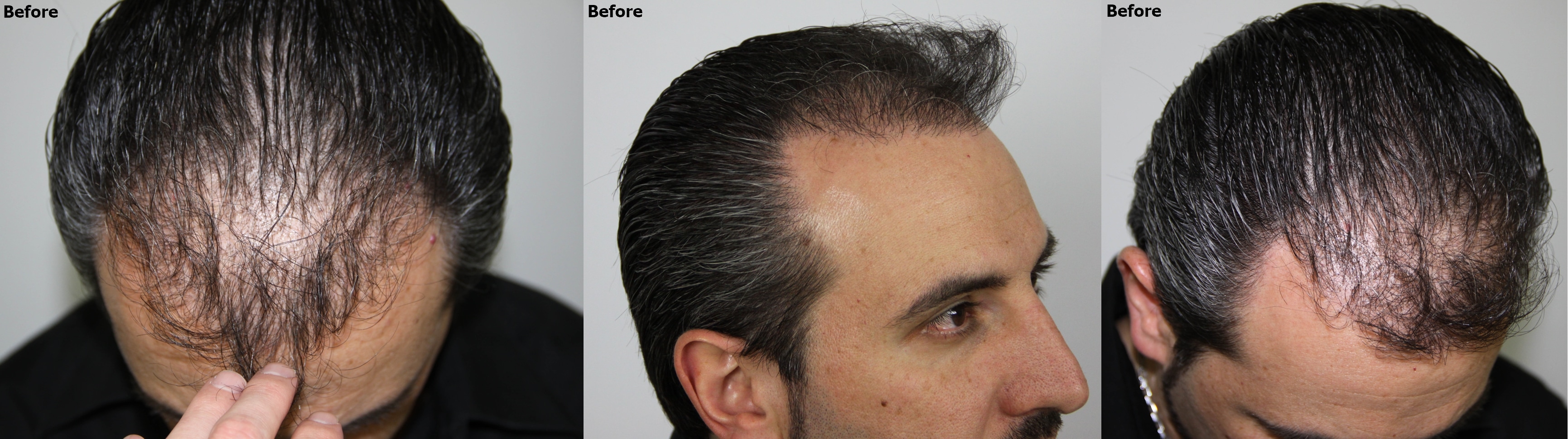
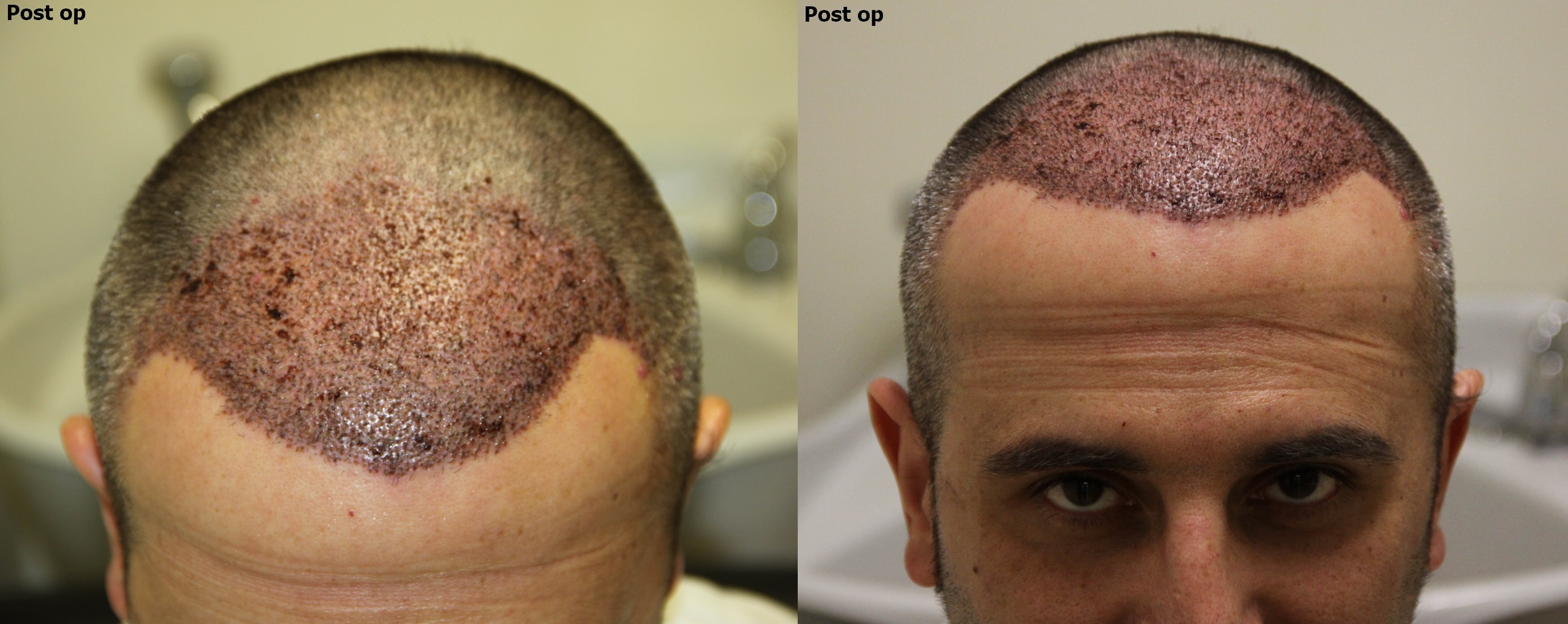
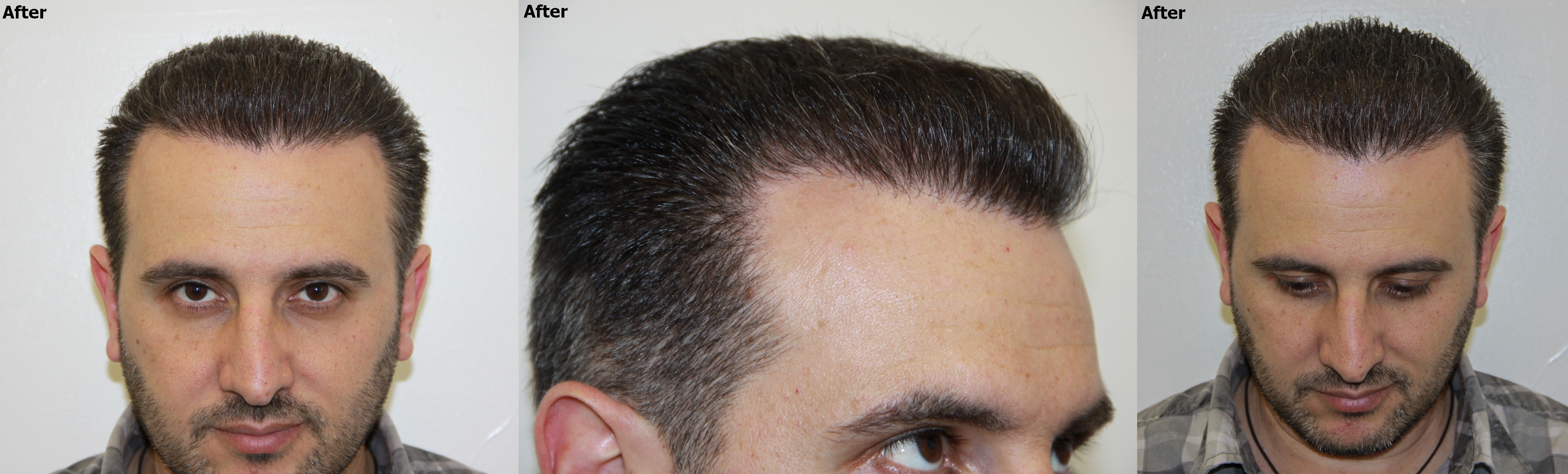
Frontal repair after failed FUE elsewhere — 2,559 grafts
Mid-30s male; poor hair growth and sporadic yield after outside clinic. 2,559 FUE in Beverly Hills to restore the entire front half and rebuild the frontal hairline with single hairs for a soft, natural appearance.
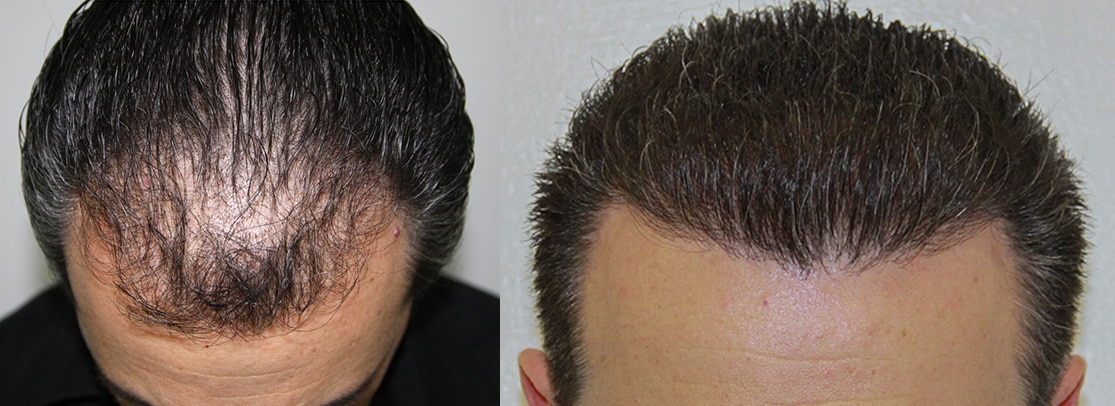
Pluggy hairline, sparse density — 2,547 grafts
Prior FUE in Europe with low yield and recipient scarring. 2,547 FUE placed in the frontal region to repair, add hair density, and naturalize the hairline. Strategic graft removal of mis-angled units helped reduce detectability.
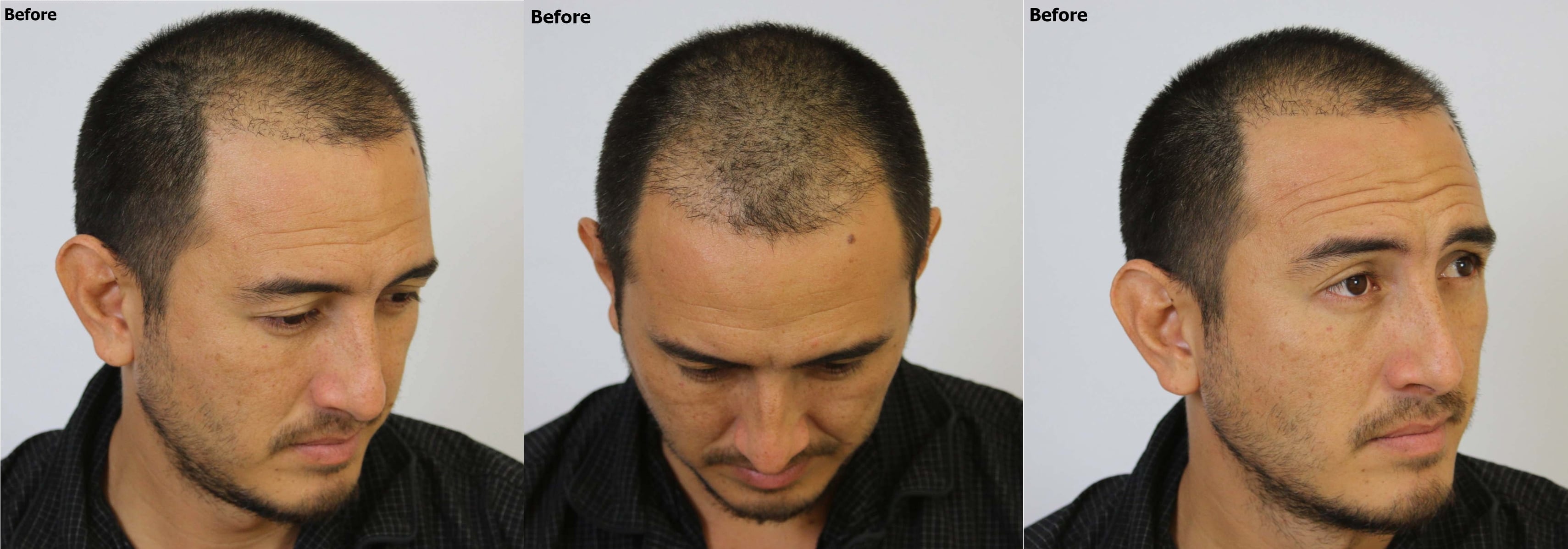
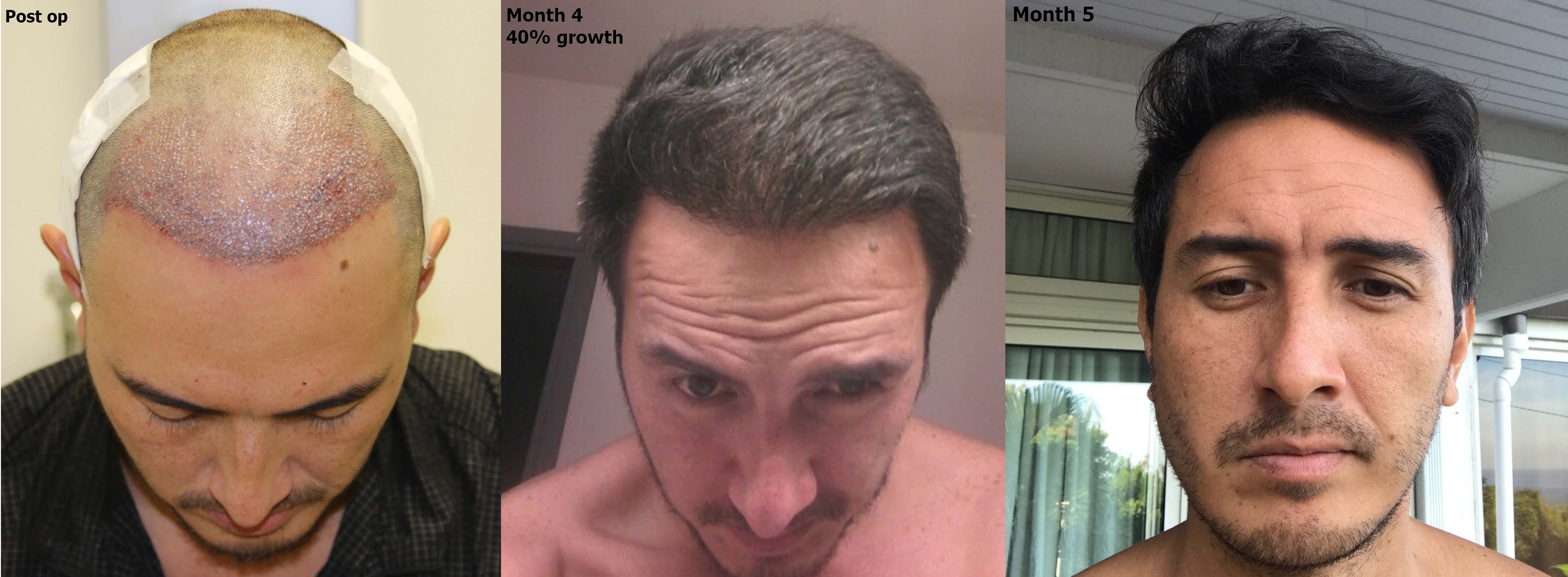
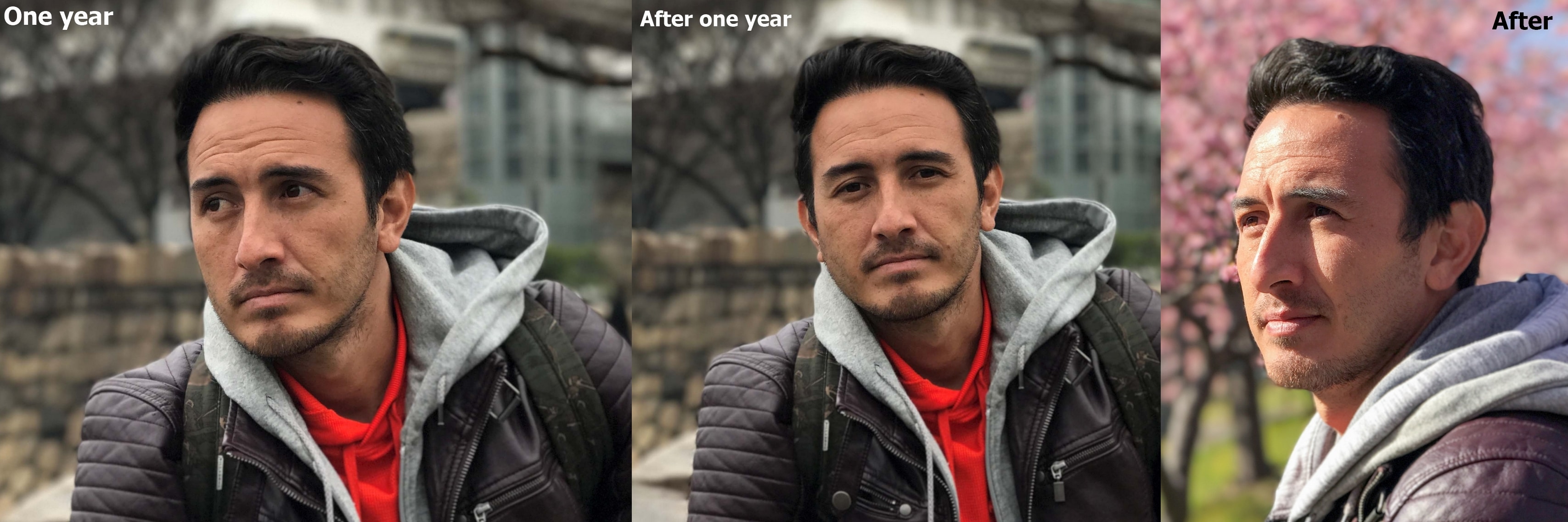
International repair & hairline lowering — 5,301 grafts (2 sessions)
Patient traveled from Italy after disappointing result in Europe. Total 5,301 FUE over two procedures to lower the hairline, repair frontal region at high density, and restore the mid-scalp. Careful planning balanced recipient areas vs donor area preservation for long-term stability.
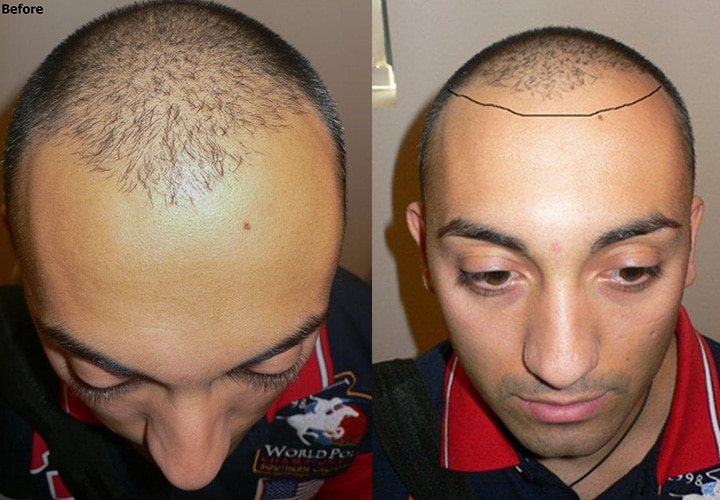
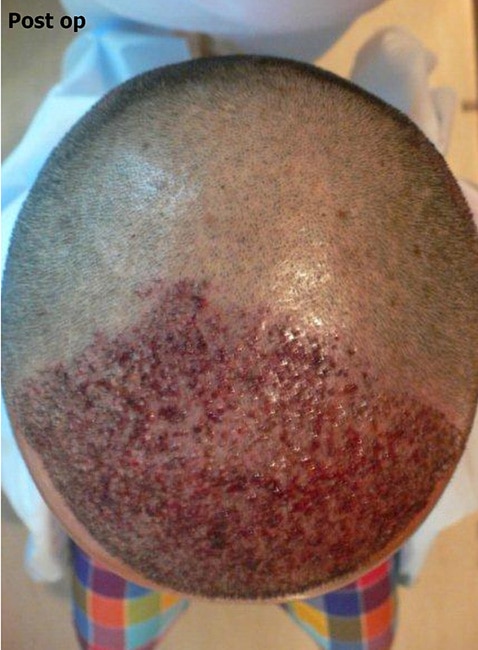
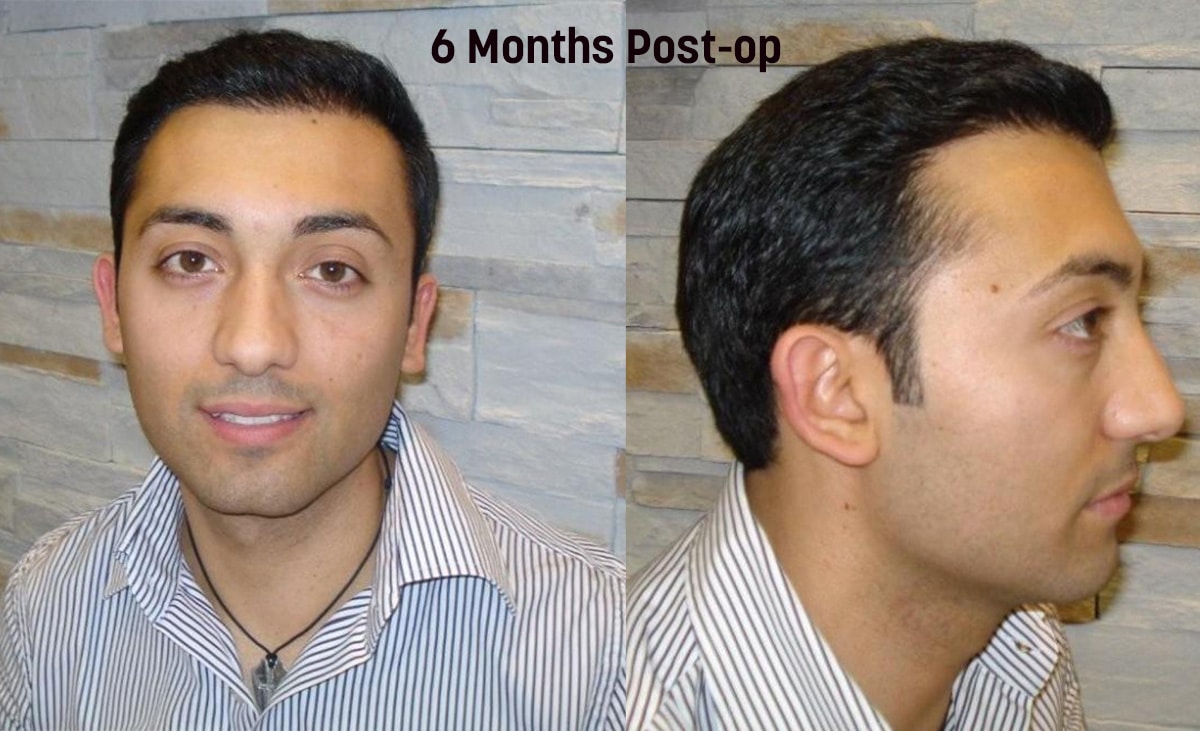
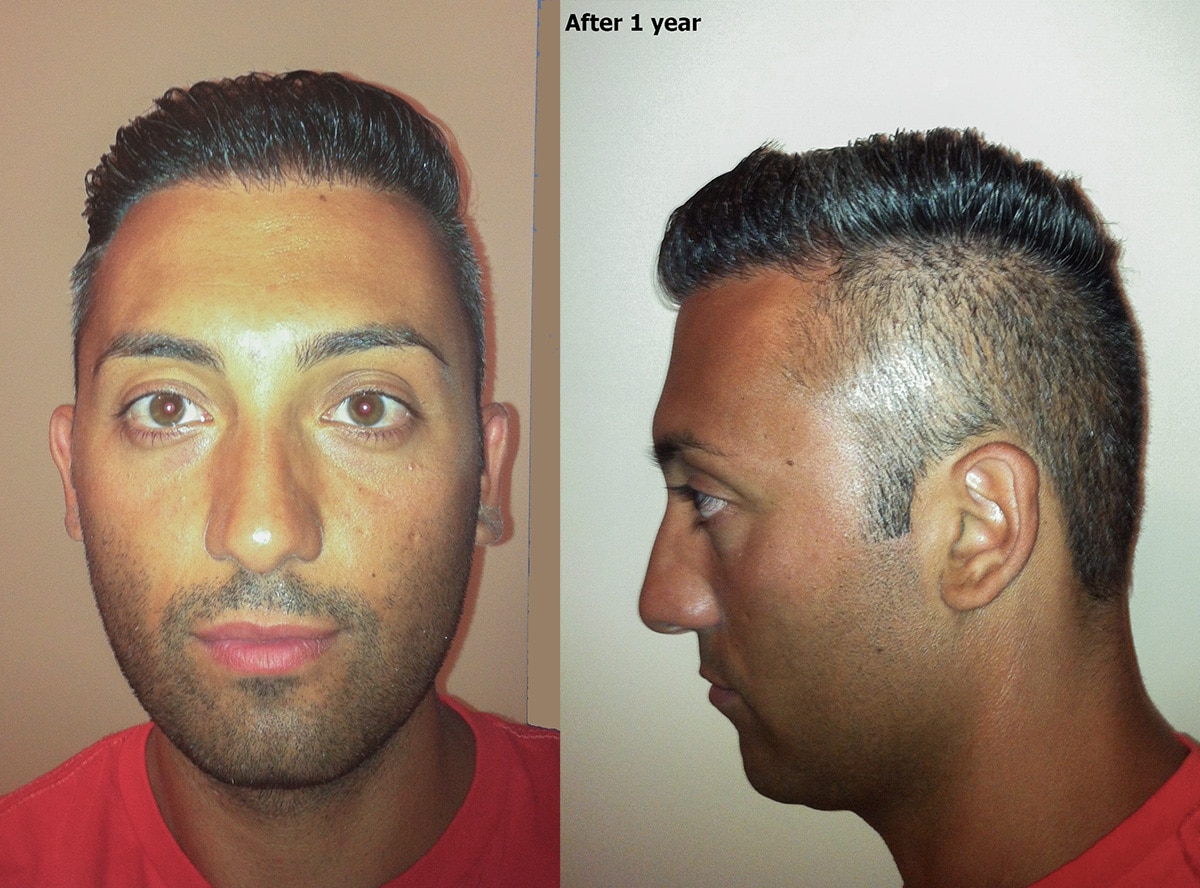
Unnatural prior work → naturalized — 2,559 grafts
Thin, wispy growth after prior clinic. 2,559 FUE to restore Zones 1–2 and fix the result. We focused on single hairs along the leading edge to recreate a soft feathered look and avoid the wrong direction seen with older techniques.
Areas We Serve
Many patients travel for repair. Most common locations include:
Key Concepts in Hair Restoration Repair
Successful repair blends the science of hair restoration with the art of design. We evaluate the donor area, the recipient areas, and the areas of the scalp most visible in your daily life. From there, we define the optimal number of grafts and technique to deliver natural results.
- Hair restoration procedure: a tailored plan that may use FUE.
- Hair grafts & follicular unit grafts: micro-units of donor hair placed for coverage and a natural appearance.
- Transplanted hair: grows permanently in the new location; results mature over months.
- Hair transplant surgeon: designs angles and direction to avoid the wrong direction look seen with older hair plugs.
- Scalp micropigmentation: used to blend contrast or support camouflage after hair transplant surgery.
- Male pattern baldness and androgenetic alopecia: common causes of hair loss that may continue after a prior procedure, sometimes requiring a second hair transplant.
Repair is an effective way to convert a failed hair transplant into a successful hair transplant with a new hairline and improved coverage — while protecting future options.
FAQs: Repair & Scar Revision
Can FUE fix an old strip (FUT) scar?
Yes. Transplanting follicular unit grafts into and around a linear scar helps break up straight lines and add coverage. Final visibility depends on scar width, vascularity, and surrounding donor.
Will my scar be completely invisible after repair?
No clinic can guarantee that. Our approach aims for practical invisibility in everyday settings and hair lengths using FUE camouflage, refined design, and when helpful, scalp micropigmentation.
What if my hairline looks pluggy or unnatural?
We can perform selective graft removal, redistribute mis-angled units, and rebuild using single-hair units to create a soft, age-appropriate frontal hairline with a more natural appearance.
Can you repair an overharvested donor area?
We use redistribution, selective extraction, and strategic placement to reduce patchiness and improve the visual hair density. Expectations depend on remaining donor supply.
How long is recovery after repair?
Most patients resume light activity in a few days. Early signs settle in 7–10 days; visible hair growth appears in the following months and matures through the year.
Do you offer discreet options?
Yes. When appropriate, we offer No-Shave approaches and careful styling plans around professional schedules.
Had prior work elsewhere?
Artistry can correct what time and technique could not. Let’s plan your repair strategy.