
What Is a Hair Graft? Understanding the Building Blocks of Hair Restoration

What is a Hair Graft?
When considering a hair transplant procedure, one of the most common questions patients ask is: “What exactly is a hair graft?” The answer lies not just in cosmetic terminology—but in cell biology, follicular anatomy, and the science of how hair grows, cycles, and regenerates.
This article explains what a hair graft is, how it functions at a biological level, and why techniques like FUE—used at Alvi Armani—are so effective in modern hair restoration.
What Is a Graft?
In surgery, a graft refers to any piece of living tissue that is transplanted from one part of the body to another without its own blood supply. This tissue may come from skin, bone, or organs—and in the case of hair transplantation, from the scalp. The goal is for the graft to survive in its new location by integrating with surrounding tissues and developing a new blood supply over time.
Grafts differ from flaps, which retain their own blood supply during relocation. In a hair transplant, once the hair-bearing tissue is removed from the donor site, it is reliant on the recipient area’s ability to revascularize it for survival and regrowth.
“A graft is a tissue that is removed from one site and transplanted to another without bringing its own blood supply.” — Wikipedia: Graft (Surgery)
The Basics: What Is a Hair Graft?
A hair graft is a small piece of scalp tissue that contains one or more hair follicles. In FUE hair transplant procedures, these grafts are carefully harvested from areas of the scalp that are resistant to hair loss—usually the back and sides—and then implanted into thinning or balding regions.
Each graft typically contains between 1 to 4 hairs, grouped naturally into what is known as a follicular unit. This structure represents the biological foundation of modern hair restoration and allows for natural results when performed using precise techniques.
Infographic: Anatomy of a Hair Graft

Hair Follicles: Dynamic Mini-Organs
Hair follicles are far more than tiny tubes that grow hair—they are living, cycling mini-organs embedded in the skin. As described by Dr. George Cotsarelis in Current Biology, each follicle undergoes a dynamic cycle of growth (anagen), regression (catagen), and rest (telogen). These transitions are regulated by signaling networks and a reservoir of stem cells located in the bulge region of the follicle.
“The hair follicle is a dynamic mini-organ... The bulge region contains epithelial stem cells crucial for reentry into anagen.” — Cotsarelis, 2008
Why Graft Survival Depends on Hair Cycle Science
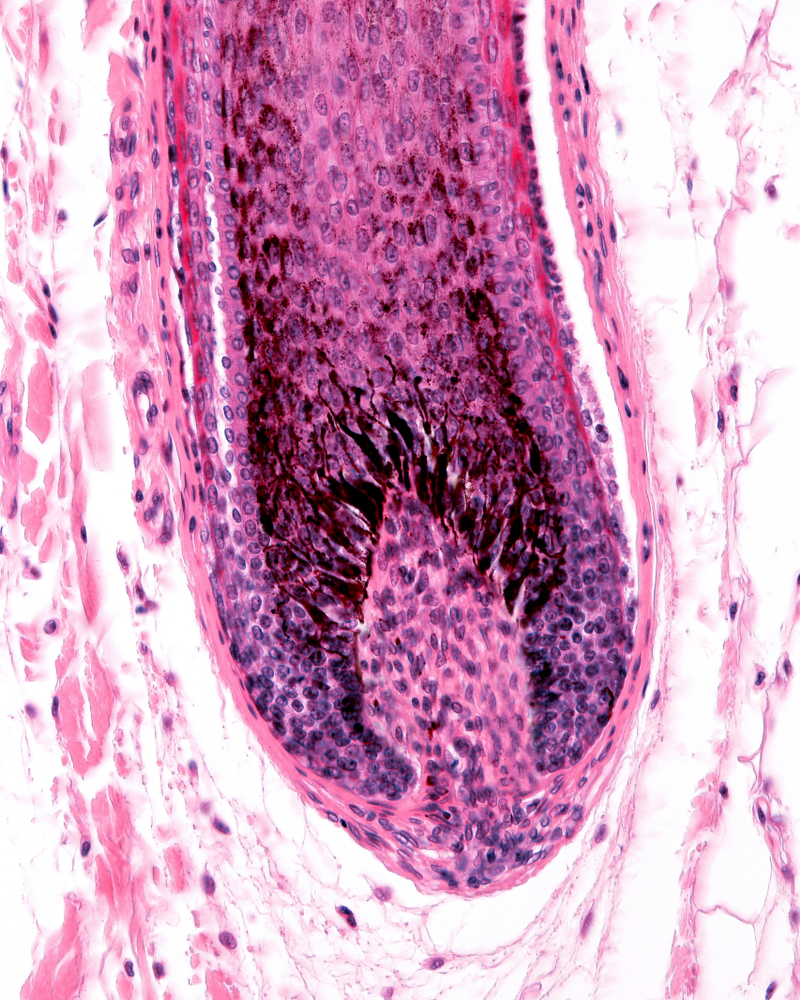
Hair Follicle Root
According to Physiological Reviews, follicle regrowth depends on molecular signaling pathways such as Wnt, BMP, and Sonic Hedgehog (SHH). These regulate entry into the anagen (growth) phase, determining the success of a transplanted hair graft.
“Hair follicle cycling is orchestrated by a series of interactions among keratinocytes, dermal papilla cells, and signaling factors.” — Stenn & Paus, 2001
The Sonic Hedgehog Gene: Unlocking Hair Regeneration
Want to dive deeper? See Origenere’s article on the Sonic Hedgehog Gene for how SHH signaling supports follicle development, dermal papilla health, and new follicle generation.
From Plugs to Precision: Why Follicular Units Changed Hair Transplants
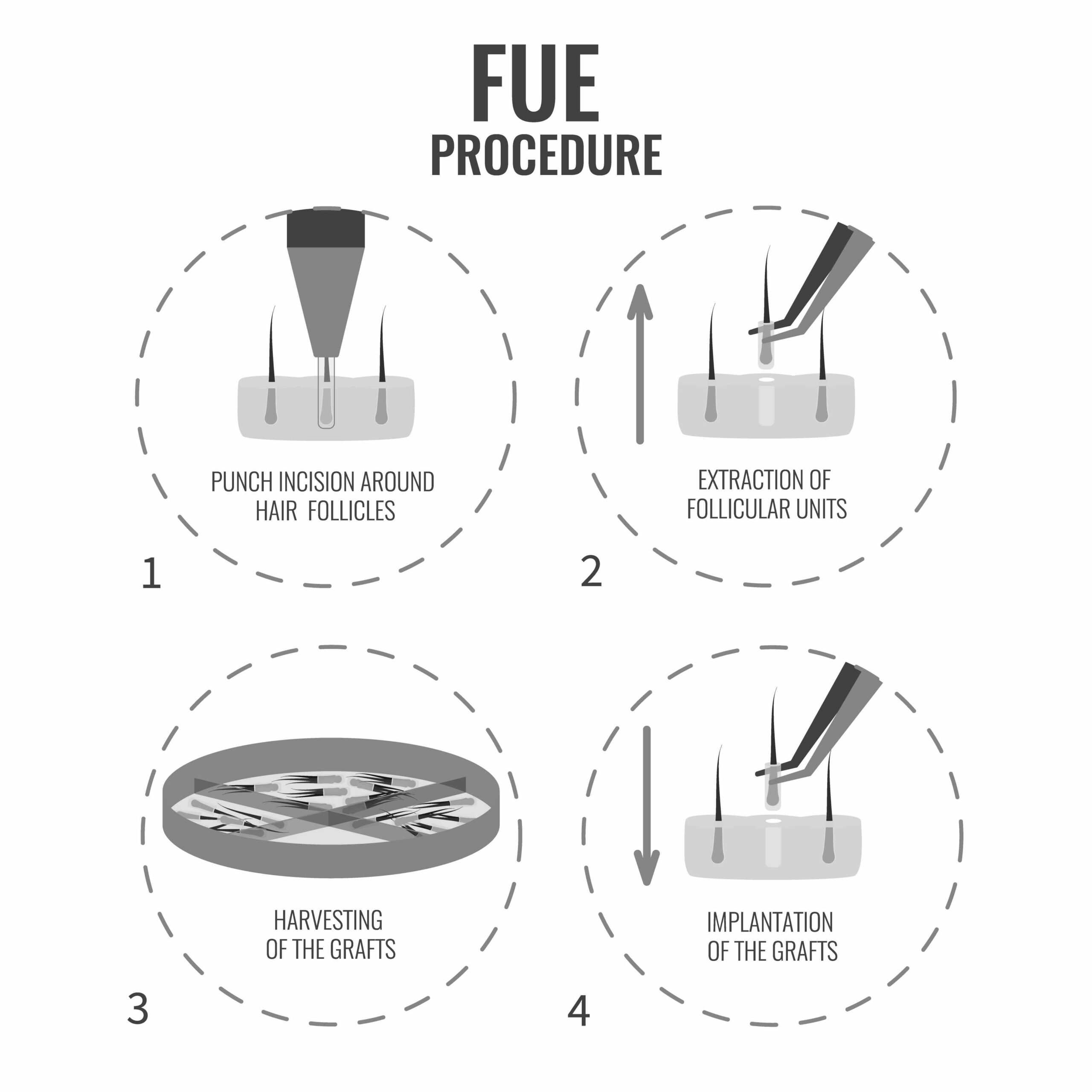
FUE Steps Involving Hair Graft
Older “hair plug” methods transplanted clusters of follicles, often resulting in unnatural density. Modern FUE hair transplant techniques extract single follicular units—minimizing scarring and delivering seamless integration into the recipient area.
From Science to Artistry
A hair graft is not just a cluster of hair—it’s a sophisticated living structure. At Alvi Armani, our surgical teams use proprietary solutions and high-density grafting to deliver a fuller head of hair with maximum retention.
FAQ: Common Questions About Hair Grafts
A hair graft is a small piece of scalp tissue containing 1–4 hair follicles. It is transplanted during procedures like FUE to restore hair in thinning areas.
Most grafts contain between 1–4 hairs, depending on the natural grouping of follicles in the donor site.
The donor area is the part of the scalp—usually the back or sides—that resists balding and provides hair for transplantation.
New hair typically begins to grow 3–4 months post-op, with full results visible around 12 months.
References
- Cotsarelis G. The hair follicle as a dynamic mini-organ. Curr Biol. 2008;18(17):R845–R846. DOI
- Carroll JD, et al. The anatomy and physiology of hair follicles. Vet Pathol. 2023;60(4):539–547. DOI
- Stenn KS, Paus R. Controls of hair follicle cycling. Physiol Rev. 2001;81(1):449–494. DOI
- Hair Anatomy: The Building Blocks of Hair Growth – Origenere
- Understanding the Sonic Hedgehog Gene – Origenere
- Wikipedia: Graft (Surgery)