
What is the success rate for hair transplant surgery?
It has been said, “I have never seen a good hair transplant.” This is true – it is impossible to detect a good hair transplant from the person’s original hair because the appearance will be completely natural. As many AlviArmani patients can attest, “Even my hair stylist has no idea I had my hair transplanted”
- Modern FUE has a high success rate when it is done by an experienced team, with graft survival often greater than 95%.
- Surgeon skill matters most. Careful graft handling, graft out of body management, correct placement, and proper angulation improve survival and natural-looking density.
- Poor planning lowers results. A weak hairline design, overharvesting, or ignoring future hair loss can make the outcome look thin or unnatural over time.
- Aftercare affects the result. Early healing needs gentle washing, no direct sun, no heavy exercise, and no trauma to the grafts. Learn more about after hair transplant care->
- Shedding is normal after surgery. The follicles stay in place under the skin, then reset before new growth begins.
- New growth takes time. Early growth often starts around 3 to 4 months, density improves by 6 to 9 months, and the final look often takes 12 to 18 months. See after hair transplant progression ->
- Transplanted hair is usually long-lasting because it comes from the permanent donor zone, but nearby native hair can keep thinning, so long-term treatment planning matters.
- The best results come from the full process, not just the surgery, strong candidacy review, careful technique, and disciplined post-op care all support a better outcome. Learn about the full process in our knowledge hub ->
What is the success rate for hair transplant surgery?
The good news is that hair transplant surgery has evolved from unsightly hair plugs in the 1980’s to a much more refined, reliable, and aesthetically natural result for most patients. The success rate of hair transplant surgery is generally very high, with graft survival rates typically between 90-95%.
A true hair transplant success story involves much more than just successfully transplanting hair follicles from the back of the head (donor site) to the top. It is just as important to:
- Safely harvest the grafts, so the donor area looks normal once healed,
- The hair is transplanted in a natural hair growth pattern that is undetectable from the patient’s baseline before the hair loss, and
- The hair restoration achieves acceptable hair density.
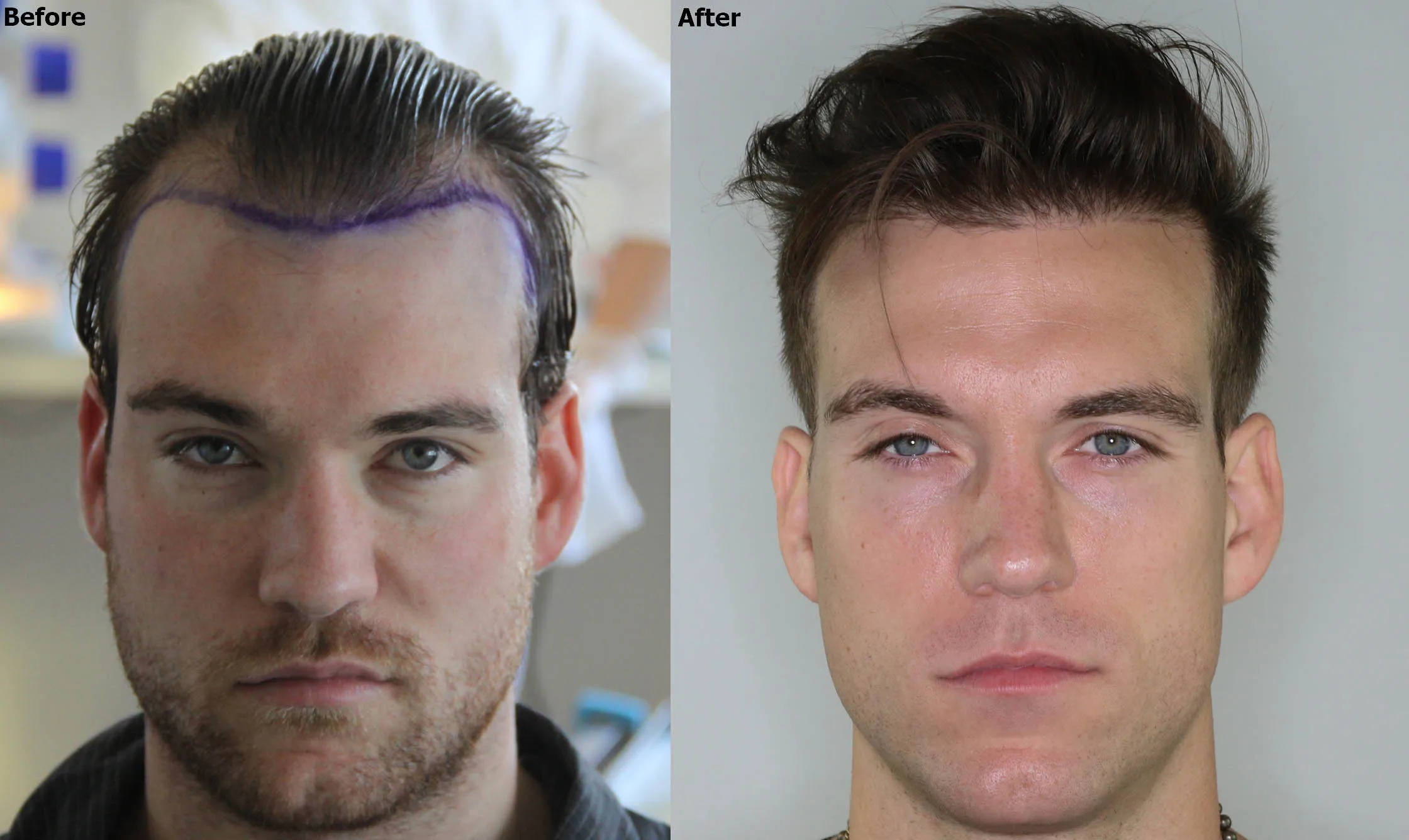
AlviArmani Patient before and after FUE hair transplant surgery.
Hair Transplant Industry Statistics:
A 2016 study surveyed patients who underwent FUE (Follicular Unit Extraction) hair transplants and found an average satisfaction rating of 8.3 out of 10 around 3 years after treatment, attesting to the high success rate.
For a hair transplant to be considered highly successful, approximately 95% of the transplanted hair grafts need to take root and thrive in the recipient area. (*What is not noted is the aesthetic satisfaction with the results, including naturalness and density.)
At reputable hair transplant clinics with skilled surgeons, the failure rate is reported to be less than 2%.
However, a hair transplant success rate can vary depending on several factors:
- The technique used (FUE vs. FUT/Strip method).
- The texture, color, and quality of the patient's existing hair.
- The skill and experience of the surgeon performing the procedure.
- Proper patient selection to ensure a successful outcome. Not all prospective patients are viable candidates for surgery.
- Proper post-operative care and adherence to instructions by the patient.
- Additional treatments or medications used to enhance results.
Overall, with modern techniques and when performed by qualified professionals at accredited clinics, hair transplant surgery has an extremely high success rate of around 90-95% graft survival and patient satisfaction.
Want to explore more real patient transformations? See More AlviArmani Results →
We have the most published results online (as noted by HairSite.com) and the largest, most transparent results gallery in the industry — including full comb-through videos so you can evaluate our work in detail. No other clinic puts their work under this level of scrutiny.

Mature AlviArmani patient with an age appropriate hairline design.
How Much of a Factor is the Surgeons’ Skill in Successful Hair Transplantation?
The surgeon's skill and experience are crucial in determining the success rate of hair transplant surgery. Here are some key factors in which a skilled and experienced surgeon can positively impact the outcome:
Graft Survival and Yield
Highly skilled surgeons have mastered the techniques to extract and implant grafts with minimal damage, resulting in higher graft survival rates. The experience of the surgeon and the medical team allows them to maximize the yield of viable grafts from the donor area.
Natural-Looking Results
Well-trained and experienced surgeons have an artistic eye and can create natural-looking hairlines and distribute grafts in a way that mimics natural hair growth patterns. This leads to more aesthetically pleasing and undetectable results.
Minimizing Complications
Skilled surgeons can anticipate and prevent potential complications like excessive bleeding, scarring, or infections through proper surgical techniques and post-operative care instructions.
Maximizing Density
Experienced surgeons can strategically plan and execute the procedure to achieve maximum density in the recipient area while preserving the donor area for potential future procedures.
Graft Placement and Angulation
Proper graft placement and angulation are critical for natural-looking results. Experienced surgeons have a deep understanding of how to orient grafts to match the patient's natural hair growth patterns.
Patient Selection and Counseling
Skilled surgeons can accurately assess a patient's candidacy for a hair transplant and provide realistic expectations, ensuring patient satisfaction with the results.
Overall, the surgeon's expertise, artistic ability, and years of experience directly translate into higher graft survival rates, natural-looking results, and minimized complications, ultimately leading to a higher success rate and patient satisfaction with the hair transplant procedure.
Celebrities widely rumored to have undergone hair restoration procedures include Elon Musk, Sylvester Stallone, Bradley Cooper, Cristiano Ronaldo, Wayne Rooney, Brendan Fraser, Sean Penn, Prince Harry, Rio Ferdinand, Rivaldo, Ludovic Giuly, Bacary Sagna, and Nemanja Gudelj.
Ready to take the next step toward natural, high-density results?
Schedule Your ConsultationSpeak with an expert and review real results tailored to your goals.
Frequently Asked Questions About Hair Transplant Success
Many patients considering a hair transplant have questions about success rates, longevity, and what can affect their results. These answers are for general education and should be discussed with your AlviArmani consultant and surgeon for personalized guidance.
What is the typical success rate for modern FUE hair transplants?
At reputable clinics using advanced FUE techniques, graft survival rates typically range from around 90–95%. That means the vast majority of transplanted follicles successfully take root and grow in the recipient area.
Success is not only about survival, but also about design. At AlviArmani, we focus on graft yield, natural hairline design, and long-term density planning so your result looks undetectable and ages well over time. AlviArmani US providers must maintain a less than 2% transection rate to remain credentialed by AlviArmani US.
What are common reasons for hair transplant failure?
True “failure” of a hair transplant is uncommon at experienced clinics, but several factors can reduce success:
- Inexperienced surgical team: Poor handling of grafts, over-harvesting the donor area, or non-anatomic placement can lead to low graft survival or unnatural results.
- Improper graft handling: Grafts that are left out too long, dehydrated, or handled roughly may not survive.
- Uncontrolled medical conditions: Smoking, poorly controlled diabetes, certain medications, and inflammatory scalp conditions can impair healing and blood supply.
- Poor post-operative care: Not following aftercare instructions, trauma to the grafts in the first few days, or picking/scratching can dislodge follicles.
- Unrealistic planning: Ignoring future hair loss and placing grafts too aggressively in the hairline without preserving donor supply can make results appear “failed” over time.
A thorough consultation, realistic planning, and a meticulous surgical process are key reasons why AlviArmani maintains consistently high success rates worldwide.
How long do hair follicles typically last after a hair transplant?
Transplanted hair follicles are usually taken from the permanent donor zone — areas that are genetically more resistant to pattern hair loss. Once they are transplanted and fully healed, these follicles generally behave like they would have in the donor area.
In most patients, this means the transplanted hair can last for many years and often for life. However, surrounding non-transplanted hair can continue to thin according to your natural pattern, which is why long-term planning and medical therapy are often recommended.
Can a hair transplant fail completely?
A complete failure (where almost no grafts grow) is extremely rare when surgery is performed by a skilled, experienced team using proper protocols. When it does occur, it is often related to a combination of:
- Severe issues with graft handling or storage
- Major vascular compromise or infection
- Significant patient non-compliance with post-op care
More commonly, patients are dissatisfied because of design issues (unnatural hairline, poor density, or wrong distribution) rather than true graft failure. These aesthetic issues can often be improved with a properly planned corrective procedure.
How long does it take to see the final results of a hair transplant?
Most patients begin to see early growth around 3–4 months after their procedure. The transplanted hairs then thicken and mature over time:
- 3–6 months: Early growth and coverage begin.
- 6–9 months: Noticeable improvement in density and texture.
- 12–18 months: Final refinement of thickness, texture, and overall look.
Because hair grows in cycles, patience is essential. Many AlviArmani patients feel “photo-ready” between 9 and 12 months, with continued subtle improvements after that.
What can I do to maximize my hair transplant success?
A few key steps can help you get the best possible result:
- Choose a clinic with a proven track record and thousands of FUE cases.
- Discuss long-term planning so the design matches your likely future pattern of hair loss.
- Follow all pre- and post-operative instructions carefully, including medications, sleep position, washing, and activity restrictions.
- Talk with your physician about ongoing therapies to help stabilize future loss, when appropriate.
To discuss your specific goals, you can start with an AlviArmani hair transplant consultation and review real patient results in our photo gallery.