
This patient underwent a 1,066-graft Vitruvian FUE™ procedure to restore the hairline and temples after early frontal hair thinning. The documented result photographs shown below are from one year after surgery.
One Year After 1,066-Graft Hairline & Temple Restoration
The documented procedure used 1,066 grafts to restore the patient's hairline and temples after early frontal thinning.
The comparison photographs below show the patient's appearance before treatment and at the documented one-year follow-up.
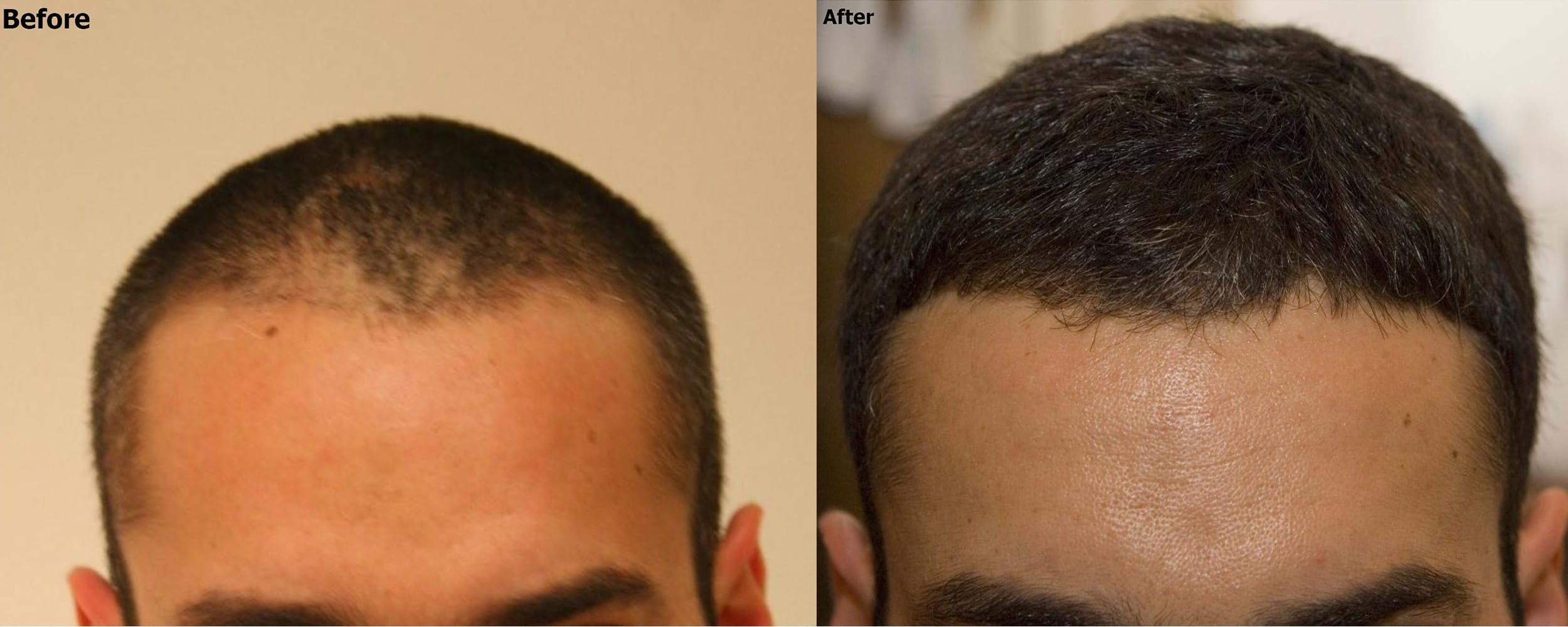
Early Frontal Thinning Affecting the Hairline and Temples
The patient presented with documented early frontal hair thinning affecting the hairline and temple regions.
The treatment plan focused on restoring those frontal areas rather than extending graft placement farther into the mid-scalp or crown.
1,066 Grafts Focused on the Frontal Frame
The documented procedure used 1,066 grafts harvested with Vitruvian FUE™ to restore the hairline and temple regions.
This is a useful example of an approximately 1,000-graft procedure being used for a focused frontal restoration rather than a larger multi-zone treatment plan.
Hairline Restoration
The frontal hairline was included in the documented treatment area.
Temple Restoration
The temple regions were also documented as part of the 1,066-graft restoration.
Additional View of the Hairline and Frontal Region
A second documented comparison provides an additional view of the treated frontal region at one year after surgery.
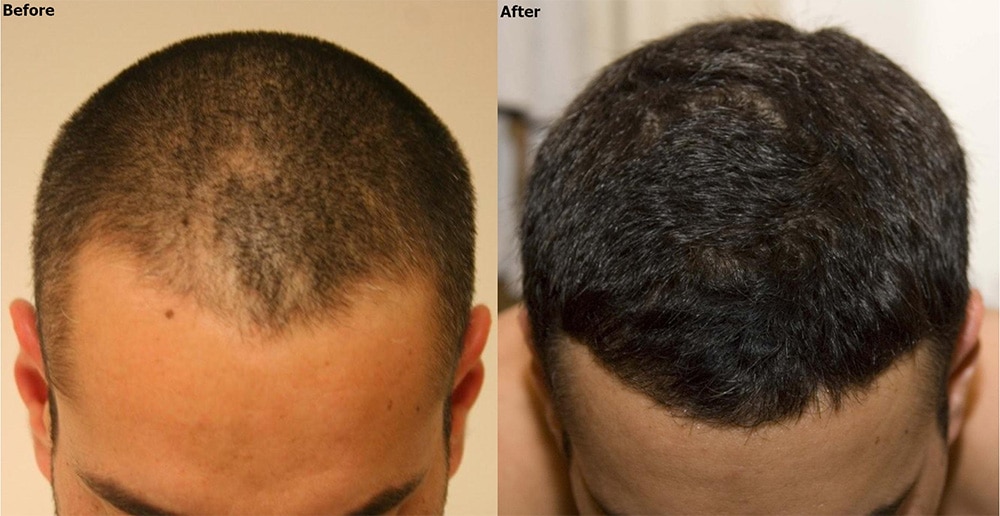
focused frontal plan
About 1,000 Grafts Can Represent a Focused Hairline Restoration
This case provides patient-specific evidence of a 1,066-graft restoration focused on the hairline and temples.
It is useful when comparing approximately 1,000-graft hair transplants because it demonstrates that a smaller graft count can represent a targeted frontal treatment rather than broader coverage through multiple scalp zones.
This does not mean every patient seeking hairline or temple restoration requires approximately 1,000 grafts. Appropriate graft requirements depend on treatment-area size, existing native hair, donor resources, hair characteristics, and the goals of the individual restoration.
Questions About This 1,066-Graft FUE Case
How many grafts were transplanted?
The documented procedure used 1,066 grafts.
What procedure was used?
The case documents graft harvesting with Vitruvian FUE™.
Which areas were treated?
The documented treatment areas were the hairline and temples.
When were the result photographs taken?
The after photographs are documented at one year after surgery.
Was the mid-scalp treated?
Mid-scalp treatment is not documented in the available case record. The documented treatment areas are the hairline and temples.
Was the crown treated?
Crown treatment is not documented in the available case record.
Does every hairline restoration need about 1,000 grafts?
No. This case used 1,066 grafts for this patient's individual treatment plan. Graft requirements depend on recipient-area size, existing native hair, donor resources, hair characteristics, and treatment goals.
Learn More About Hairline Restoration and Patient Results
Your Hair Restoration Plan Is Individual
Graft count is only one part of planning. Your hair-loss pattern, treatment areas, existing native hair, donor resources and long-term goals all influence the appropriate approach.