
What can approximately 4,000 hair grafts accomplish in hair restoration? There is no single coverage map. In documented Alvi Armani FUE hair transplant results, graft counts around 4,000 have been concentrated in the hairline and frontal scalp, extended through the mid-scalp, distributed across the frontal two-thirds, or placed between existing native hair from the hairline through the crown.
What Does a 4,000-Graft Hair Transplant Look Like?
There is no single visual answer. The number of hair grafts tells you how many follicular units were transplanted, but it does not tell you where they were placed, how much native hair was already present, how large the recipient area was or which areas were prioritized.
These documented cases show why patients researching 4,000 grafts should compare the treatment plan as closely as the graft number.
The Same 4,000 Grafts Can Represent Different Hair Transplant Plans
Two patients can receive approximately the same number of grafts without receiving the same hair transplant procedure. The cases above document several different ways a graft count near 4,000 has been allocated.
Hairline + Temples
One documented 4,000-graft case focused on lowering and restoring the hairline, closing the temples and rebuilding the front of the scalp.
Frontal Two-Thirds
Another exact 4,000-graft case distributed grafts across the frontal two-thirds of a Norwood 5 scalp rather than extending treatment into the crown.
Front + Mid-Scalp
The 3,995- and 4,000-graft evidence includes procedures extending behind the frontal frame into documented mid-scalp treatment.
Diffuse Hairline-to-Crown Treatment
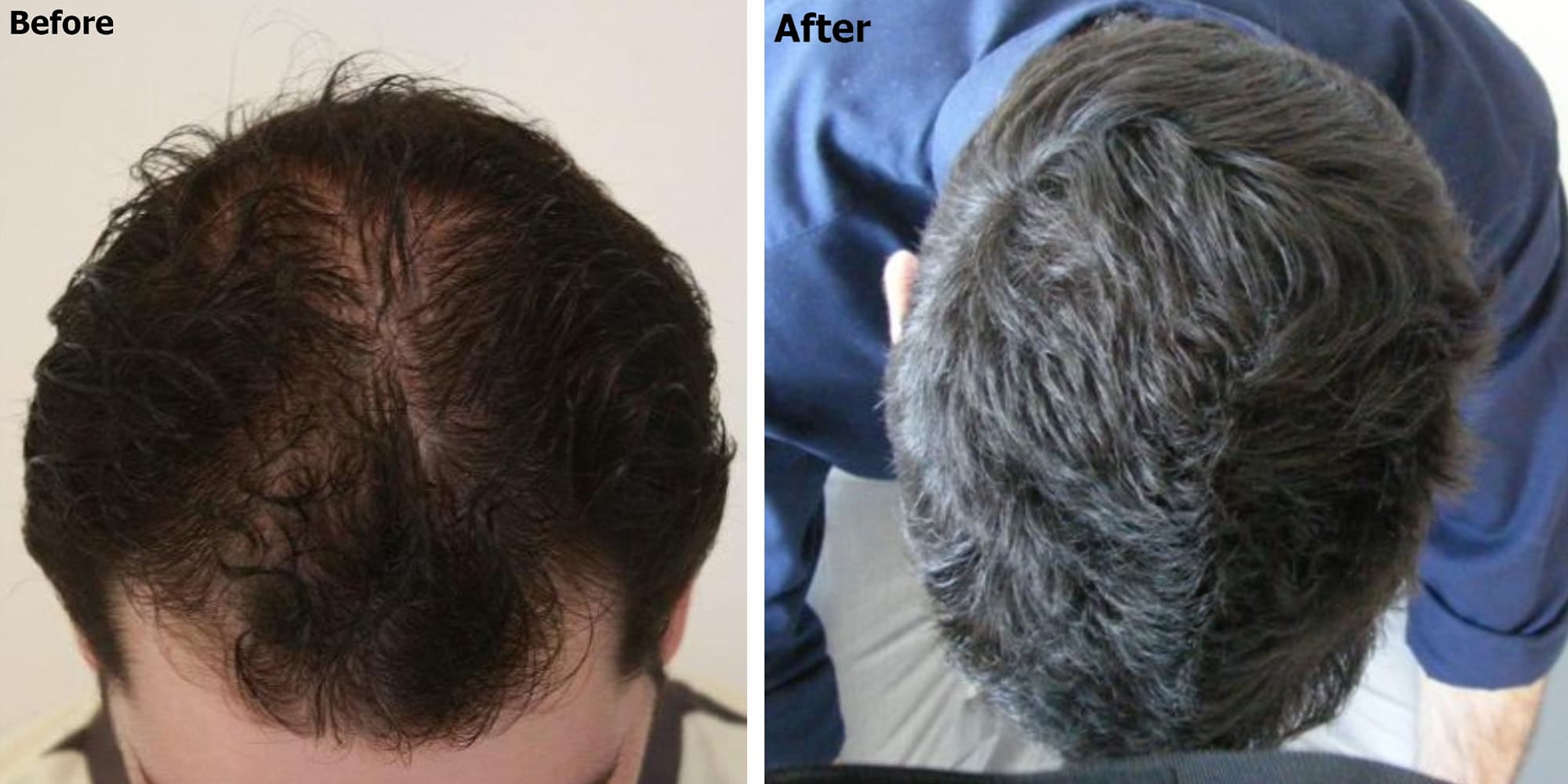
The original patient on this page had diffuse thinning across the top of the scalp, with 4,000 grafts placed through the hairline, mid-scalp and crown among existing native hair.
4,000-Graft Maximus FUE for Diffuse Hair Loss
This male patient presented with diffuse hair loss throughout the top of his scalp and a documented Norwood 4 / Alvi Armani Pattern 1 Class 4 starting pattern. Compare this classification with other Norwood 4 hair transplant results.
He received 4,000 grafts using Maximus FUE™ hair transplantation at the Alvi Armani Beverly Hills hair transplant clinic. The documented treatment included the hairline, mid-scalp and crown, with grafts placed between existing native hairs.
The available case record also states that the patient was using hair-maintenance medical therapy.

≠ one coverage plan
How Much Coverage Can 4,000 Hair Grafts Provide?
The documented cases on this page show why a fixed answer would be misleading.
Approximately 4,000 grafts have been used for a concentrated hairline and frontal hair transplant, for the frontal two-thirds of the scalp, for the front and mid-scalp, and for a diffuse FUE hair transplant extending from the hairline through the crown.
The amount of scalp that can reasonably be treated depends on the area of the scalp being treated, the amount and distribution of existing native hair, hair type, hair thickness and the desired density. The same graft count can serve different goals, such as creating a natural hairline or providing better coverage across a broader thinning region.
This does not mean that every patient with advanced hair loss should receive 4,000 grafts. The appropriate number and distribution must be individualized. Some patients need fewer grafts for a smaller treatment area; others need a staged plan that accounts for future hair loss.
Is 4,000 Grafts a Large Hair Transplant?
At Alvi Armani, a single-session procedure requiring more than approximately 3,500 grafts falls within the Maximus FUE™ hair transplantation large-session pathway.
Several documented cases in this approximately 4,000-graft group were completed in a single session. That does not make 4,000 grafts an appropriate target for every patient.
A large-session plan must still fit the patient's donor density, available donor hair, treatment areas and existing native hair. During planning for follicular unit extraction (FUE), the medical team must weigh the proposed harvest against the donor supply available for both this session and future hair transplant surgery.
How Much Does a 4,000-Graft Hair Transplant Cost?
Graft count is an important part of surgical scope, but 4,000 grafts do not create one universal hair-transplant price. Pricing depends on the procedure and graft requirements established through the individual treatment plan.
The first question is therefore not simply what 4,000 grafts cost, but whether approximately 4,000 grafts are appropriate for the patient's recipient needs and available donor resources.
Compare More Than the Graft Number
Before-and-after results should be compared in the context of the patient's starting hair-loss pattern, treatment areas, existing native hair and follow-up interval. Assessing natural results means considering the hairline design and the distribution of hair density together.
Photography also matters. Camera angle, lighting, styling, hair length and the timing of the photograph can change how a result appears.
A 4,000-graft photograph is therefore most useful when the graft count is connected to the actual surgical strategy and the quality of the available evidence.
Questions About 4,000-Graft Hair Transplants
What does 4,000 hair grafts look like?
There is no single appearance. The documented cases on this page show approximately 4,000 grafts used for different combinations of the hairline, temples, frontal region, mid-scalp and crown. Where the grafts are placed is as important as the total number.
Is 4,000 grafts a lot for a hair transplant?
At Alvi Armani, approximately 4,000 grafts falls within the large-session Maximus FUE™ range when performed in one session. Whether that number is appropriate depends on the patient's donor resources, recipient-area requirements, existing hair and long-term plan.
How much coverage does 4,000 grafts provide?
Coverage is not fixed by graft count, and 4,000 grafts do not guarantee a return to natural density. The cases here include focused frontal hair transplantation, frontal-two-thirds treatment, front and mid-scalp treatment, and a diffuse case involving the hairline, mid-scalp and crown. Recipient-area size and existing native hair substantially change how 4,000 grafts may be distributed.
Can 4,000 grafts combine hairline treatment with crown restoration?
They can in an appropriately selected treatment plan, but they do not have to. The original Norwood 4 patient on this page received treatment through the hairline, mid-scalp and crown. By contrast, the documented 4,054-graft case concentrated 3,454 grafts in Zones 1 and 2 and another 600 in anterior Zone 3, with no crown treatment.
Can 4,000 FUE grafts be transplanted in one session?
Yes, in appropriately selected patients. Alvi Armani documents multiple cases around 4,000 grafts completed as large single-session FUE procedures. Candidacy depends on donor capacity, treatment area, hair characteristics and long-term planning.
Are 4,000 grafts the same as 4,000 hairs?
No. A graft is a follicular unit containing hair follicles and may contain more than one hair. The number of hairs represented by 4,000 grafts therefore depends on the composition of the transplanted follicular units. Learn more about what a hair graft is.
How much does a 4,000-graft hair transplant cost?
There is not one universal price based on the graft number alone. Pricing depends on the procedure and the graft requirements established through the patient's surgical plan. Review current Alvi Armani hair transplant pricing.
Does every Norwood 4 or Norwood 5 patient need about 4,000 grafts?
No. The Norwood scale describes a pattern of hair loss, but a Norwood stage does not determine graft requirements by itself. Recipient-area size, existing native hair, donor resources, hair characteristics and the hair transplant priorities all affect the appropriate graft number.
From 4,000-Graft Results to Your Own Hair Transplant Plan
Use these cases as evidence of different FUE surgical plans, not as a prescription for a specific graft number.
Your FUE Hair Transplantation Plan Is Individual
Graft count is only one part of planning. Your hair-loss pattern, treatment areas, existing native hair, donor resources and long-term goals all influence the appropriate approach.