
A documented Alvi Armani FUE case for a patient with a Norwood Class 4 hair-loss pattern. The majority of the 4,054 grafts were concentrated in the frontal restoration across Zones 1 and 2, with 600 grafts distributed into the anterior portion of Zone 3 to increase mid-scalp density. The current photographs show his progress at 9 months post-op.
4,054 Grafts From Surgical Plan to Visible Result
This case was designed primarily as a frontal restoration. Of the 4,054 grafts transplanted, 3,454 were concentrated across Zones 1 and 2, while 600 grafts were distributed through the anterior portion of Zone 3 to add density behind the reconstructed frontal region.

Norwood 4 Hair Loss With Frontal Recession and Mid-Scalp Thinning
Before surgery, the patient presented with a Norwood Class 4 hair-loss pattern characterized by significant frontal recession with reduced density extending posteriorly into the mid-scalp.
The primary restoration priority was the front. The surgical design reconstructed the frontal frame across Zones 1 and 2, while a smaller allocation of grafts was reserved to reinforce density in the anterior portion of Zone 3.


The Surgical Strategy: Prioritize the Front, Reinforce the Mid-Scalp
The final graft allocation placed the majority of the 4,054 follicular units into Zones 1 and 2, where they could rebuild the frontal frame and provide the greatest visual impact.
An additional 600 grafts were then sprinkled through the anterior portion of Zone 3. Rather than attempting to densely rebuild the entire mid-scalp, these grafts were used to reinforce existing density and improve the visual transition behind the frontal restoration.

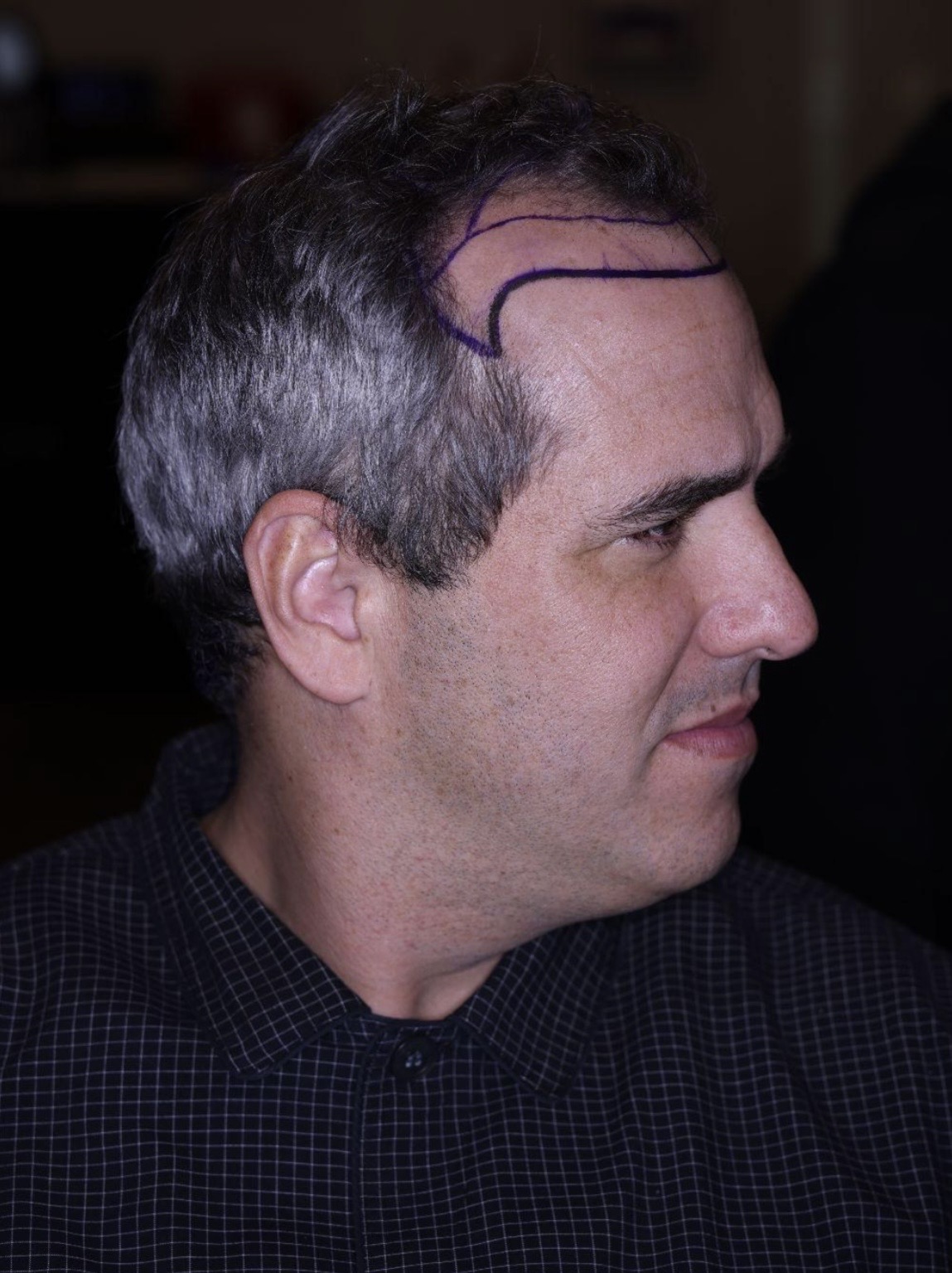
Preoperative Planning
The preoperative images document the initial planning process. The final intraoperative graft allocation was concentrated in Zones 1 and 2 with additional grafts placed into anterior Zone 3.
Final Graft Distribution
3,454 grafts were concentrated through Zones 1 and 2 for the frontal restoration.
600 grafts were distributed through the anterior portion of Zone 3 to increase density through the mid-scalp transition.
The crown was not treated during this procedure.
What Made Up the 4,054 Hair Grafts?
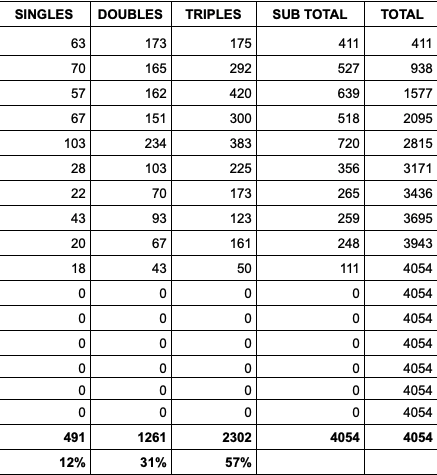
The operative graft-count record documents 4,054 transplanted follicular units. The total included single-, double- and triple-hair grafts rather than 4,054 identical units.
Graft composition adds another layer of context to the headline number. Procedures with similar graft totals may differ substantially in both follicular-unit composition and where those grafts are strategically placed.
Current Result After 4,054-Graft FUE
At approximately 9 months post-op, the current photographs show the reconstructed frontal frame with increased visual density extending posteriorly into the treated anterior mid-scalp.
The majority of the grafts were used to establish the frontal restoration, while the 600 grafts placed into anterior Zone 3 helped reinforce the transition into the patient's existing native hair.
These photographs document the patient's current stage of growth rather than presenting nine months as a final long-term endpoint.



Not a universal target.
A 4,000-Graft Hair Transplant Is Really a Distribution Question
This Norwood 4 case is useful for patients researching approximately 4,000 grafts because it demonstrates that a larger procedure does not necessarily mean treating every area of hair loss equally.
Here, the surgical priority was the frontal restoration. Approximately 85% of the grafts were concentrated in Zones 1 and 2, while roughly 15% were used to reinforce density through anterior Zone 3.
The result demonstrates how graft placement can be weighted toward the areas expected to create the greatest visual impact while still improving continuity into the mid-scalp.
It does not mean every Norwood 4 patient requires 4,054 grafts. Graft number and distribution must be individualized to the patient's donor resources, existing hair and restoration priorities.
Understanding This 4,054-Graft Norwood 4 Case
How many grafts were transplanted in this Norwood 4 case?
The documented operative total was 4,054 FUE grafts. Of those, 3,454 were concentrated in Zones 1 and 2, while 600 were distributed into the anterior portion of Zone 3.
Where were the 4,054 grafts placed?
The majority were used for the frontal restoration across Zones 1 and 2. An additional 600 grafts were sprinkled through anterior Zone 3 to increase mid-scalp density and improve the transition into the patient's existing native hair.
Was the crown treated during this procedure?
No. The final procedure treated Zones 1 and 2 and the anterior portion of Zone 3. The crown was not treated in this session.
Does every Norwood 4 patient need about 4,000 grafts?
No. Norwood classification describes a pattern of hair loss, but it does not by itself determine graft requirements. Recipient-area size, donor supply, native hair, hair characteristics and long-term planning all matter.
Are these the patient's final hair transplant results?
No final-result claim is being made. These photographs were taken approximately nine months after the December 2025 procedure and document the patient's current follow-up.
What types of grafts were used?
The operative record documents 491 single-hair grafts, 1,261 double-hair grafts and 2,302 triple-hair grafts, totaling 4,054 follicular units.
Learn More About Alvi Armani or Understand Your Own Plan
Explore the Alvi Armani clinical team and locations, compare additional patient results, or begin a personalized evaluation of your own hair-loss pattern and restoration goals.
Your FUE Hair Transplantation Plan Is Individual
Graft count is only one part of planning. Your hair-loss pattern, treatment areas, existing native hair, donor resources and long-term goals all influence the appropriate approach.