
Full Head Hair Transplant: Whole Scalp Restoration & Mega Sessions
The AlviArmani Guide
Full Head Hair Transplant: Whole Scalp Restoration, Mega Sessions, and Maximus™ FUE
For patients with more advanced hair loss, one of the most common questions is simple: can a hair transplant restore a full head of hair? The answer depends on donor supply, hair-loss pattern, density goals, and how the restoration is planned.
What Is a Full Head Hair Transplant?
A full head hair transplant usually refers to a hair restoration plan that addresses multiple zones of the scalp rather than one isolated area. This may include the frontal hairline, temples, frontal scalp, mid-scalp, crown, or areas of diffuse thinning.
Patients often use terms like “full hair transplant,” “whole head hair transplant,” “full scalp hair transplant,” or “complete hair restoration” when they are looking for broad coverage. Clinically, however, the plan must be more precise.
A surgeon must determine which zones need the greatest density, which areas can be restored in one session, and which areas may need to be staged over time.
Can a Hair Transplant Restore the Whole Head?
A hair transplant can often create dramatic improvement across large areas of the scalp, but “whole head” restoration depends on the relationship between donor supply and recipient demand.
The donor area, usually located on the back and sides of the scalp, contains the hair follicles available for transplantation. That supply is finite. The larger the balding area, the more important it becomes to use each graft strategically.
For some patients, full-scalp restoration can be performed in a single high-volume session. For others, the safest and most natural plan may involve staging the restoration over more than one procedure.
The goal is not simply to move the highest possible number of grafts. The goal is to create the most natural, durable, and visually balanced result.
Why Full Head Hair Transplant Planning Starts With the Hairline
Even when a patient wants “the whole head” restored, the frontal hairline is usually the most important aesthetic priority.
The hairline frames the face. It influences facial proportions, perceived age, and the way density is seen from the front. A strong restoration plan often begins by designing the hairline and frontal zones first, then building coverage backward into the mid-scalp and crown.
This is especially important in advanced hair loss and male pattern baldness. If too many grafts are used in the crown too early, the patient may not have enough donor supply left to create a strong frontal frame. A well-designed full head hair transplant must consider the entire lifetime of the patient’s hair restoration journey.
How Many Grafts Are Needed for a Full Hair Transplant?
The number of hair grafts needed depends on the size of the thinning area, the desired hair density, hair characteristics, and the patient’s donor availability.
- Smaller frontal restorations may require approximately 1,500 to 2,500 grafts.
- Hairline and frontal zone restoration may require approximately 2,000 to 3,500 grafts.
- Frontal scalp plus mid-scalp restoration may require approximately 3,000 to 4,500 grafts.
- Larger full-scalp cases may require 4,000 to 6,000+ grafts.
- Crown restoration may require additional grafts or a staged approach depending on the pattern of loss.
These ranges are educational estimates only. A true graft plan requires an individualized consultation and examination of the donor area.
What Is a Mega Session Hair Transplant?
A mega session hair transplant is a high-volume procedure in which a larger number of grafts are transplanted during a single surgical session.
In follicular unit extraction, this usually refers to cases involving several thousand grafts. Mega sessions are often considered for patients who need broader coverage, have adequate donor supply, and want to accomplish a larger restoration in fewer procedures.
A mega session may be appropriate for patients seeking improvement in multiple zones, such as the hairline, frontal scalp, mid-scalp, and in some cases the crown. However, candidacy depends on donor strength, hair characteristics, surgical safety, and the long-term restoration plan.
Featured Case Study
4,135-Graft High-Volume Frontal Restoration
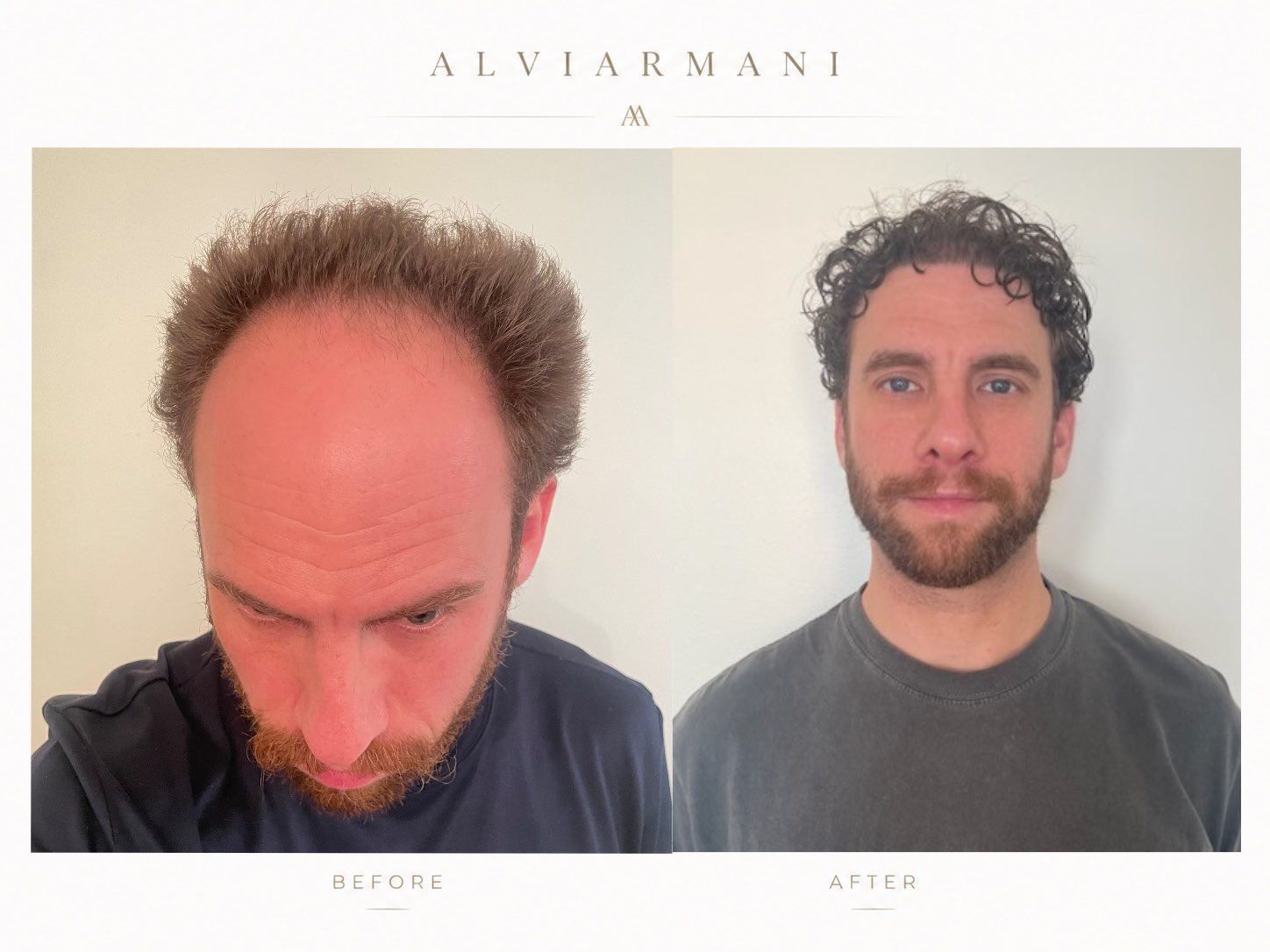
This June 2024 AlviArmani case involved a patient with a Norwood 4A/5 hair loss pattern who underwent a 4,135-graft restoration focused on zones 1 and 2.
Although many patients describe their goal as a “full head hair transplant” or “whole head restoration,” the most effective surgical plan often begins with the areas that create the greatest visual impact. In this case, the priority was the frontal frame: the hairline and frontal scalp.
This case demonstrates an important principle in full-scalp hair restoration planning: the best result is not achieved by placing grafts everywhere equally. It is achieved by placing the right number of grafts in the right zones, with a design that restores proportion, coverage, and visual density where they matter most.
Maximus™ FUE for High-Volume Restoration
At AlviArmani, Maximus™ FUE is designed for patients who are candidates for high-volume FUE restoration.
This approach may be considered when a patient needs a larger number of grafts and wants maximum visual impact in a single session. Maximus™ FUE is especially relevant for patients with more advanced hair loss who require broader coverage across the frontal scalp, mid-scalp, or full scalp.
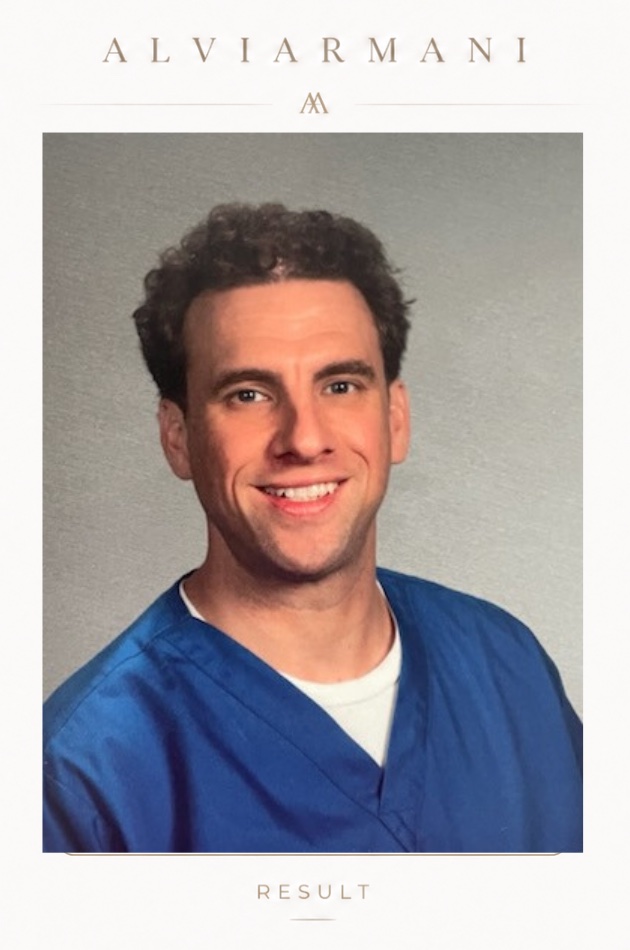
The procedure is not simply about graft quantity. High-volume hair transplant surgery requires careful planning, donor management, graft handling, placement strategy, and artistic design.
For the right candidate, Maximus™ FUE can help create a transformative change while maintaining the principles of natural hairline design and long-term donor preservation.
What Happens After a Full Head Hair Transplant?
After hair restoration surgery, patients enter a healing and growth timeline. The early recovery process involves protecting the grafted area, following post-operative instructions, and allowing the scalp to heal.
During the first several weeks, some patients may experience shock loss, which refers to temporary shedding of transplanted hair or surrounding existing hair. This can be a normal part of the post-procedure course and does not necessarily reflect the final outcome.
Over time, the transplanted follicles enter their growth cycle. New hair growth usually develops gradually, and patients should understand that hair transplant recovery is measured in months, not days. The full results often take time to mature, with final results becoming more visible as the transplanted hair thickens and blends with surrounding hair.
Full Head Hair Transplant vs. Crown-Only Restoration
Many patients with advanced hair loss are especially bothered by the crown. However, the crown can require a large number of grafts to create the appearance of density because of its circular growth pattern and larger visual surface area.
In full head hair transplant planning, the crown must be balanced against the frontal and mid-scalp zones. For many patients, the frontal frame produces the greatest visual impact. The crown can then be addressed as part of a larger plan or staged later depending on donor availability.
This is why a full restoration strategy should never be reduced to simply “filling in everything.” It should be designed around priority, proportion, and long-term stability.
One Session or Multiple Sessions?
Some patients are candidates for a large single-session hair transplant. Others are better served by a staged plan.
A single high-volume session may be considered when:
- The donor area is strong.
- The patient’s hair characteristics are favorable.
- The restoration zones are clearly defined.
- The patient can safely undergo a longer surgical session.
- The graft plan supports long-term donor preservation.
A staged approach may be recommended when:
- Hair loss is very advanced.
- The crown requires separate planning.
- Donor supply must be preserved carefully.
- The patient is younger and may experience future progression.
- The safest result requires more than one phase.
Both approaches can be appropriate. The best option depends on the individual patient.
How Much Does a Full Head Hair Transplant Cost?
The cost of a full head hair transplant depends on the number of grafts, the zones being restored, the complexity of the case, and whether the restoration is performed in one high-volume session or staged over time.
Because full-scalp cases vary significantly, the most accurate way to determine cost is through a personalized consultation. During the consultation, the team can evaluate the donor area, map the restoration zones, estimate the graft range, and determine whether a high-volume procedure such as Maximus™ FUE is appropriate.
Who Is a Good Candidate for a Full Head Hair Transplant?
A good candidate for full head or high-volume hair restoration typically has:
- Advanced but stable hair loss.
- Adequate donor hair on the back and sides of the scalp.
- Realistic expectations about density and coverage.
- A desire for broad cosmetic improvement.
- A willingness to follow a long-term restoration plan.
- A pattern of hair loss that can be treated safely and naturally.
Patients with limited donor supply may still benefit from hair transplantation, but the plan must be more selective. In those cases, the focus may be on restoring the most visible zones first.
The AlviArmani Approach to Full-Scalp Restoration
AlviArmani’s approach to full head hair transplantation is built around individualized design, facial balance, density planning, and long-term donor preservation.
For some patients, this may mean a focused frontal restoration. For others, it may mean a high-volume Maximus™ FUE session designed to restore multiple zones in one procedure. In more advanced cases, it may mean a staged plan that builds coverage over time.
The right plan is not the one that uses the most grafts. It is the one that uses the right grafts, in the right areas, with the right design.
Schedule a Full Head Hair Transplant Consultation
If you are considering a full head hair transplant, whole scalp restoration, or a mega session FUE procedure, the first step is an individualized consultation. AlviArmani can evaluate your hair loss pattern, donor supply, goals, and candidacy for Maximus™ FUE or a staged restoration plan.
Frequently Asked Questions
Can you transplant hair over the whole head?
In some patients, broad scalp coverage is possible, but it depends on donor supply, hair-loss pattern, hair characteristics, and the number of grafts required. Some full-scalp cases can be treated in one high-volume session, while others are better staged.
How many grafts are needed for a full head hair transplant?
Larger full-scalp cases may require 4,000 to 6,000+ grafts, but the exact number depends on the areas being restored, the density goal, and the patient’s donor supply.
Is a mega session the same as a full head hair transplant?
Not exactly. A mega session refers to a large graft session. A full head hair transplant refers to the goal of broader scalp restoration. A mega session may be one way to achieve that goal in selected candidates.
Can the crown be restored in the same session?
Sometimes. In advanced cases, the crown may need to be staged to preserve donor supply and maintain the best visual outcome. The frontal scalp and mid-scalp are often prioritized because they create the strongest visual frame.
Is Maximus™ FUE for full head restoration?
Maximus™ FUE is designed for high-volume FUE cases and may be appropriate for selected patients seeking larger restoration sessions. Candidacy depends on donor supply, hair-loss pattern, graft requirements, and long-term planning.
Is a full head hair transplant permanent?
Transplanted follicles are typically taken from the donor area, which is generally more resistant to pattern hair loss. However, native non-transplanted hair may continue to thin over time, which is why long-term planning is important.
Do all patients need 4,000+ grafts for a full hair transplant?
No. Some patients need fewer grafts, especially if the restoration is focused on the hairline or frontal scalp. Others with more advanced thinning may require a high-volume session or staged plan.