
This patient received 2,500 grafts using Vitruvian FUE™ in Zones 1 and 2 at Alvi Armani Beverly Hills to restore and redesign the hairline and frontal region. The result photographs shown below are documented at 18 months.
18 Months After 2,500-Graft Vitruvian FUE™
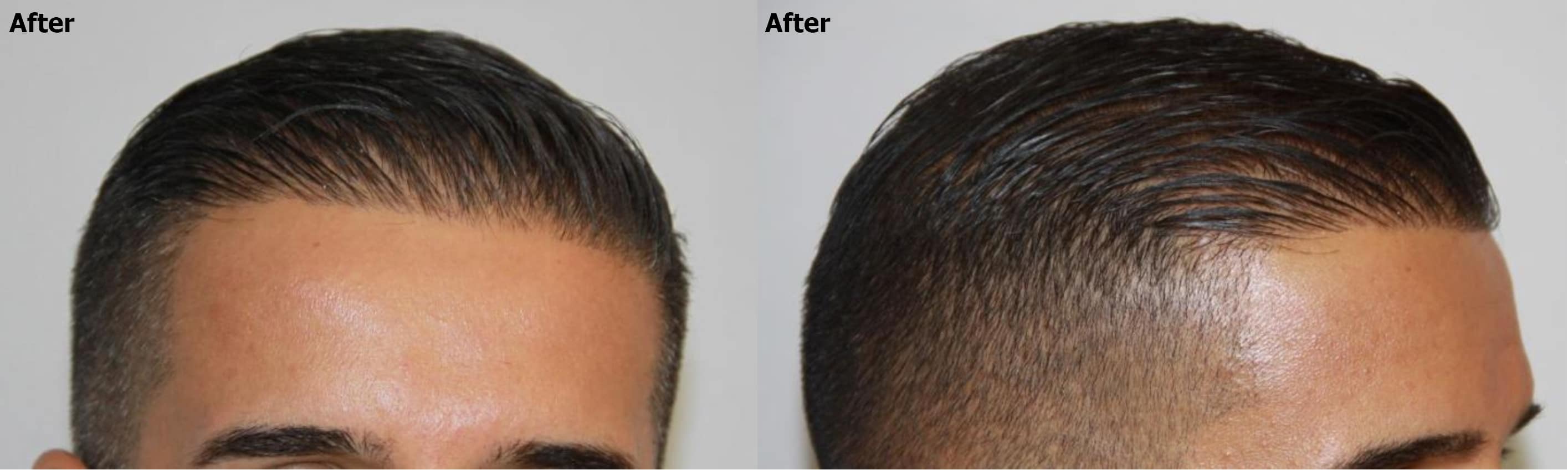
The after photograph documents the patient's appearance 18 months after the 2,500-graft procedure.
The treatment was focused on Zones 1 and 2 to restore and redesign the hairline and frontal region.
Hairline and Frontal Thinning With Temporal Recession
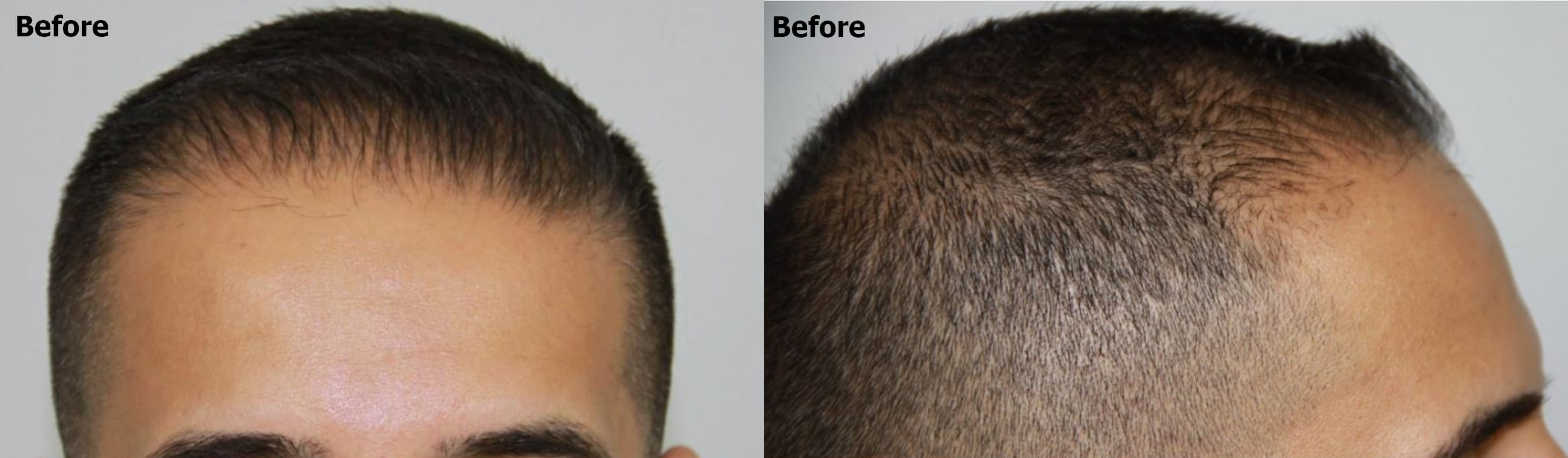
The patient's starting photographs document recession involving the hairline and temporal areas, along with thinning through the frontal region.
His hair-loss pattern was documented as Alvi Armani Pattern 2, Class 4 .
The patient had been combing the hair forward to help cover the areas of frontal thinning and recession.
2,500 Grafts Directed to Zones 1 and 2
The procedure used 2,500 grafts with Vitruvian FUE™ for Zones 1 and 2.
The documented treatment goal was to restore and redesign the patient's hairline while rebuilding coverage through the frontal region.
Zone 1
The hairline region formed part of the documented treatment plan.
Zone 2
Treatment extended into the frontal region as part of the documented restoration.
Postoperative View of Zones 1 and 2
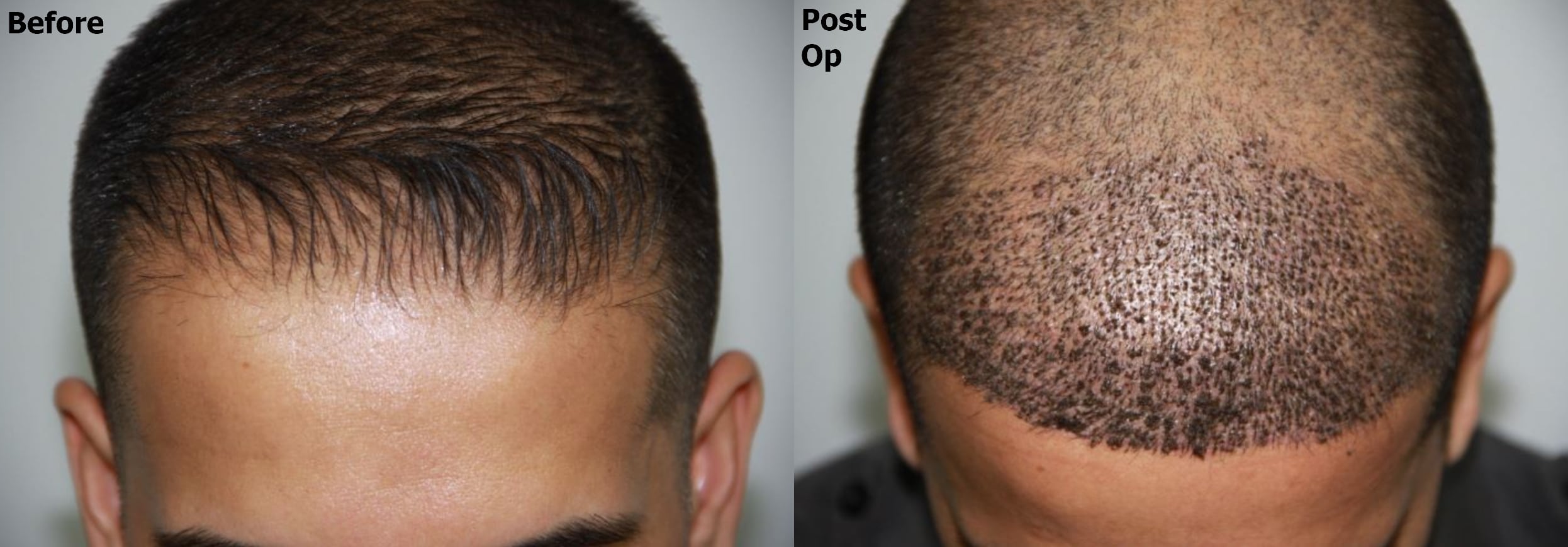
The postoperative photograph documents the recipient area immediately following the 2,500-graft procedure, showing the distribution of graft placement through the treated frontal regions.
documented result
A Focused 2,500-Graft Hairline and Frontal Restoration
This case provides a documented example of 2,500 grafts being used across Zones 1 and 2 for a patient whose primary concerns involved the hairline and frontal region.
The photographic sequence is particularly useful because it shows the patient's baseline appearance, postoperative graft placement and a documented 18-month result.
It should not be interpreted to mean that every patient with a similar starting pattern requires 2,500 grafts. Graft requirements depend on the individual treatment area, existing native hair, donor resources and restoration goals.
Why the Postoperative Photograph Matters
A result photograph shows the later appearance of the transplant, while postoperative photography provides additional evidence of where grafts were actually placed.
Reviewing the starting point, operative evidence and documented follow-up together provides better context than evaluating an after photograph alone.
Questions About This 2,500-Graft FUE Case
How many grafts were transplanted?
The documented procedure used 2,500 FUE grafts.
What procedure was used?
The case documents a 2,500-graft Vitruvian FUE™ procedure.
Which areas were treated?
The documented procedure treated Zones 1 and 2 to restore and redesign the hairline and frontal region.
What was the patient's hair-loss pattern?
The case documents Alvi Armani Pattern 2, Class 4.
Were the temples treated?
Temporal recession is documented in the patient's starting photographs, but the available procedure record specifically documents treatment of Zones 1 and 2. A separate temple graft allocation is not stated.
When were the result photographs taken?
The after photographs are documented at 18 months after the procedure.
Is postoperative photography available?
Yes. The case includes postoperative photography documenting the recipient area following placement of the 2,500 grafts.
Does every hairline restoration require 2,500 grafts?
No. The appropriate graft number depends on the size of the treatment area, existing native hair, donor resources, hair characteristics and individual goals.
Compare More Patient Evidence
Compare this 18-month case with other documented 2,500-graft treatment plans and Alvi Armani results.
Your FUE Hair Transplantation Plan Is Individual
Graft count is only one part of planning. Your hair-loss pattern, treatment areas, existing native hair, donor resources and long-term goals all influence the appropriate approach.