
A documented 3,600-graft Vitruvian FUE restoration for an Alvi Armani Pattern 2 Class 5 patient. The surgical plan focused the majority of the graft supply across Zones 1 and 2, transitioned into anterior Zone 3, and used limited posterior placement in Zone 4.
Frontal Framing After a 3,600-Graft Vitruvian FUE Restoration
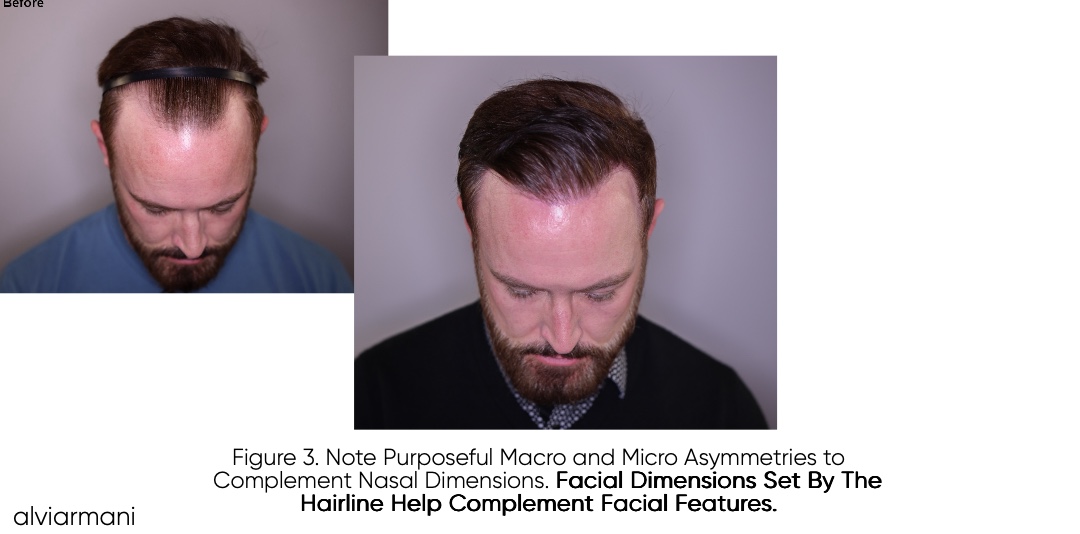
The available before-and-result photography documents the frontal restoration following the 3,600-graft procedure, including the relationship between the reconstructed frontal frame and the patient's existing facial proportions.
The exact postoperative interval for the result photography is not documented in the available case record.

Pattern 2 Class 5 With an Anterior Restoration Priority
The patient was documented as Alvi Armani Pattern 2 Class 5. The operative plan prioritized the anterior restoration, with Zones 1 and 2 receiving the primary focus.
Treatment did not stop abruptly behind the frontal zones. The documented strategy incorporated a transition into anterior Zone 3 together with limited placement farther posteriorly in Zone 4.
Concentrating the Graft Supply Anteriorly
The 3,600-graft Vitruvian FUE procedure was designed around a clear anterior priority. Zones 1 and 2 formed the principal recipient area, followed by a transition into anterior Zone 3.
The posterior component was intentionally limited rather than treated with the same concentration as the frontal scalp.
Zones 1 & 2 Priority
The majority of the available graft supply was directed toward the anterior restoration, where the hairline and frontal architecture were the principal surgical priorities.
Transition & Posterior Placement
Treatment transitioned into anterior Zone 3, while only limited graft placement was documented farther posteriorly in Zone 4.
83% Double- and Triple-Hair Follicular Units
The case record documents that 83% of the grafts were double- or triple-hair follicular units, while single-hair grafts were used at the hairline edge.
The available documentation provides this percentage composition but does not supply separate exact counts of singles, doubles and triples.
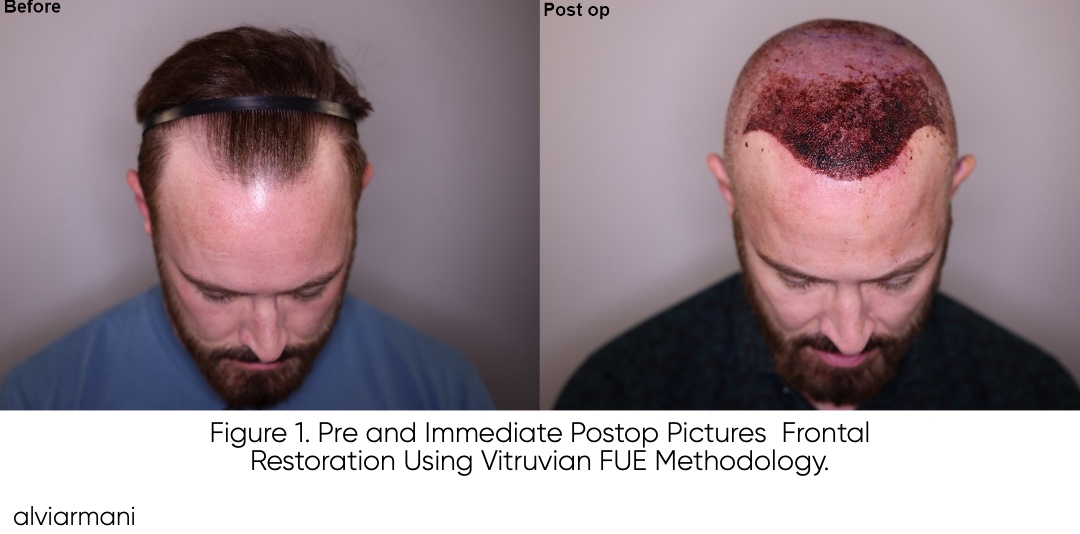
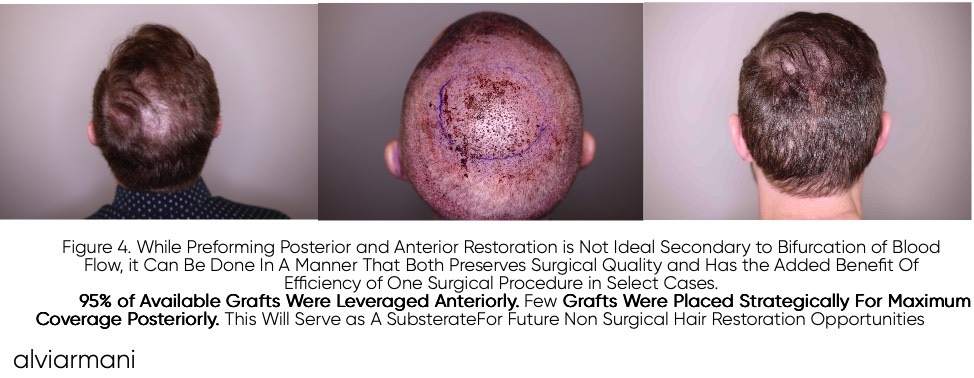
Before Surgery and Immediately After Recipient-Site Placement
The operative photography provides a direct comparison between the patient's starting point and the immediate postoperative recipient area.
Frontal and Mid-Scalp Evidence After Treatment
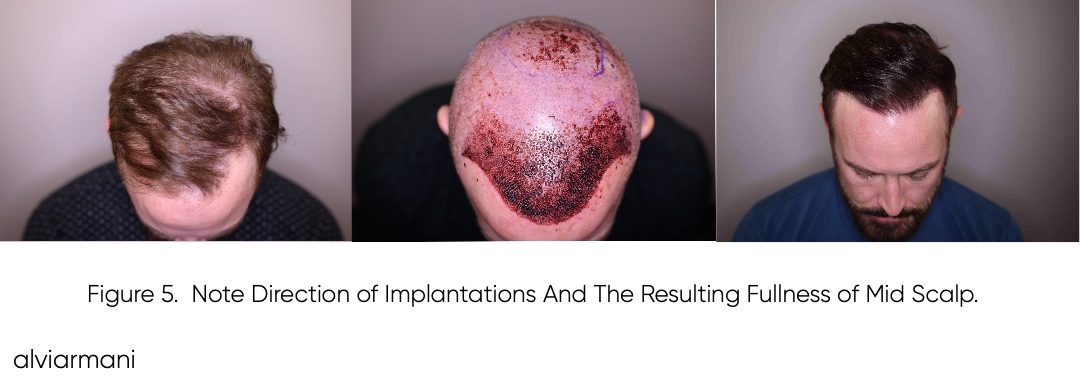
Additional result views document the appearance of the frontal restoration and the transition farther into the scalp.
Because the current case record does not provide an exact follow-up interval, these photographs should not be assigned a specific month or described as a mature or final result.
Priority
A 3,600-Graft Plan Does Not Require Uniform Coverage Across Every Zone
This case is particularly useful because the operative strategy is documented more precisely than graft count alone.
The procedure emphasized Zones 1 and 2, transitioned into anterior Zone 3, and used only limited graft placement posteriorly in Zone 4. The case documentation states that approximately 95% of the available grafts were directed anteriorly.
That creates a different planning example from another procedure in the same graft-count range where the graft supply might be distributed more evenly across several recipient regions.
This does not mean every Pattern 2 Class 5 patient requires 3,600 grafts or the same distribution. Appropriate graft requirements depend on recipient-area size, donor resources, existing native hair, hair characteristics and the goals of the individual restoration.
Understanding This 3,600-Graft Vitruvian FUE Case
How many grafts were used?
The documented procedure used 3,600 FUE grafts.
What was the patient's documented classification?
The patient was documented as Alvi Armani Pattern 2 Class 5. A Norwood classification is not documented in the current case record.
Which areas received the greatest treatment focus?
Zones 1 and 2 were the primary treatment focus. The plan then transitioned into anterior Zone 3, with limited posterior graft placement in Zone 4.
How much of the graft supply was used anteriorly?
The available case graphic states that approximately 95% of the available grafts were leveraged anteriorly. Exact graft counts by individual zone are not documented.
What types of follicular units were used?
The case documentation states that 83% of the grafts were double- or triple-hair follicular units, with singles used at the hairline edge. Exact counts for each graft type are not provided.
Was Zone 4 treated?
Yes, but the case documents only limited posterior placement in Zone 4 rather than the same concentration used in the anterior treatment zones.
How long after surgery were the result photographs taken?
The exact follow-up interval is not documented in the available case record.
Does every Pattern 2 Class 5 patient need 3,600 grafts?
No. Graft requirements vary according to recipient-area size, donor resources, existing native hair, hair characteristics and the goals of the individual restoration.
Learn More About the Team, Locations and Patient Results
The treating provider and procedure location are not documented in the available case record. Explore the Alvi Armani team and locations, compare additional results, or begin an individualized evaluation of your own restoration goals.
Your FUE Hair Transplantation Plan Is Individual
Graft count is only one part of planning. Your hair-loss pattern, treatment areas, existing native hair, donor resources and long-term goals all influence the appropriate approach.