
Post Hair Transplant Care | After Hair Transplant Care
The operating room establishes the design. The after hair transplant care protocol protects it. This guide explains what happens after a hair transplant and how AlviArmani US supports patients through a carefully structured post-op protocol.
A successful hair transplant procedure is both surgical and biologic. Follicles are placed with precision, then the body completes the healing process. What you do after surgery influences healing progress, comfort, and the timeline toward new hair growth.
Post Hair Transplant Care and Expectations
Whether your procedure uses follicular unit extraction or follicular unit transplantation, recovery follows a predictable sequence. The timeline varies by individual needs and number of grafts, but the phases are consistent.
- Avoid direct water pressure in the shower.
- Use lukewarm water and a mild shampoo when instructed.
- Limit strenuous activities, heavy lifting, and excessive sweating.
- Minimize sun exposure; avoid direct sunlight and direct sun exposure.
- Hair shedding is a normal part of the hair growth cycle.
- The follicles remain beneath the skin as the hair growth cycle resets.
- Focus on consistent care and following doctor’s advice.
New growth typically becomes noticeable over the next several months. Early new hair may appear fine at first. Hair density improves as the hair growth cycle progresses and hairs mature.
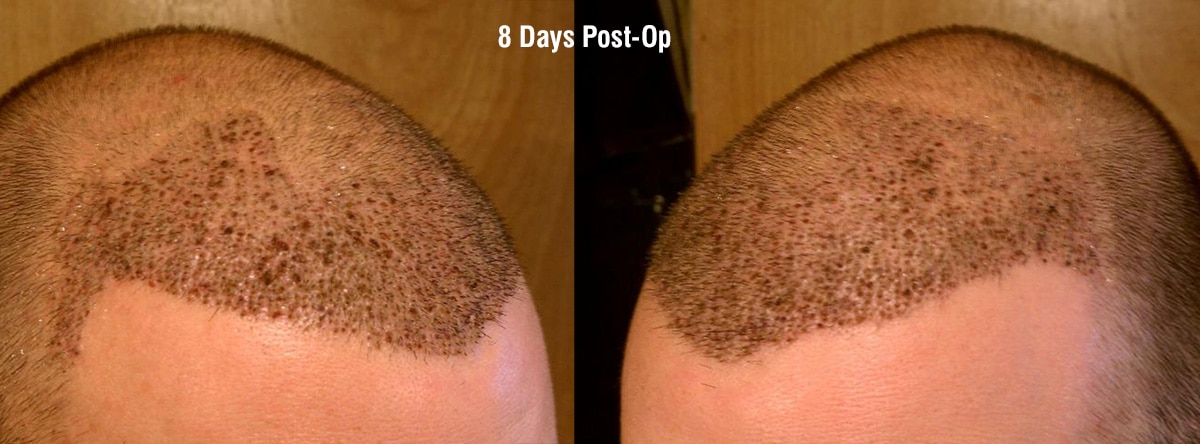
Around day 8
A common point where early crusting has begun to settle and the transplanted area looks more socially presentable.
Early post-op → 7 months

Healing progression

Density development

Later growth

For a larger library with more timelines and angles, see FUE healing photos and results.
Why proper after hair transplant care affects results
After placement, hair follicles rely on restoring blood flow and blood circulation in their new location. During this phase, the goal is to reduce unnecessary inflammation and avoid physical disruption.
Proper care helps protect graft stability and supports a smooth healing journey. While outcomes vary, disciplined scalp care and consistent care improve the conditions that support healthy hair and natural hair appearance over time.
The AlviArmani US post-op protocol
Our process begins intraoperatively and continues through follow-up and education. Patients receive videos and reading material on what to expect, post-op medications, and scalp care.
- AMP-T PRP is incorporated into every procedure as supportive care.
- Ampligraf intraoperative solutions are used as part of graft handling.
- Post-op graft spray support and scheduled saline spray.
- Post-op donor cream guidance.
- Medication plan and follow-up instructions.
- Expert support with clear checkpoints.
What is included in your post-op care package
- Structured video library covering each phase of hair transplant recovery
- Written reading material with step-by-step care instructions
- Post-operative medication plan tailored to your procedure
- Donor site cream with guidance on application and timing
- Ampligraf post-op graft spray to support early scalp environment
- Risanare™ post-operative recovery set by Origenere for structured at-home scalp care
- Saline spray protocol for hydration and comfort
- Scheduled follow-up check-ins and access to our team for questions
The goal of this package is to make proper aftercare simple, consistent, and supported—so patients can focus on healing progress and the emergence of new hair growth.
Post-op Care video walkthroughs
These short videos walk through key moments in the early healing timeline so patients can visualize what to expect and how to care for the scalp at each stage.
First night post-op guidance and positioning
Early healing process and scab resolution timeline
Growth process and timeline toward new hair emergence
This protocol has been refined over decades of clinical experience. We avoid absolute guarantees and focus on what we can control: disciplined technique, structured education, and a post-op system built around proper aftercare.
Care guidelines that protect early healing
Patients often ask what matters most after hair transplant surgery. The answer is simple: protect the transplanted area, follow instructions, and avoid common mistakes that increase irritation.
- Follow doctor’s advice exactly, even if you feel “ahead” of schedule.
- Use mild shampoo and lukewarm water once permitted.
- Keep scalp care simple; avoid harsh chemicals.
- Prioritize a balanced diet and hydration.
- Return to physical activities gradually, based on guidance.
- Direct sun exposure and prolonged direct sunlight early on.
- Strenuous activities, heavy lifting, and excessive sweating during early healing.
- Direct water pressure on grafts.
- Unapproved hair products or aggressive hair care products.
Questions about ice pack use, side effects, or when to resume exercise should be answered based on your specific plan. Recovery guidance is always tailored to individual needs.
Related AlviArmani resources
The pages below expand on specific phases of hair transplant recovery. Together with this guide and the Patient Journey Hub, they form a complete framework covering preparation, procedure, healing, and long-term care.
FAQ: after hair transplant
These answers are general education. Your post-op plan may differ based on procedure type, graft count, and individual healing patterns.
When does new hair start to grow?
New growth usually becomes noticeable over the following months. Early new hair can look fine at first, then matures as the hair growth cycle progresses. The timeline varies by individual needs.
Is shedding normal?
Yes. Hair shedding is commonly a normal part of the hair growth cycle after a hair transplant. The follicle remains beneath the skin as the hair growth cycle resets.
When can I resume exercise?
Physical activities are reintroduced gradually. Strenuous activities, heavy lifting, and excessive sweating are typically avoided early. Follow doctor’s advice for your specific plan.
How should I wash my scalp?
Washing is typically introduced with lukewarm water and a mild shampoo, avoiding direct water pressure. Regular washing should follow the schedule provided in your instructions.
Does sun exposure matter?
Yes. Direct sun exposure and direct sunlight can irritate healing tissue. Your team will provide timing and protection guidance as your healing process progresses.
What about hair products?
Use only approved hair products and hair care products early on. Avoid harsh chemicals until your scalp care plan allows reintroduction.