
Norwood 6 represents an advanced pattern of hair loss, but the classification alone does not determine a graft count or surgical plan. These documented AlviArmani cases show different approaches to Norwood 6 restoration, including broader scalp coverage and treatment focused through the hairline and mid-scalp.
What Does Norwood 6 Hair Loss Mean?
Norwood 6 is an advanced stage of the Hamilton-Norwood classification in which hair loss across the top of the scalp has become extensive and the separating bridge of hair between the frontal and crown regions is no longer preserved.
Classification describes the pattern and extent of hair loss. It does not determine how many grafts a patient should receive, which regions should be restored, or whether treatment should occur in one procedure or multiple stages.
Surgical planning also depends on recipient-area size, existing native hair, available donor resources, hair characteristics and the goals of the individual restoration.
Advanced Hair Loss Requires Individualized Planning
With a larger recipient area, the important question is not simply the Norwood number. Treatment planning must consider how the available donor hair can be distributed across the areas being restored and which regions should receive priority.
Understand Treatment Zones
The hairline, frontal scalp, mid-scalp and crown represent different treatment regions. The actual areas treated should be reviewed alongside any graft-count or classification comparison.
Explore Hair Treatment Zones →Understand Candidacy
Advanced hair loss does not determine candidacy by itself. Donor resources, recipient-area requirements, existing native hair and long-term restoration goals must be evaluated together.
Am I a Good Candidate? →Norwood 6 FUE Hair Restoration in Beverly Hills
The patient originally featured on this page underwent a documented FUE hair restoration procedure with the AlviArmani Beverly Hills clinic in 2018.
The available case record documents restoration involving the hairline, mid-scalp and broader scalp coverage. The exact graft count and treating physician are not documented in the current case record.
The photographic evidence includes a preoperative view, a frontal before-and-after comparison and a documented one-year postoperative result.
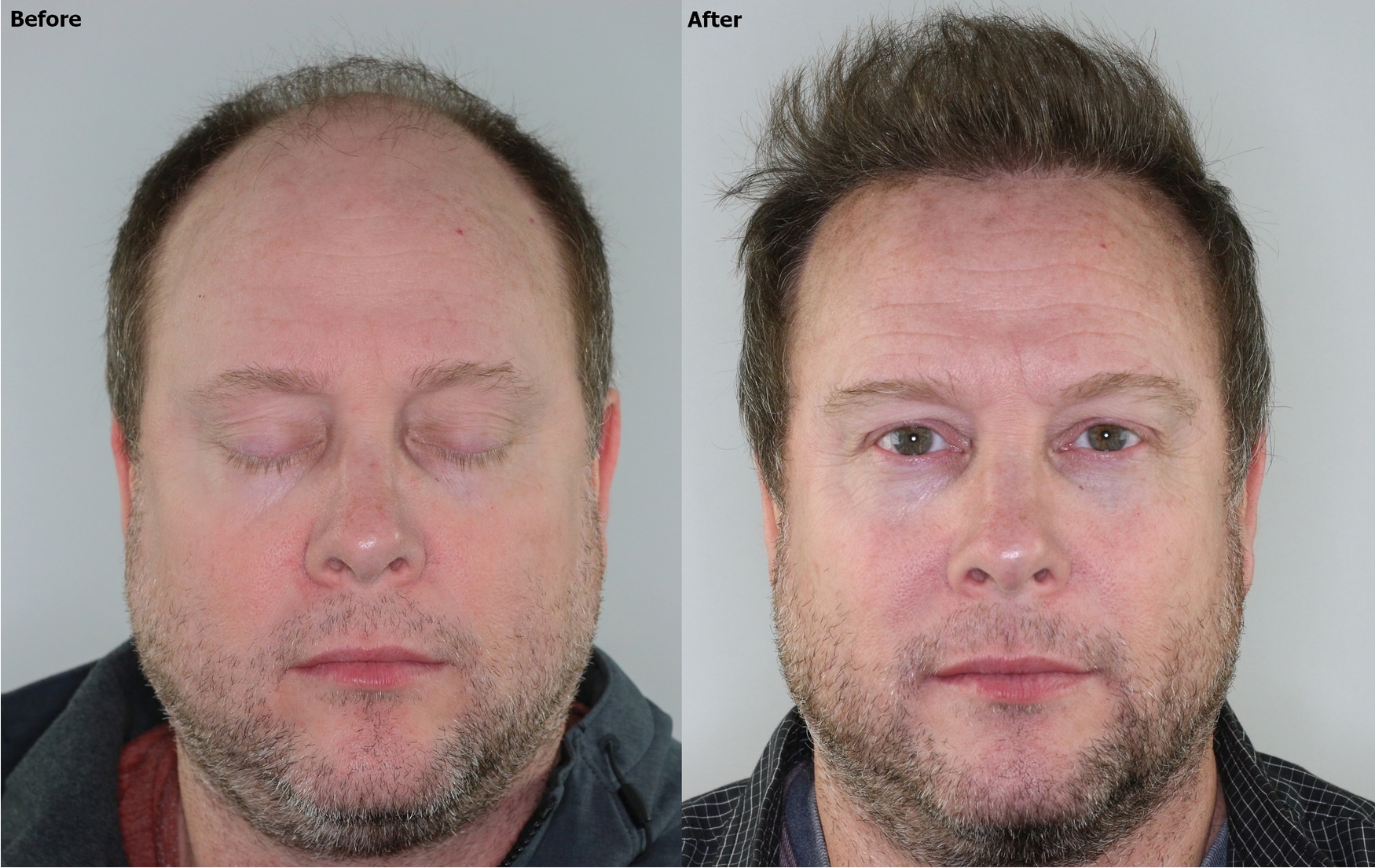
Before and 1-Year Views of the Featured Case
These additional photographs document the patient's starting point and the available one-year postoperative result.
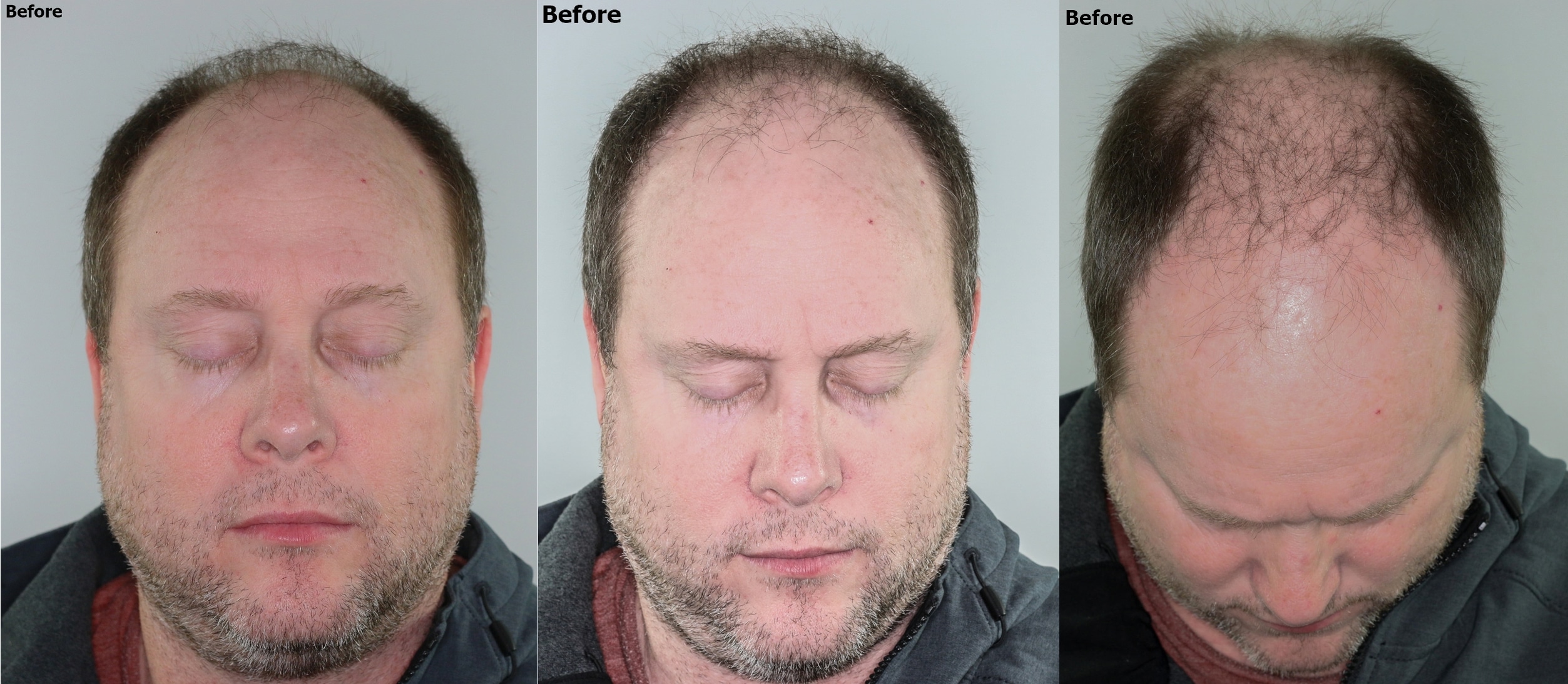
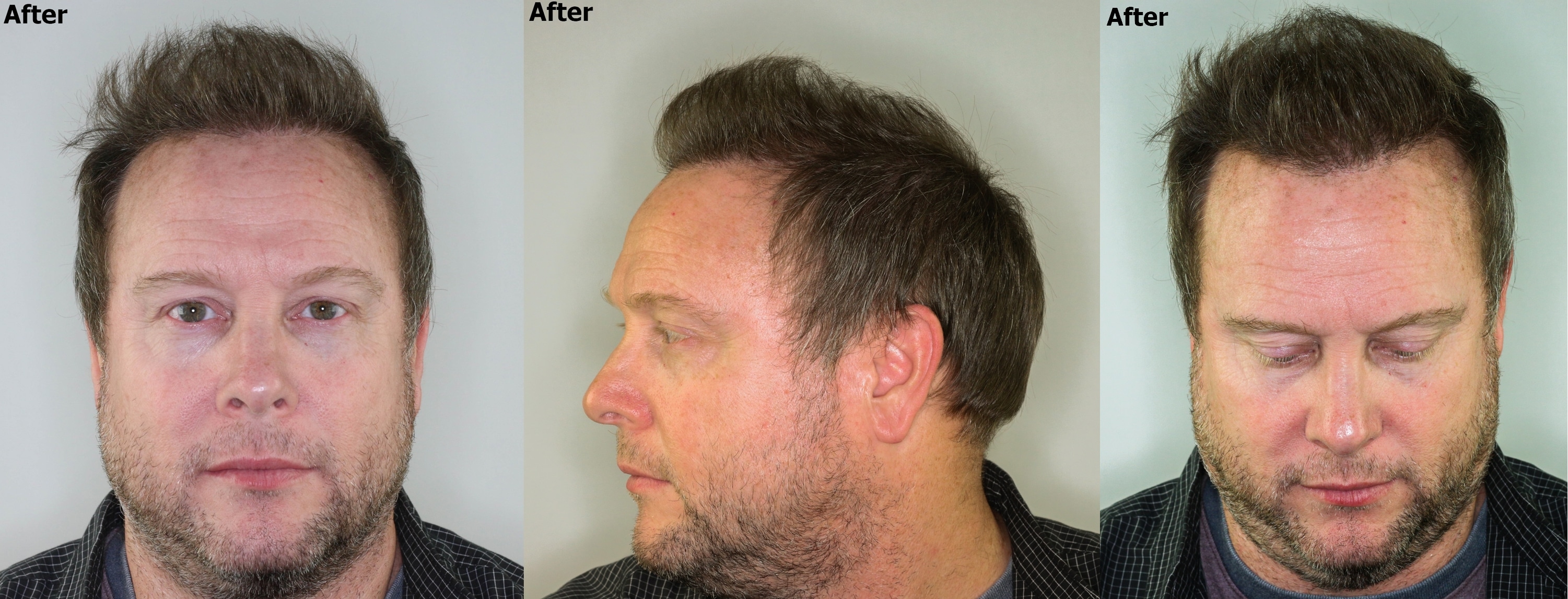
More Documented Norwood 6 Hair Transplant Evidence
Patients with the same Norwood classification can receive different treatment plans. AlviArmani's documented Norwood 6 evidence also includes a separate Beverly Hills patient whose procedure focused on the hairline and mid-scalp.
different plans
Norwood 6 Does Not Equal One Treatment Plan
The featured patient documents treatment involving the hairline, mid-scalp and broader scalp coverage, while the supporting Norwood 6 case documents treatment focused on the hairline and mid-scalp.
That distinction matters. Two patients can share the same Norwood classification while having different recipient areas, existing native hair, donor resources and restoration priorities.
Neither of these cases establishes a universal graft requirement for Norwood 6. Appropriate graft planning depends on recipient-area size, donor resources, existing native hair, hair characteristics and the goals of the individual restoration.
Coverage, Donor Resources and Treatment Priorities
Norwood 6 can involve a substantial recipient area. As the area requiring restoration increases, the relationship between available donor resources and the patient's treatment priorities becomes increasingly important.
Treatment Priority
A surgical plan may prioritize selected regions rather than assuming that every area of hair loss should be treated in the same procedure.
Broader Coverage
The featured 2018 case documents a broader restoration pattern involving the hairline, mid-scalp and additional scalp coverage.
Donor Resources
The size of the recipient area must be considered in relation to the donor hair available for transplantation and the patient's longer-term restoration goals.
Graft Count Is Individual
An exact graft count is not documented for either Norwood 6 case currently featured in this collection. The classification itself should therefore not be used to infer a graft requirement.
Compare Results in the Context of Treatment Area and Time
The featured case includes a documented one-year postoperative result. The supporting Norwood 6 patient includes a two-year follow-up and comb-through.
Follow-up timing, treatment area, photographic angle, lighting and styling should all be considered when comparing one patient's result with another.
Understanding Norwood 6 Hair Transplant Planning
What does Norwood 6 mean?
Norwood 6 describes an advanced pattern of male hair loss in which the frontal and crown areas have become extensively affected and the separating bridge of hair across the top of the scalp is no longer preserved.
Can someone with Norwood 6 have a hair transplant?
Some patients with Norwood 6 hair loss may be candidates for hair transplantation. Classification alone does not determine candidacy. The recipient area, available donor resources, existing native hair, hair characteristics and the patient's goals all need to be evaluated.
How many grafts does a Norwood 6 hair transplant require?
There is no universal graft requirement based on Norwood classification alone. The exact graft count is not documented for the two Norwood 6 cases currently shown in this collection, so these cases should not be used to infer one standard graft number.
Does every Norwood 6 patient need full-scalp treatment?
No. Treatment area depends on the individual surgical plan. The featured case documents broader scalp restoration, while the supporting Norwood 6 case documents treatment focused on the hairline and mid-scalp.
What follow-up evidence is available in these Norwood 6 cases?
The featured 2018 Beverly Hills patient has a documented one-year postoperative result. The separate supporting Norwood 6 case includes immediate postoperative evidence and a documented two-year comb-through.
Learn More About AlviArmani Results and Hair Transplant Planning
Review additional patient evidence or begin a personalized evaluation of your hair-loss pattern, donor area and restoration goals.
Your Hair Restoration Plan Is Individual
Graft count is only one part of planning. Your hair-loss pattern, treatment areas, existing native hair, donor resources and long-term goals all influence the appropriate approach.