
Crown Hair Transplant in Zone 4
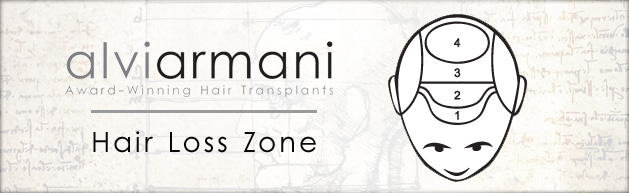
The crown is one of the most technical regions in hair restoration. It is not just about adding grafts. It is about rebuilding the posterior scalp so the result reads naturally under overhead lighting, in motion, and over time.
At AlviArmani, crown restoration begins with flow, not just density. The central question is not how to fill a circle. It is how to recreate a living vortex, transition smoothly into surrounding hair, and distribute donor resources in a way that remains believable as the patient ages.
The crown is different from the hairline.
A hairline is read straight on. The crown is read from above. A hairline depends on framing. The crown depends on pattern flow, layering, and how hair bends as it gains length. That is why crown work should never be treated like a generic fill-in procedure.
Many patients are not choosing between the hairline and the crown.
They are trying to understand how both zones fit together. The hairline shapes the face. Zone 4 shapes top-down coverage. When both are part of the conversation, the goal is a plan that feels balanced from every angle.
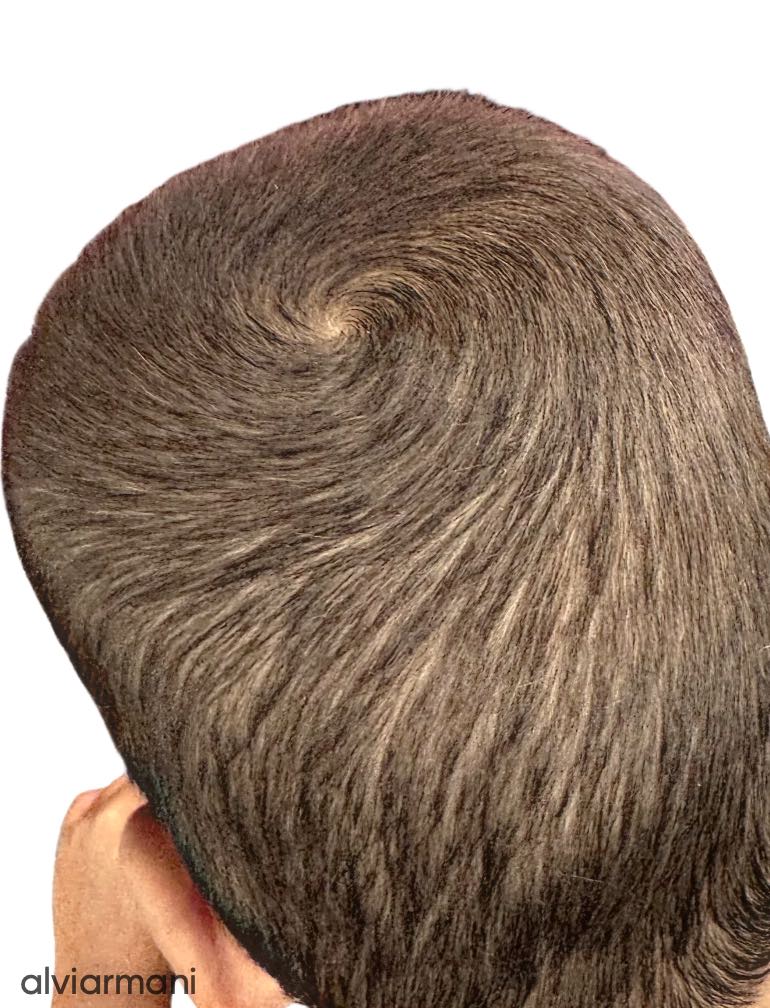
The crown is a rotational system, not a circle.
At the center of the crown is a whorl, or vortex, where hair emerges in a coordinated rotational pattern. This structure defines how the crown behaves visually. Successful restoration depends on recreating this directional flow before density is introduced.
From concept to clinical framework
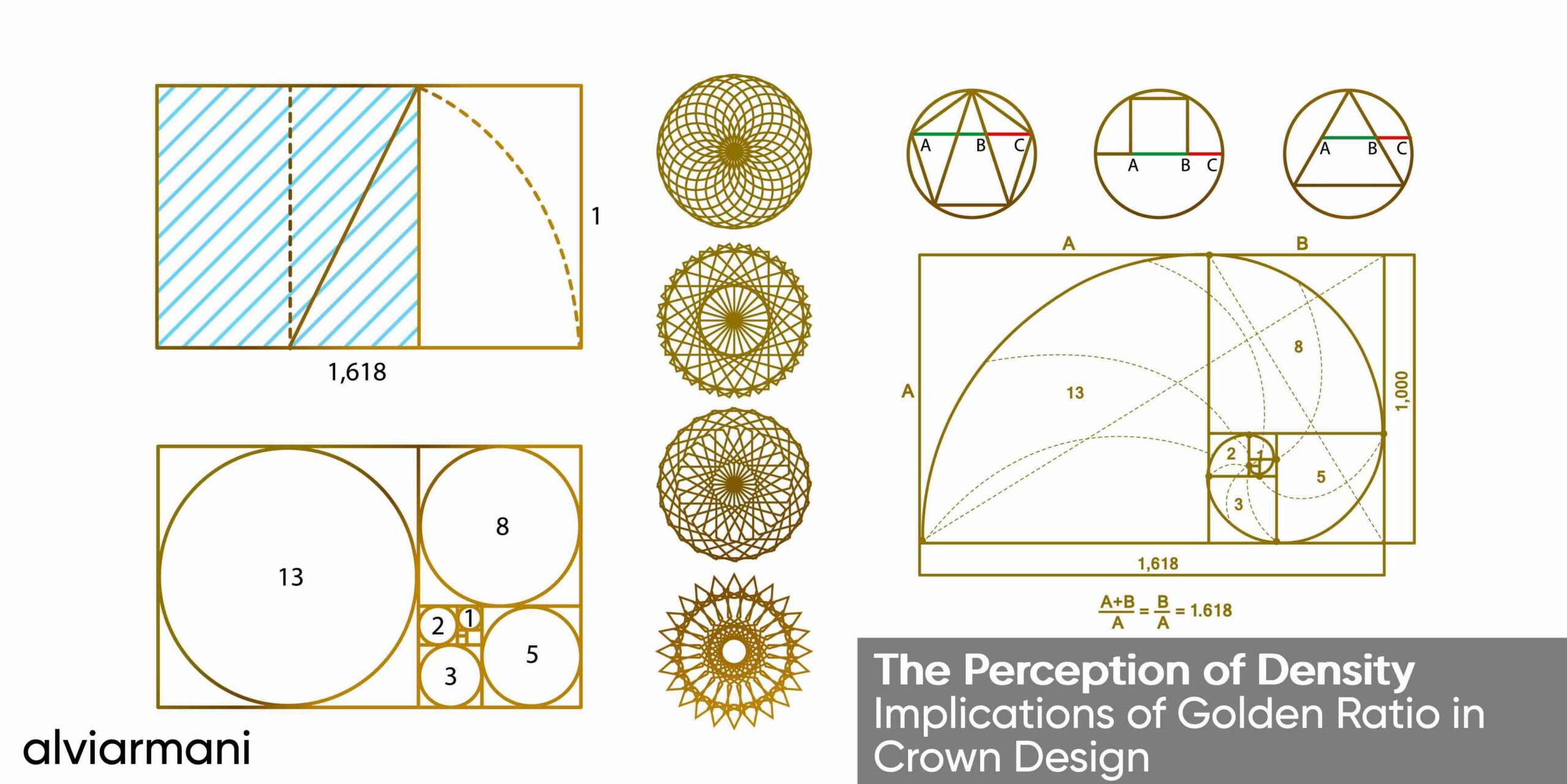
The principles outlined here are part of a broader clinical framework developed by the AlviArmani Research Institute, focusing on vortex architecture, optical density, and posterior scalp restoration strategy.
Whorl before density
The crown behaves as a rotational system. Restoration begins by recreating directional flow around a central vortex before density targets are layered in.
Optics drive coverage
Crown fullness is not defined by graft count alone. Pattern, overlap, length, and light interaction determine how dense the posterior scalp appears.
Plan the posterior continuum
Zone 4 should be evaluated with its neighboring territory in mind, balancing current visibility, future progression, and donor allocation across the scalp.
Density is measured. Coverage is perceived.
Two crowns can have the same number of grafts but appear completely different. What matters is how hair is layered, angled, and allowed to interact with light. In the crown, the difference is not simply straight versus diagonal placement. It is whether the pattern behaves like a true whorl and creates believable overlap as hair gains length.
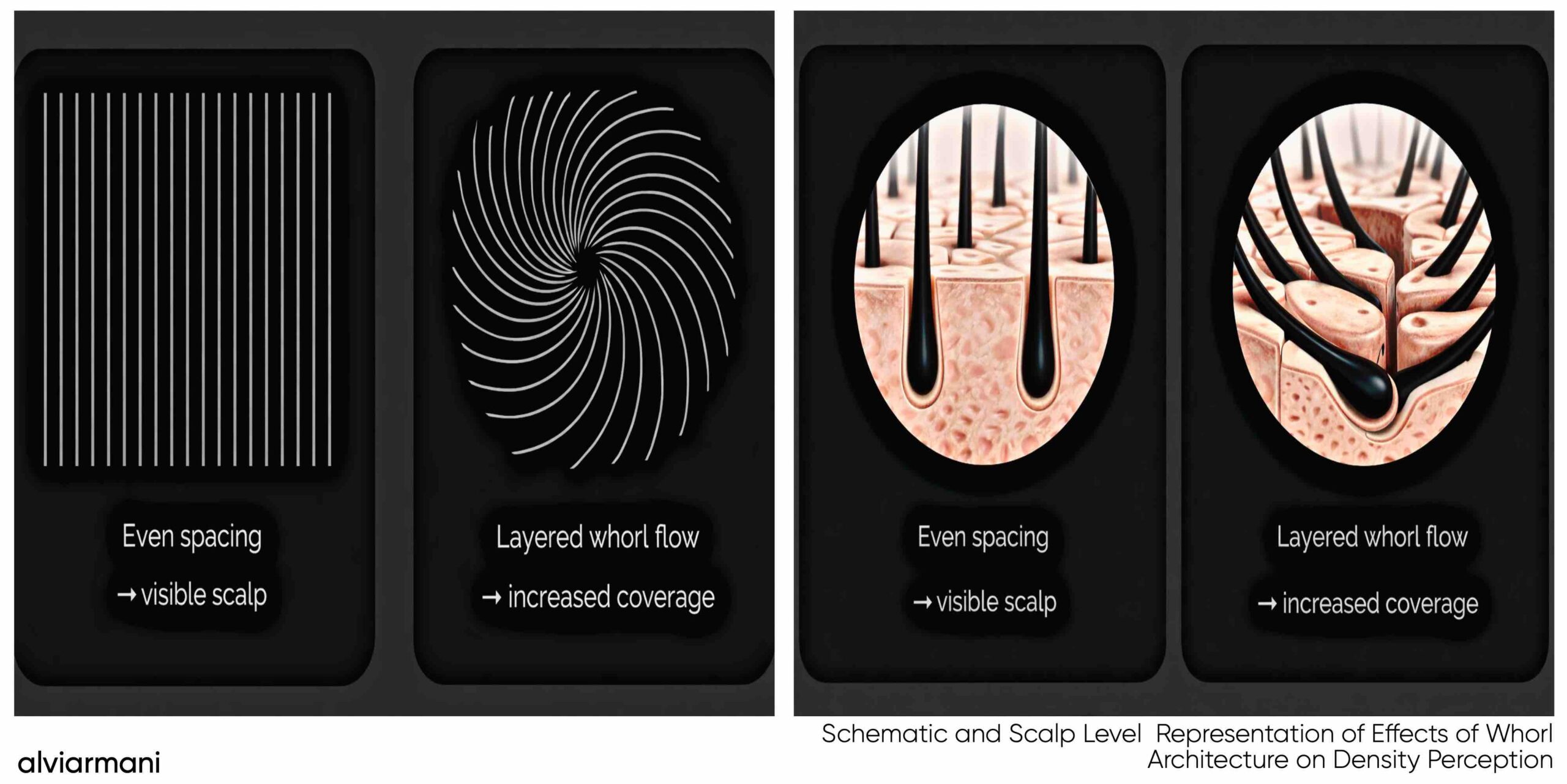
Overhead light reveals spacing early.
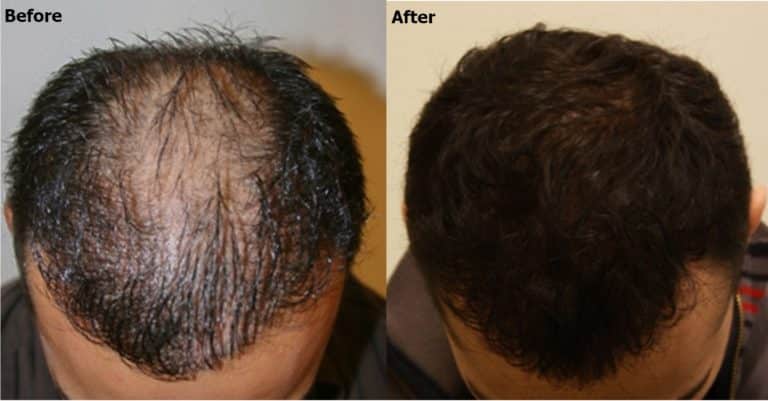
Patients often judge the crown too early because light hits the area directly. Even when growth has begun, the result may not look complete until hairs are long enough to intersect and create true visual overlap.
The crown has a rotational pattern.
Instead of a mostly forward-facing arrangement, the crown requires a vortex or spiral architecture. This means angle, exit direction, and spacing must all work together from multiple viewing positions.
Donor strategy matters more here than many patients realize.
Because the crown can consume large numbers of grafts, the right plan weighs current thinning, future loss, surrounding miniaturization, and whether the patient may later need Zone 3 or frontal reinforcement.
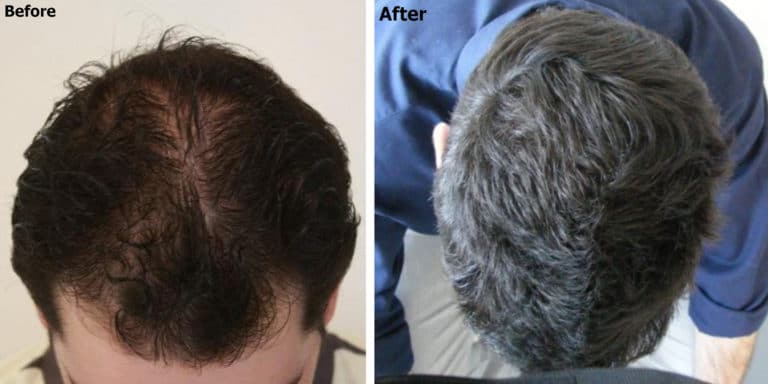
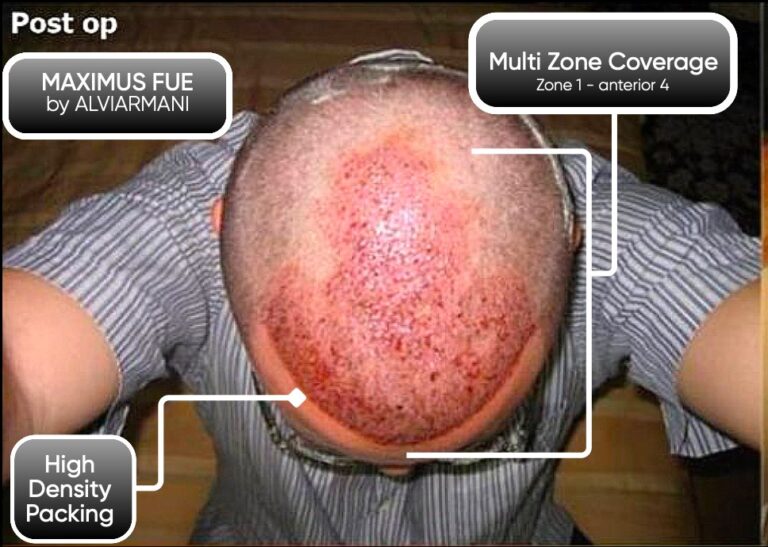
Why patients notice the crown late — then all at once.
The crown frequently becomes a frustration point because it is harder for patients to monitor day to day. Then overhead photos, bright sunlight, or shorter hairstyles suddenly make the thinning obvious.
- Miniaturization in the crown may progress gradually before becoming cosmetically obvious.
- Posterior thinning often looks worse in photos than in the mirror because of camera angle and top-down light.
- Many patients also have neighboring Zone 3 thinning, which changes how the crown should be planned.
- Crown work is rarely about a single circle. It is usually about a broader posterior density map.
Density is not the same as coverage.
In Zone 4, the goal is not simply a high number of grafts per square centimeter. It is believable coverage. That means the direction of implantation, caliber of the available donor hair, size of the crown, and surrounding native hair all change the visual result.
- A crown that is packed without proper flow can look unnatural.
- A crown that is directionally correct but under-planned may still look see-through under harsh light.
- The best outcomes come from matching vortex geometry, then building density in a way that supports the pattern.
How AlviArmani approaches Zone 4 crown restoration
Map the vortex first
Before talking about cosmetic fullness, the design starts with whorl direction. The crown has to read correctly in motion and from multiple angles, so the core flow pattern is established before density targets are finalized.
Create the Zone 4 to Zone 3 transition
Many strong crown outcomes depend on the transition. Rather than creating an isolated circle of improvement, AlviArmani often extends design logic into adjacent posterior territory so the change appears smooth and intentional.
Build coverage before chasing maximal packing
Crown restoration is a game of optics. Proper spacing and directional fidelity allow the result to mature naturally. Once the architecture works, density can be layered where it has the greatest cosmetic return.
Plan for the long term
Crown grafting should respect donor supply. A good plan considers current pattern, possible future expansion, and whether the patient may later prioritize midscalp or frontal reinforcement.
This page should educate first, but patients who are ready can also see how Zone 4 planning translates into specific surgical approaches.
Vitruvian FUE™
The core AlviArmani approach for natural flow, density planning, and crown architecture.
View procedure → Larger casesMaximus™ FUE
A strong fit when crown restoration is part of a larger multi-zone or higher-graft coverage plan.
View procedure → Select candidatesVitruvian No-Shave FUE™
For the right patient, a discreet pathway that can still respect the design demands of Zone 4.
View procedure →Not every crown follows the same pattern.
One of the biggest mistakes in crown restoration is treating every patient as though Zone 4 were the same shape, size, and progression pattern. In reality, the crown can behave as a contained whorl, a broader posterior thinning field, or part of a multi-zone pattern that also includes Zone 3 or the frontal scalp.
Common posterior patterns
- Contained Zone 4 crown: a more defined central vortex with relatively stronger surrounding hair.
- Zone 4 plus Zone 3 transition: the crown is visible, but the surrounding posterior scalp is also beginning to thin.
- Diffuse posterior thinning: the issue is not a single circle but a broader loss of top-down density.
- Full-scalp pattern: crown treatment only makes sense when balanced against frontal and midscalp priorities.
Why pattern matters
Pattern determines nearly everything: how many grafts may be needed, whether Zone 3 should be included, how aggressively density should be pursued, and whether the better answer is local crown work or a broader coverage strategy.
This is also why surface area matters more than something simplistic like hat size alone. Head size can influence area, but the real surgical question is the actual footprint of thinning and how far the posterior pattern extends.
How many grafts does the crown need?
There is no single crown number that fits everyone. Graft planning depends on the size of the crown, the degree of native miniaturization, the desired level of coverage, the quality of donor hair, and whether adjacent posterior or midscalp zones are included.
| Situation | What usually drives the plan | Design priority |
|---|---|---|
| Smaller Zone 4 crown | Defined thinning with stable surrounding hair | Whorl accuracy and believable coverage |
| Zone 4 + Zone 3 transition | Broader posterior see-through pattern | Smooth posterior gradient |
| Hairline + crown in one plan | Need to distribute donor resources across multiple zones | Prioritization and long-term balance |
| Advanced diffuse loss | Large surface area and future progression risk | Coverage realism over aggressive promises |
The crown conversation is not always the same in men and women.
Men more often present with a discrete crown or combined male-pattern progression that can be mapped zone by zone. Women may present with broader diffuse thinning, different styling priorities, and a different threshold for what counts as cosmetically meaningful density.
- Men: more often evaluated for defined crown restoration, multi-zone graft allocation, and future progression planning.
- Women: often require careful assessment of diffuse thinning, donor stability, hair caliber, and whether surgical crown work is the right answer at all.
- Both: need individualized planning based on the actual pattern, not just the location of the complaint.
How far down does Zone 4 go?
Zone 4 is best understood as a design territory rather than a hard painted circle. In some patients it is fairly contained around the crown vortex. In others, the visible problem extends farther posteriorly or blends forward into Zone 3.
That means the practical boundary of Zone 4 is defined by pattern, visibility, and transition needs. The point is not to chase a fixed line. The point is to restore the posterior scalp in a way that looks coherent from the crown outward.
Why the crown can appear slower to mature
Patients are often told that hair growth takes time, but in the crown that advice matters even more. The crown has to not only grow. It has to bend, layer, and create overlap. That is why many patients experience meaningful change through months 6 to 12 and sometimes beyond.
- Early phase: healing, shedding, and a "quiet" period can make the crown look similar to baseline.
- Mid phase: visible growth returns, but spacing may still show under bright light.
- Maturation phase: length, caliber, and pattern interaction make the result read more densely.
Some of the most dramatic crown improvement happens only after the hair is long enough to behave like crown hair.
That distinction matters. The final impression of the crown is not just about emergence from the scalp. It is about how the hair interacts with neighboring shafts to create believable posterior coverage in real life.
Crown vs hairline: why they should not be planned the same way

| Topic | Hairline | Crown / Zone 4 |
|---|---|---|
| Primary visual job | Frame the face | Create believable top-down coverage |
| Pattern logic | Mostly frontal and directional | Rotational, spiral, multi-angle |
| When patients judge it | Immediately in the mirror | Often by photos, sunlight, and overhead views |
| Maturation perception | Often feels earlier | Often feels later because layering matters |
| Planning pressure | Aesthetic framing | Donor allocation and posterior realism |
Who may be a good candidate for crown restoration
Patients bothered by top-down visibility
You may have a relatively acceptable frontal appearance but still feel exposed in photos, bright sunlight, or when viewed from above.
Patients needing Zone 3 + Zone 4 planning
Not every crown should be treated in isolation. Some of the best posterior outcomes depend on designing the transition zone correctly.
Patients exploring non-surgical support
For some patients, exosomes or other biologic support may be part of the crown strategy, either as a stand-alone step or combined with surgery depending on the pattern.
Explore the rest of the Zone 4 pathway
This hub should also point patients back into the frontal design story. The crown and hairline are different problems, but many consultations involve both. Linking them directly creates a clearer patient journey across the site.
Crown Hair Restoration
A focused crown page centered on Vitruvian FUE and the technical demands of posterior design.
View page → Case study2,588-Graft Crown Case
A Zone 4 dominant case with controlled extension into Zone 3 and expectation-setting around maturation.
View case → Combined planning3,500 Grafts: Hairline + Crown
An example of multi-zone allocation where frontal framing and posterior restoration were planned together.
View case → Non-surgicalExosome Injection Therapy for Crown Hair Loss
A stand-alone biologic option for patients seeking improvement in crown thinning without surgery.
View therapy → Crown supportExosome Treatment for the Crown
An additional crown-focused exosome pathway, including same-day strategy for patients addressing front and crown together.
View page → VideoCrown Restoration Video
A visual example of hair transplant plus biologic support with attention to sunlight and real-world visibility.
Watch results →When the right answer is bigger than the crown
Some patients come in asking only about the crown, but the better question is whether the crown is the main problem or just the most visible one. In advanced cases, the right conversation may involve full-scalp strategy, not just local treatment.
See how crown restoration looks in motion
Video helps patients understand what static images cannot fully show: how the crown reads under movement, light, and real-world viewing angles.

Common questions about crown hair restoration
Is the crown harder than the hairline?
Usually, yes. The crown requires rotational flow planning, careful density distribution, and realistic long-term donor strategy. It is one of the most technical regions in hair transplantation.
Why does the crown sometimes look thin even after growth starts?
Because the crown is judged from above. Early hair may be growing, but until it becomes long enough to bend, layer, and overlap, light can still reveal spacing.
Can the crown and hairline be treated at the same time?
Yes, but it depends on the pattern and donor supply. In some patients a multi-zone plan makes excellent sense. In others, prioritization is more important than treating everything at once.
Can exosomes help the crown?
For the right patient, they may play a role as a stand-alone option or as part of a broader strategy. Crown thinning does not always require the same solution for every patient.
Is Zone 3 always involved when the crown is treated?
No, but it is frequently relevant. Some crown cases are truly Zone 4 dominant, while others look best when the posterior transition into Zone 3 is designed deliberately.
Can you estimate grafts from hat size?
Not reliably. Head size can influence overall surface area, but graft planning is driven far more by the actual footprint of thinning, the desired level of coverage, donor quality, and whether adjacent zones need to be included.
Thinking about the crown is really thinking about pattern, planning, and time.
The best Zone 4 outcomes come from a strategy that respects vortex architecture, donor supply, and how the crown will actually be seen in daily life.
Next: Zone 3 — The Bridge Between Hairline and Crown
If you have already explored the hairline and crown, the next step is understanding how they connect. Zone 3 is the transition zone that determines whether the result feels continuous or segmented.
This page focuses on midscalp density, gradient design, and how frontal framing and posterior coverage are blended into a single, cohesive result.
AlviArmani Scalp Design Framework

Schedule a Free Hair Transplant Consultation at Alvi Armani
A hair transplant consultation is your first step toward the natural, lasting hair you deserve and the peace of mind that comes with it.
Your Free Consultation Includes:
- One-on-one time with a world-renowned hair restoration expert
- A personalized treatment plan designed for your unique goals
- Honest answers about results, recovery, and cost — no surprises
- Learn about advanced, natural-looking options available
- Access to 0% financing, making transformation attainable now
Book your consultation today and take the step that changes everything.

We respect your privacy & personal information & we are committed to NO spam.